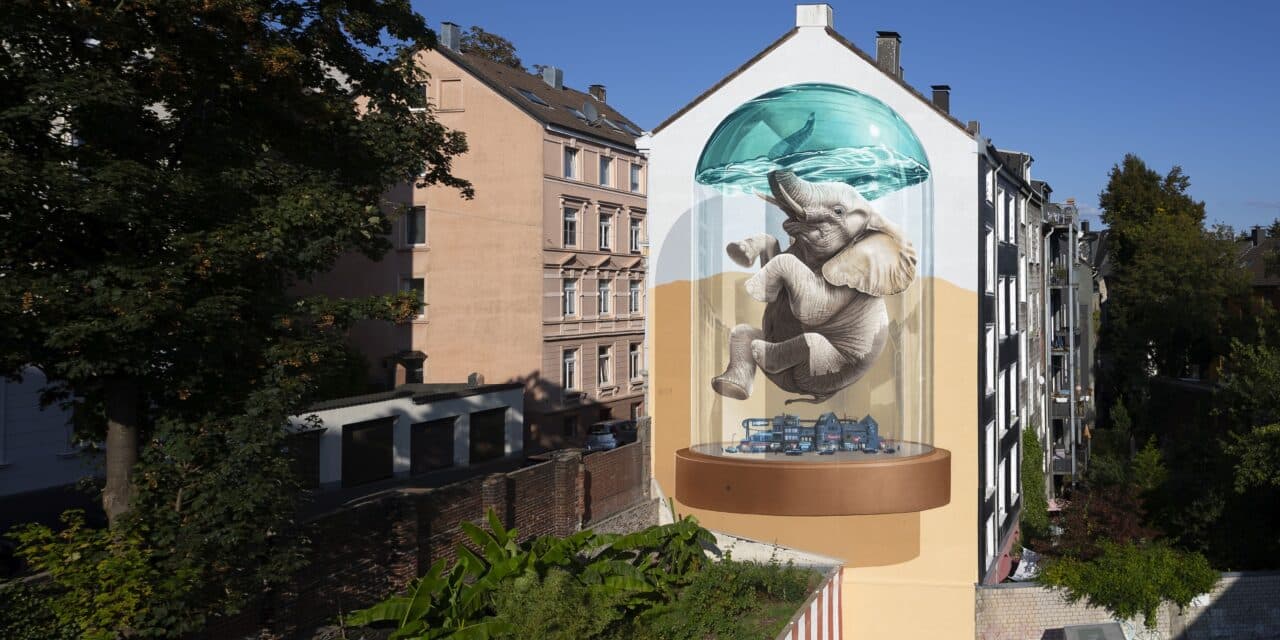
The Vienna Climate Biennale 2026 will once again transform Vienna into an experimental resonance chamber for art, climate, and social change. Under the theme "Unspeakable Worlds," the festival will explore realities that can no longer be captured by language alone. In times of global crisis, art becomes a tool of translation—between science and emotion, analysis and intuition, criticism and vision.
The Vienna Climate Biennale, initiated by the City of Vienna, sees itself as a transdisciplinary festival that understands art not as a decorative element, but as a social force for action. Financed by several business groups within the city administration and supported by UniCredit Bank Austria, the first edition already attracted over 225,000 visitors and established itself as one of the most important climate art festivals in Europe.
From April 9 to May 10, 2026, the program will extend across the entire city, with a special focus on the public space around Karlsplatz. There, the festival will condense into an urban laboratory for artistic interventions, activations, and participatory formats. Art thus becomes part of everyday urban space—visible, tangible, and directly embedded in the realities of social life.
At the heart of the artistic program are two exhibitions at KunstHausWien, which serves as the festival headquarters. The show "Seeds. Reclaiming Roots, Sowing Futures" considers seeds as cultural and ecological archives. Fourteen international artists examine seeds as symbols of migration, colonial history, biodiversity, and indigenous knowledge systems. Works by artists such as Maria Thereza Alves and Kapwani Kiwanga combine ecological research with political memory culture and show how closely nature, power, and identity are interwoven.
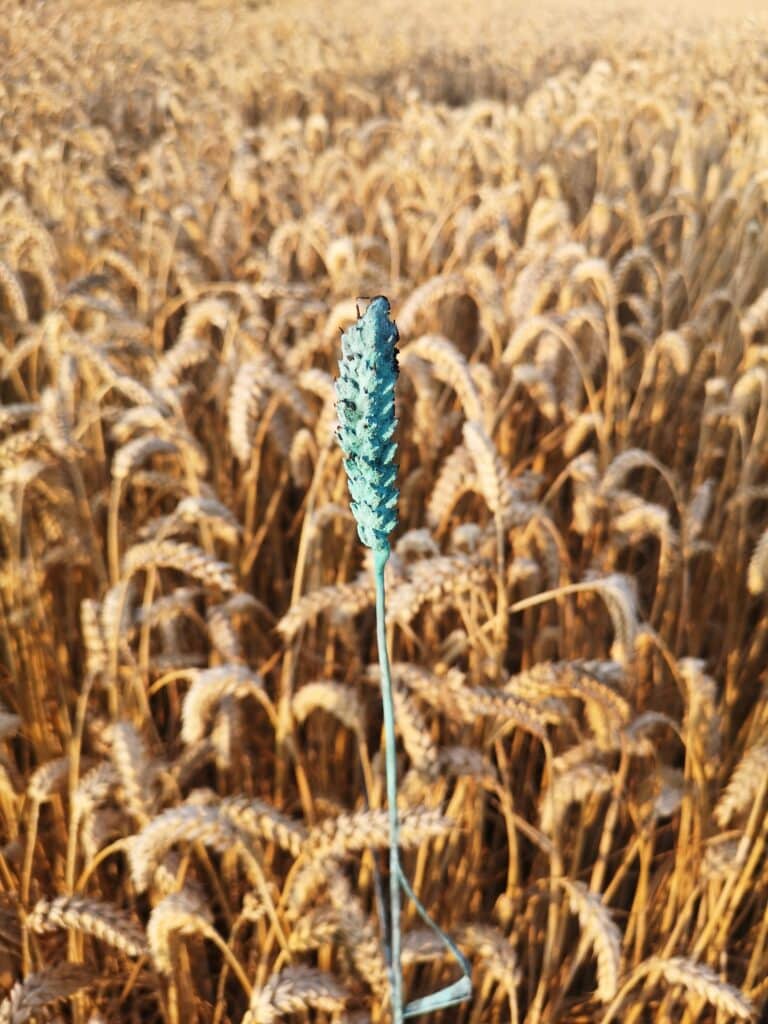
Photo Seeds Criewener No. 104 2022 © Tue Greenfort_Courtesy of the artist and König Galerie
The Institute of Queer Ecology presents the exhibition "I Wish We Had More Time" in the Garage project space. Using an interdisciplinary approach combining art, music, literature, and science, the exhibition examines loss as a multi-layered cultural phenomenon—from disrupted ecological symbioses and ruptures in queer history to personal experiences of separation and longing. The spatial design of the festival itself also becomes an artistic statement. The scenography duo Jascha Findeisen & Franziska Bader, together with writer Andrea Grill, have developed a poetic spatial narrative in which texts, architecture, and visual design merge into one another. The museum thus becomes not only an exhibition venue, but also a dramaturgical space for experience.
Once again, there is a special focus on involving younger generations. In cooperation with institutions such as UNICEF Austria and the University of Vienna, projects are being developed that actively involve children and young people in questions about the future. A two-day climate summit at the beginning of the festival brings science, activism, business, and politics into a joint dialogue.
Under the title "(No) Funny Games," the biennial expands the urban space with critical artistic interventions. Site-specific works oscillating between utopia and dystopia are created on facades, bridges, and in shopping centers. In this way, art becomes a mirror of social tensions and, at the same time, a space for possible futures. Works by artists such as Margot Pilz combine historical perspectives with current climate discourses.
The Vienna Climate Biennale 2026 shows that climate issues are not only ecological but also deeply cultural issues. At a time when many social developments leave us speechless, the festival seeks new forms of understanding. Because the future, according to its central message, is not created solely by technology or politics—but through shared imagination and action.
April 9 to May 10, 2026
www.biennale.wien
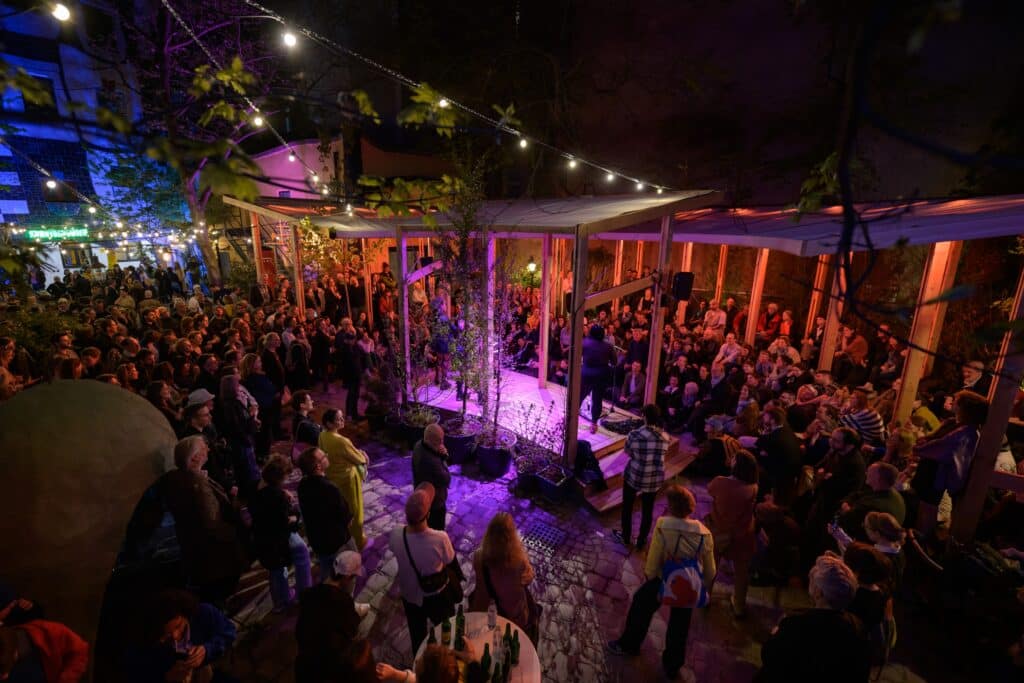
KHW EÖ 2024, photo: eSeL.at, Joanna Pianka