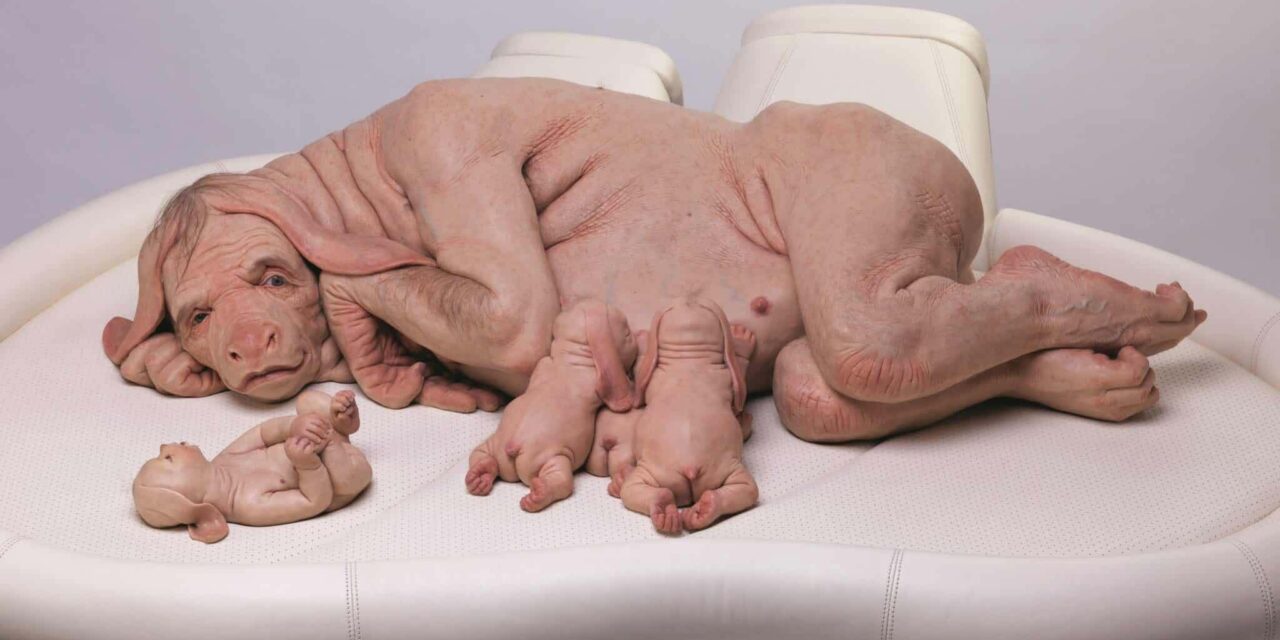
When the world of abstract post-war modernism meets hyper-real contemporary art at the KOENIGmuseum in Landshut, the result is a dialog that is as surprising as it is profound. Under the title "Patricia Piccinini. Welcome Guest", the museum presents a major exhibition of the internationally acclaimed Australian sculptor - an artist who has long since become one of the most important voices in contemporary sculpture with her simultaneously touching and disturbing creatures between human, animal and machine.
The fact that her works now interact with the sculptural works of Fritz Koenig (1924-2017) is far more than a formal experiment. It is a clash of two artistic worlds that - despite their differences - survey the same terrain: the fragility of being human. While Koenig condenses existential themes such as death, eroticism and the longing for harmony in the hard material of bronze and iron, Piccinini creates soft-looking body hybrids in silicone and hair that attract and irritate in equal measure. Both explore that zone between life and idea where the human begins to tilt.
The exhibition, realized in cooperation with the Institute for Cultural Exchange in Tübingen, marks the start of a new curatorial strategy: in future, the KOENIGmuseum wants to place the work of its namesake in a targeted relationship with contemporary artists. The "Welcome Guest" is therefore to be understood programmatically - as an invitation to see the familiar from a different perspective.
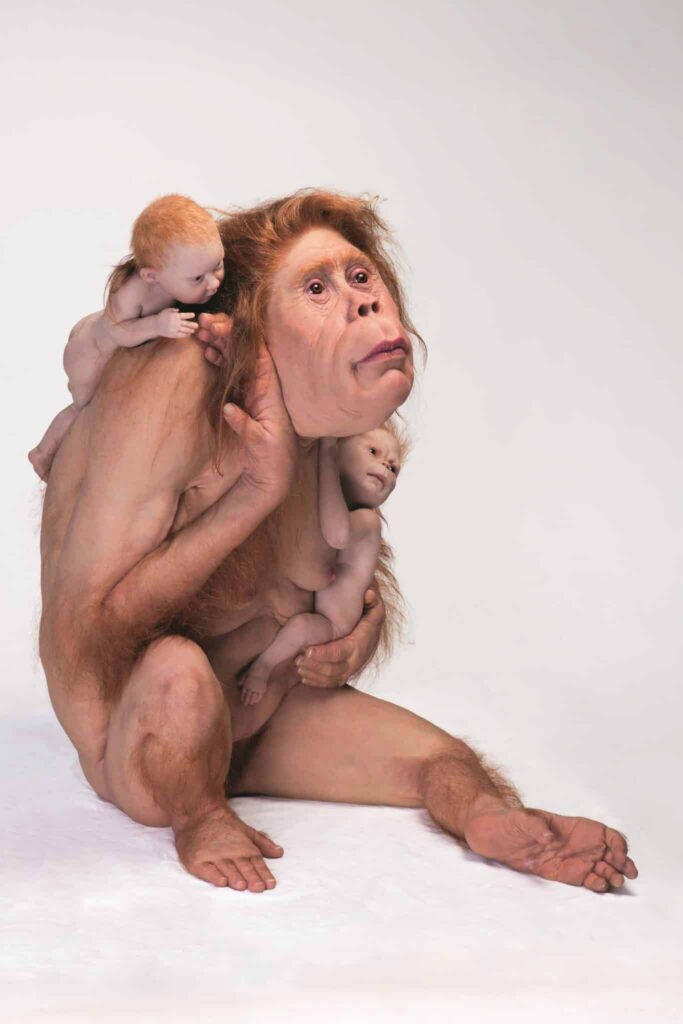
Patricia Piccinini, Kindred, 2018 © Courtesy of the artist and the Institute for Cultural Exchange
Patricia Piccinini, born in 1965, belongs to the second generation of hyperrealists. Like her colleagues Ron Mueck and Evan Penny, she uses the precision of modern materials to pose questions about ethics, empathy and the future of life. Her creatures - half human, half animal, sometimes machine-like - are not nightmares of genetic engineering, but poetic speculations on proximity and responsibility. They embody the alien in our own, the other that dwells within ourselves. Their skin seems to breathe, their bodies tremble with life, and yet they elude any clear classification.
The interplay with Koenig's abstracted equestrian figures, animal sculptures and mother-child depictions creates unexpected resonances. Where Koenig reduced the form to its archaic core, Piccinini takes it to the limits of biological abundance. Both artists share a deep awareness of the organic, of the intertwining of life, matter and spirit. And both question the relationship between nature and culture, between man and creation - only with different grammar.
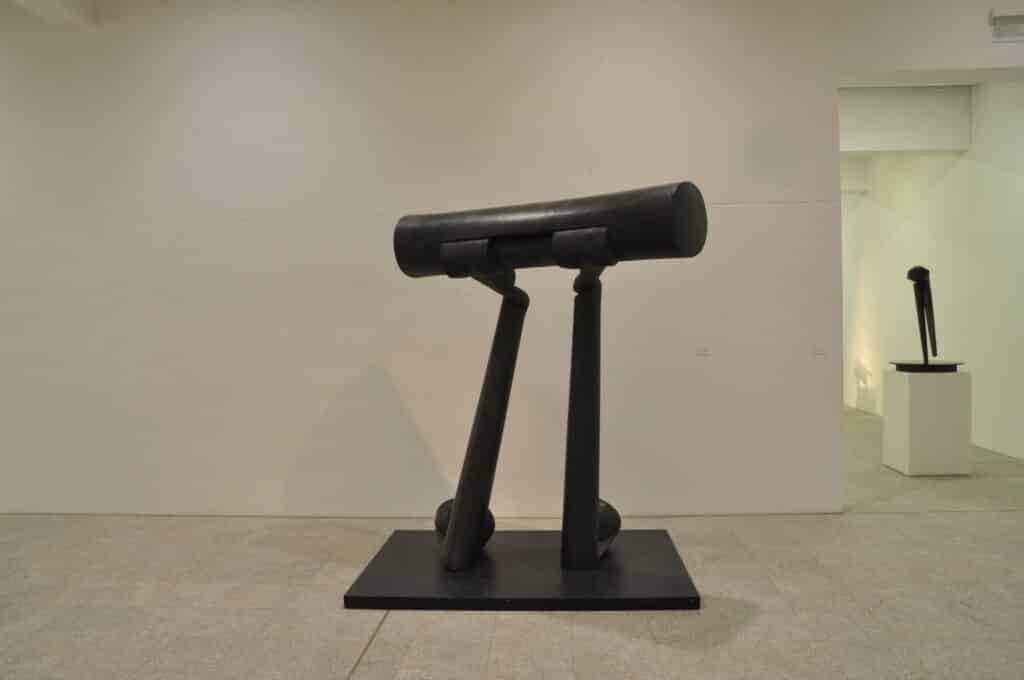
Fritz Koenig, Large double caryatid N, bronze, 1968/70, WVZ-Sk 421, photo: KOENIGmuseum
Large double caryatid N, Ganslberg, photo: Koenig Archive
This sensually and intellectually stimulating show succeeds in redefining the concept of the "human". It touches on questions of empathy, crossing boundaries and responsibility at a time when technical possibilities challenge the definition of the living. An extensive accompanying program with panel discussions, workshops and an artist talk with Patricia Piccinini herself will delve deeper into these topics and make the KOENIGmuseum a place to reflect on what life - and compassion - means in the 21st century.
Thus, "Welcome Guest" is more than an encounter between two generations of artists. It is a plea for openness, for the ability to recognize the familiar in the unfamiliar - and to find a resonating space for the questions of our time in art.
October 25, 2025 to February 22, 2026
In cooperation with the Institute for Cultural Exchange, Tübingen
https://koenigmuseum.de
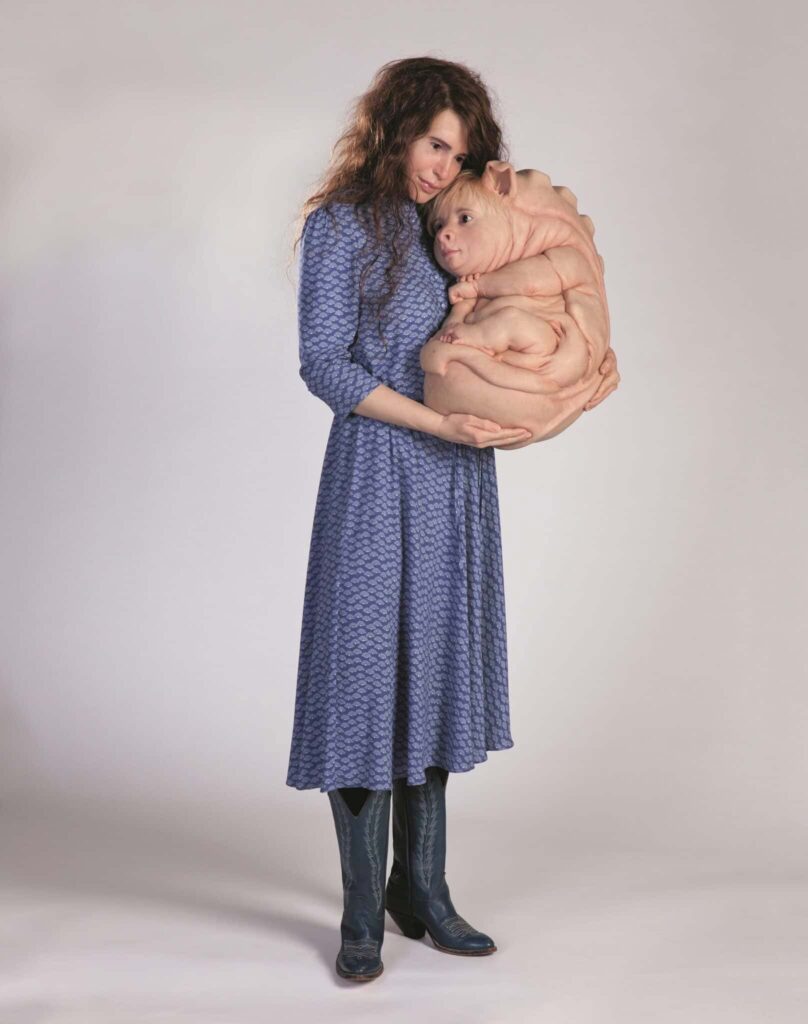
Patricia Piccinini, The Bond, 2016 © Courtesy of the artist and the Institute for Cultural Exchange