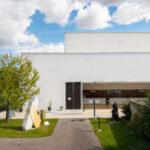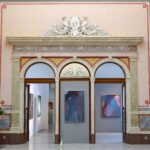
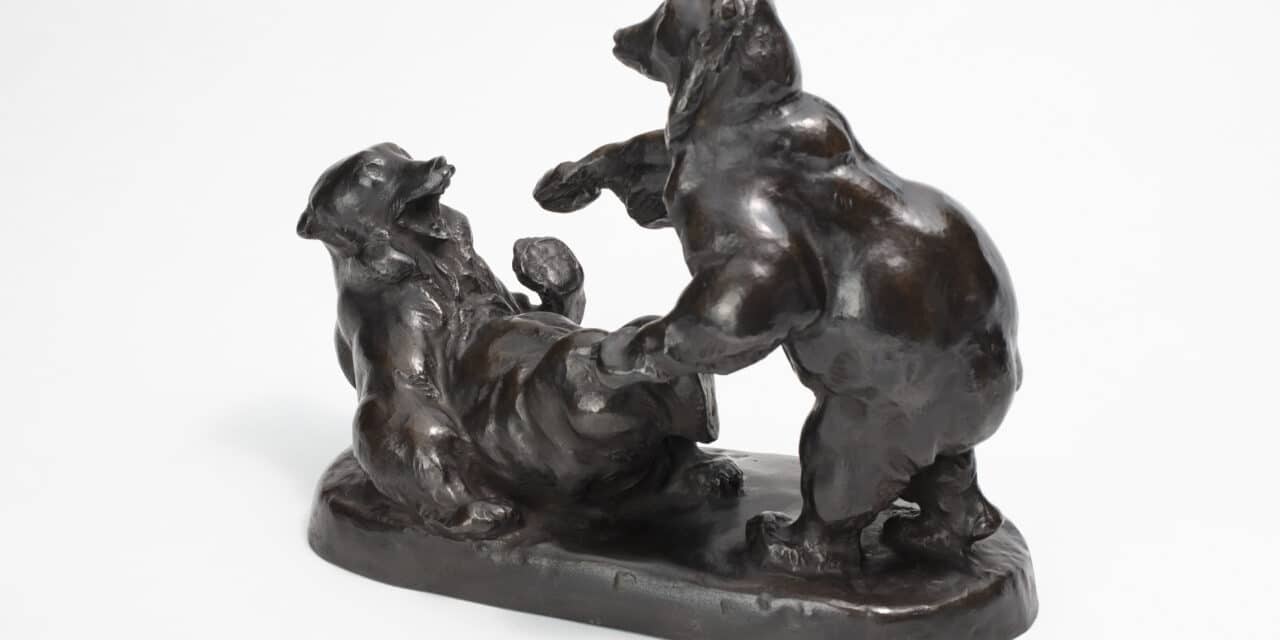
In the soft autumn light of Frankfurt's museum embankment, the Liebieghaus awakens to an unusual conversation: humans and animals meet at eye level. The major special exhibition "Animals are only human. Sculptures by August Gaul" from November 13, 2025 to May 3, 2026 is dedicated to an artist who crossed the threshold of modernism like no other - with a view that was at once loving, scientific and radical.
August Gaul (1869-1921) was not a classic animal sculptor, he was a soul researcher in bronze. Where previously lions, eagles or monkeys served as bearers of power, virtue or sin, Gaul saw the living itself. He freed the animal from symbolism and pathos in order to capture something of the essence of life in its movements and gaze. The Frankfurt show presents around one hundred sculptures - from the powerful lion to the inconspicuous goose - and opens up a view of an age that rediscovered man in its encounter with the animal.
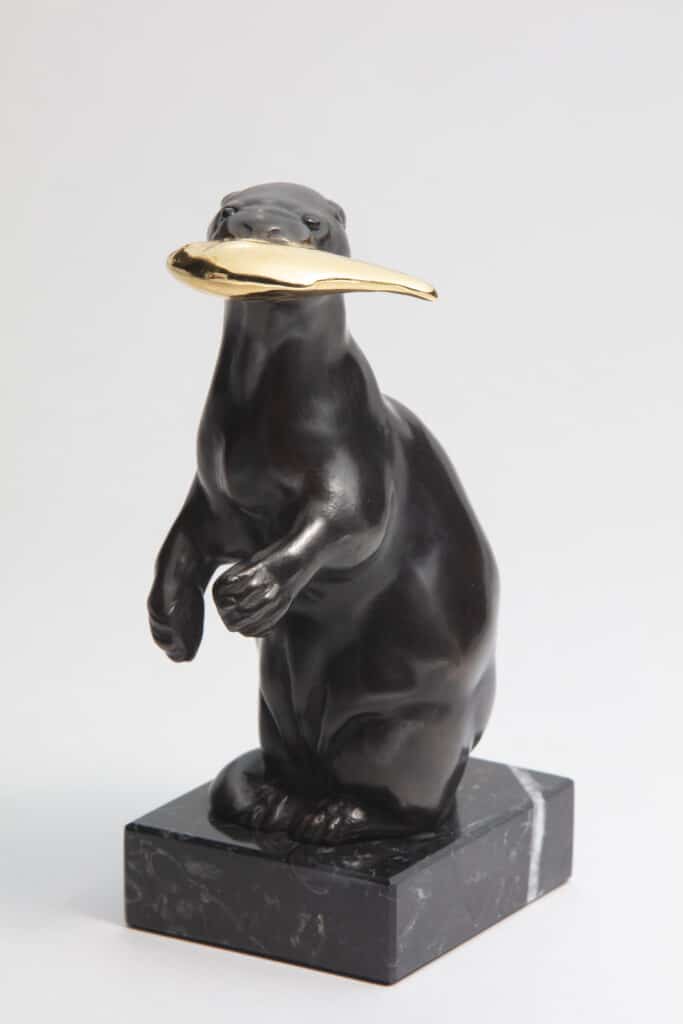
August Gaul (1869-1921), Otter with fish, 1902, bronze, gold, 22 x 9 x 12 cm, Frankfurt, Giersch Collection, Photo: Uwe Dettmar
The exhibition extends across almost all rooms of the Liebieghaus and creates dialogs that bridge time and material: Ancient animal idols from Egypt meet Gaul's bronze monkeys, mythical chimeras from the Greek world mirror his silent donkeys and ducks. The larger-than-life eagle, originally created for the Kaiser Wilhelm National Monument, is particularly impressive in the museum garden. But instead of being enthroned heroically, it lands - heavy, elegant, alive. Gaul's revolution is evident here: the animal not as a symbol, but as a subject.
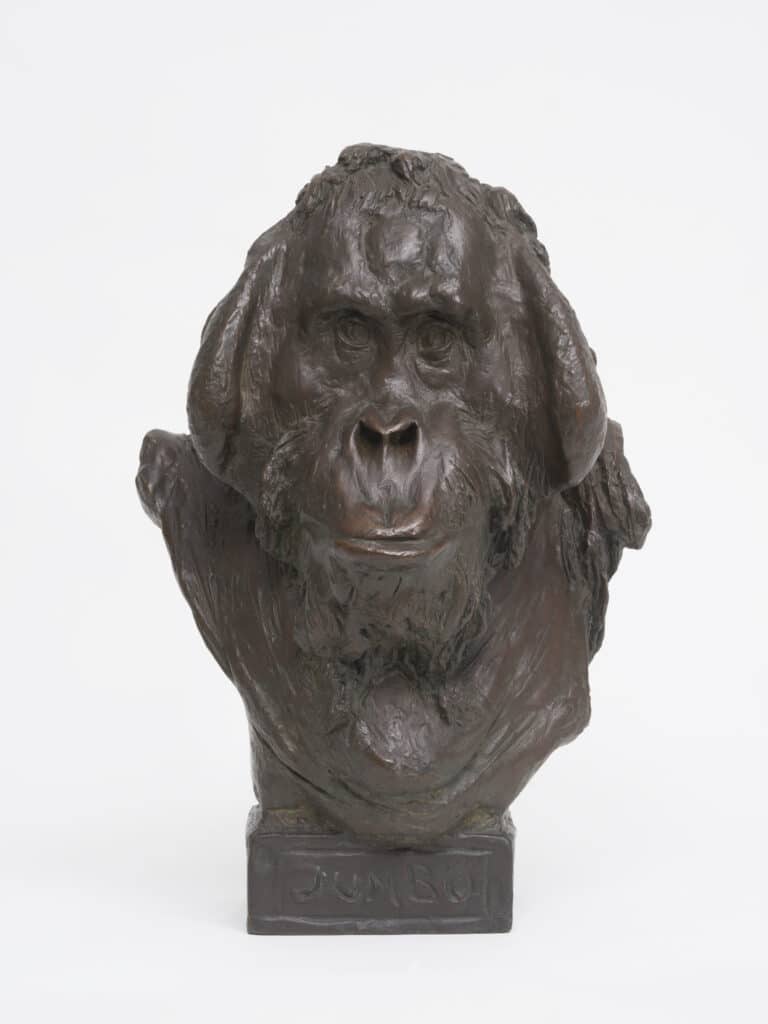
August Gaul (1869-1921), Orangutan head 'Jumbo', 1895, bronze, 53.7 x 35.5 x 31 cm, Museum der bildenden Künste Leipzig
The important private collection of Carlo Giersch will be presented for the first time, supplemented by loans from Berlin, Hamburg, Hanau and Leipzig. This abundance reveals Gaul's astonishing range - between scientific precision and poetic reduction. His orangutan head "Jumbo" (1895), for example, is juxtaposed in the Liebieghaus with a portrait of the philosopher-emperor Marcus Aurelius - an astonishing dialog about thought, dignity and consciousness that seems to span millennia.
Gaul's art was closely linked to the new scientific discoveries of his time. Charles Darwin's theory of evolution, early behavioral research, but also the emerging animal psychology inspired him. His sculptures resonate with amazement at the closeness between humans and animals - a fascination that also found expression in popular culture around 1900: in Kipling's Jungle Book or in Margarete Steiff's teddy bear.
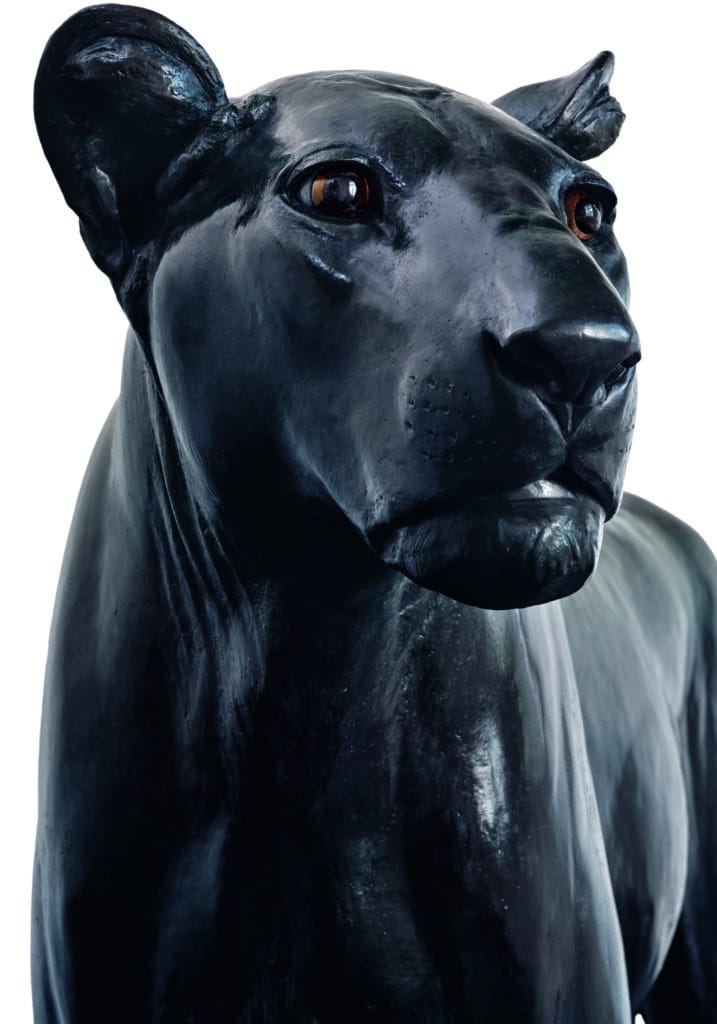
August Gaul (1869-1921), Standing Lioness, 1899-1900 (detail view), bronze, 115 x 195 x 50 cm, Photo: Liebieghaus Skulpturensammlung - Norbert Miguletz
The exhibition ends with a look at the present. A media installation brings together animal images from social networks - selfies with dogs, cat videos, exotic wild animals as digital stars. This shows the extent to which the question of the relationship between humans and animals continues to have an impact today.
"Gaul's sculptures combine tenderness with strict clarity," says curator Vinzenz Brinkmann. In fact, a quiet dignity seems to reside in each of his figures - as if the animal were looking at us and not the other way around. The Liebieghaus makes it possible to experience that Gaul's work is far more than just a depiction of animals: it is an early manifesto of modern empathy.
November 13, 2025 to May 3, 2026
https://liebieghaus.de
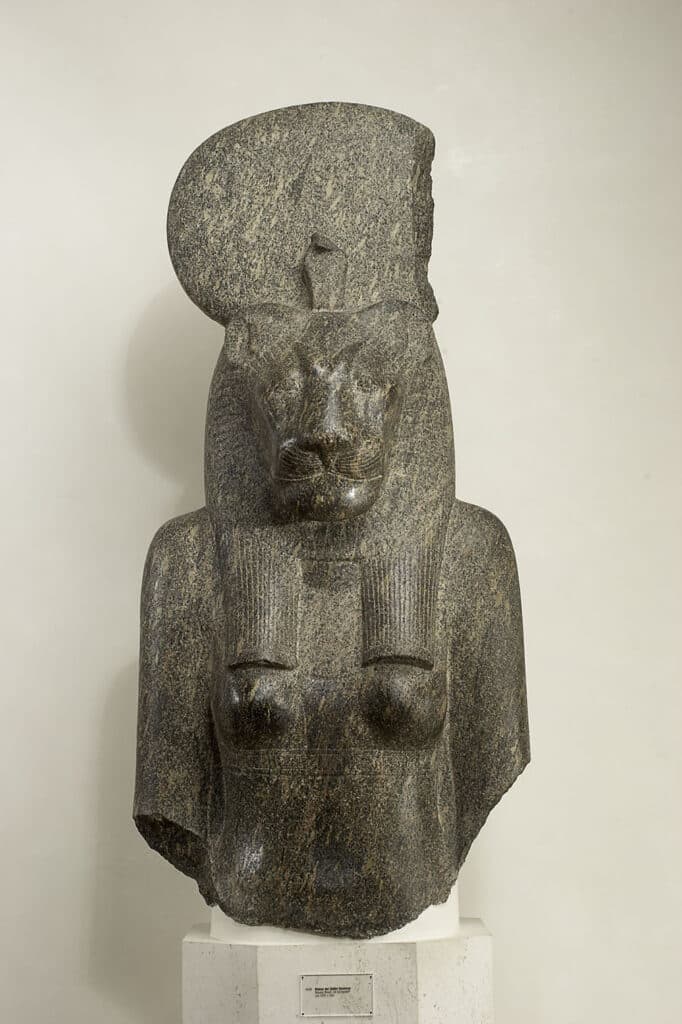
Statue of the goddess Sakhmet, Egypt, New Kingdom, 18th Dynasty, c. 1375 BC
Granite, height 112 cm, Liebieghaus Skulpturensammlung, Frankfurt am Mai