The exhibition "Mapping the 60s" is based on the idea that key socio-political movements of the 21st century have their roots in the 1960s. Black Lives Matter or #MeToo, for example, are based on the anti-racist and feminist uprisings of the time, and the current discussions about war, mediatization and mechanization, consumerism and capitalism are no different.
The developments of the 1960s in general and the events around 1968 in particular are not only paradigmatic in social and political terms, they are also of central importance in terms of cultural policy. In 1962, the Museum of the 20th Century was founded in Vienna as the forerunner of the mumok, whose collection focuses on the artistic movements of the 1960s - Pop Art, Nouveau Réalisme, Fluxus, Viennese Actionism, Performance Art, Conceptual Art and Minimal Art. And even if we ask ourselves in what form we can reappraise art history today and make it productive, we also come across debates that go back to this period.
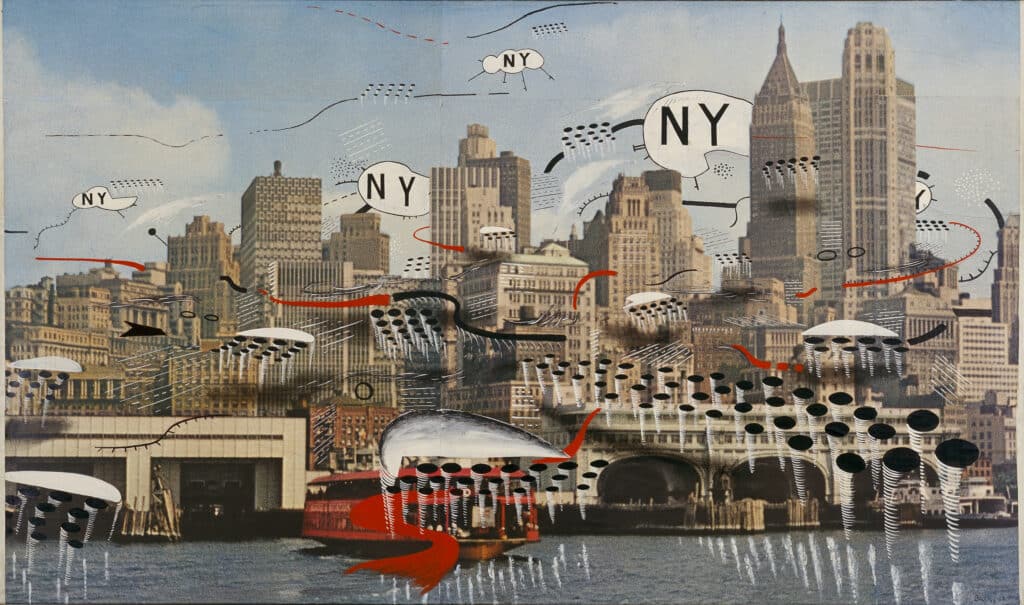
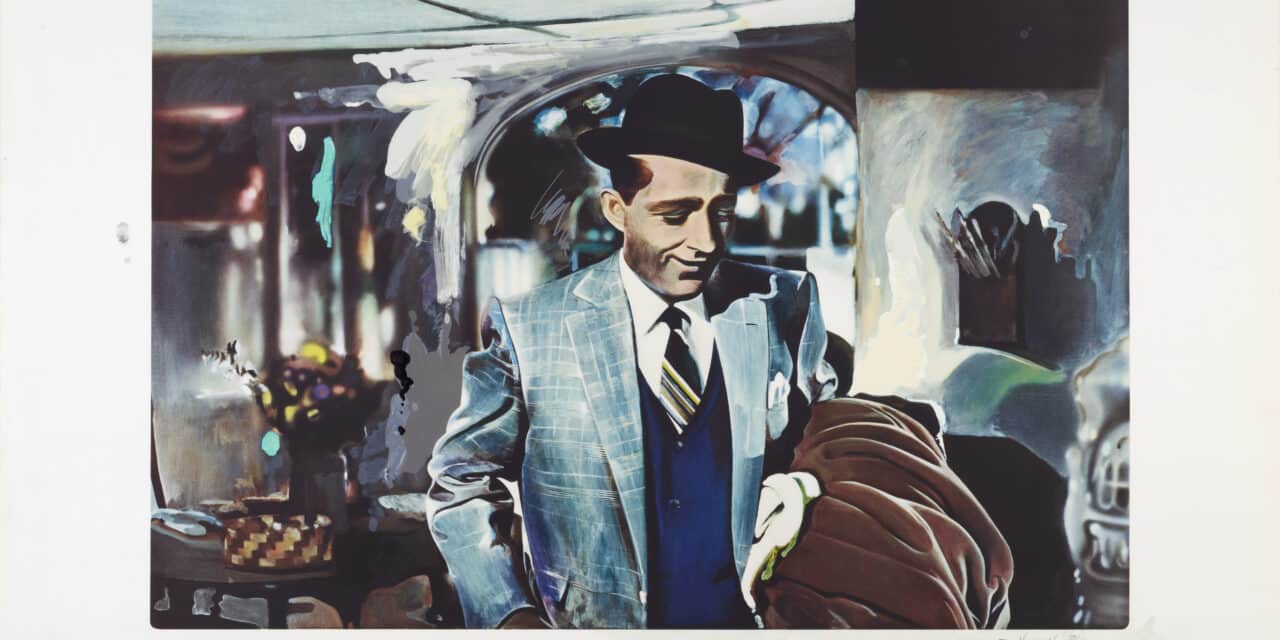
Peter Brüning, NY, NY, NY, NY, NY No. 22/67, 1967, 165 cm x 280 cm, Overpainted offset poster, mounted on canvas © mumok - Museum moderner Kunst Stiftung Ludwig Wien, on loan from the Austrian Ludwig Foundation, since 1981, Bildrecht, Vienna 2024
Parallel to the socio-political upheavals of this decade, theorists such as Michel Foucault and Jacques Derrida developed a new understanding of history, historical knowledge and historicity. Models of linearity and unbroken progression had become obsolete and it was recognized that historical artworks and concepts could not be transferred to the present without reservation or reflection. Following these insights, Mapping the 60s attempts a selective cartography of the 1960s: away from a linear model of history and towards a concentration on specific discursive nodes and networks of relationships. The result is a deliberately fragmentary presentation of historical regularities, interdependencies and connections between individual events, artists and works.
July 5, 2024 to February 1, 2026