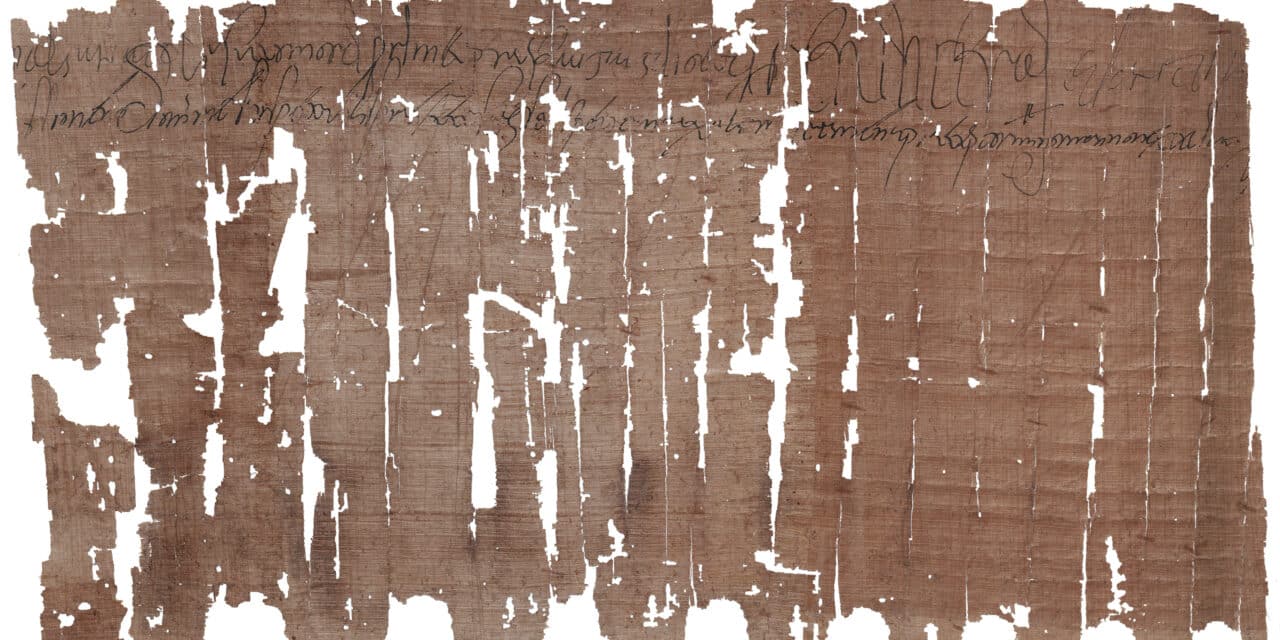
Language is power. It structures our perceptions, determines affiliation and sets boundaries. Ludwig Wittgenstein already recognized: "The limits of my language mean the limits of my world." The special exhibition at the Papyrus Museum of the Austrian National Library impressively demonstrates how topical this insight is: "The power of words. Rule and cultural diversity in ancient Egypt".
More than 90 exhibits - fragile originals on papyrus, parchment and paper - shed light on the linguistic diversity of Egypt from around 1500 B.C. to 1000 A.D. During this long period, different languages overlapped: Egyptian and Greek, Latin, Coptic and Arabic. They coexisted, displaced each other, merged anew - and created a cultural landscape characterized by multilingualism and hybridity. This is particularly evident in the tension between rulers and ruled. While Alexander the Great and the Ptolemies made Greek the language of administration, the population continued to communicate in Egyptian. Under the Romans, Latin was added, but remained limited to the military and political elite. Arabic later replaced Greek, while Coptic continued to be used in religious contexts. The documents in the exhibition - letters from rulers, petitions, legal documents - show how communication took place across language barriers and how language ensured political legitimacy.
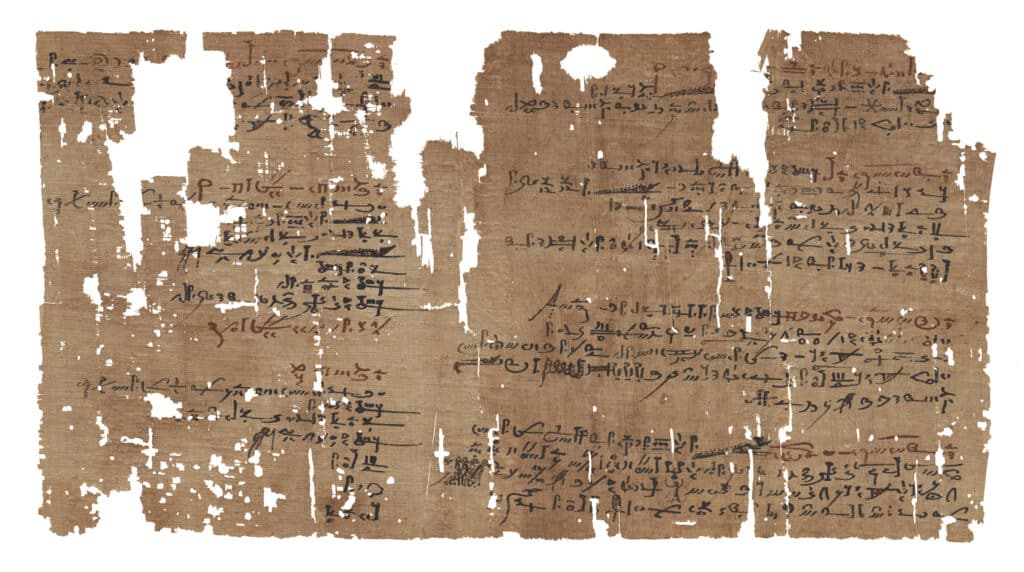
Greek Demotic marriage contract, D 10099b - Demotic, Greek - Soknopaiu Nesos, March 8, 142 BC - Papyrus © Austrian National Library
But language was not just a tool of power. It was also a carrier of identity and belief. Magical amulets, magic formulas and religious manuscripts show how words were understood as having healing or protective powers. The texts of the book religions of Judaism, Christianity and Islam also reflect the struggle for the unadulterated transmission of the divine word.
The exhibition draws parallels to the present day: multi-ethnic, multilingual societies are not a modern phenomenon. Even in ancient Egypt, they determined everyday life and culture. Anyone reading the papyrus fragments will recognize in them not only evidence of past times, but also reflections of our own present - shaped by migration, cultural exchange and the question of how language shapes power structures.
"The Power of Words" is therefore more than just a historical exhibition. It is an invitation to reflect on language as the basis of identity, domination and understanding - and to discover how timeless this topic is.
June 12, 2025 to May 3, 2026
www.onb.ac.at
You are currently viewing a placeholder content from Vimeo. To access the actual content, click the button below. Please note that doing so will share data with third-party providers.