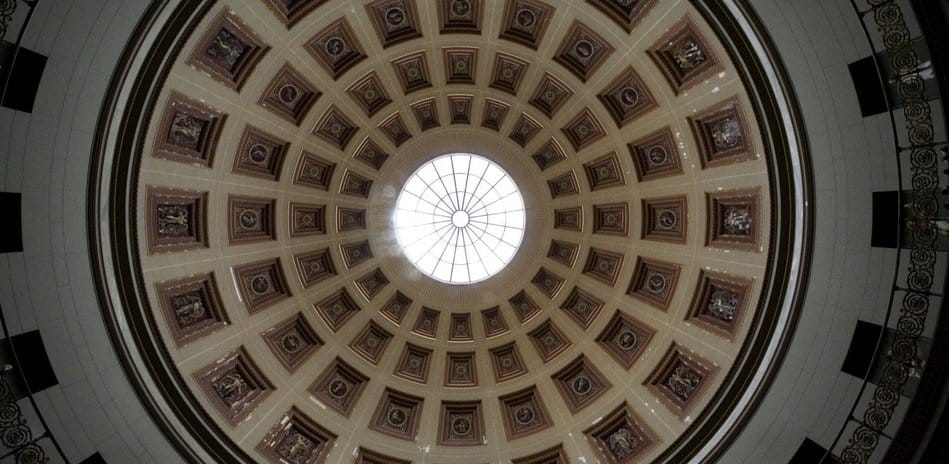
Today, a visit to the Museum Island is a must for many visitors to Berlin. Since its opening in 1830, what was initially the Royal Museum quickly developed into a crowd-puller. However, the experience of visiting a museum back then was completely different to today. The special exhibition on the upper floor of the Altes Museum provides exciting insights into the beginnings of the museum and shows a selection of antiquities that were already on display in the first permanent exhibition in 1830.
The foundation stone for the museum designed by Karl Friedrich Schinkel in Berlin's Lustgarten was laid on July 9, 1825. Just five years later, on August 3, 1830, the first public museum in Berlin and Prussia was opened. The Altes Museum quickly developed into a crowd-puller and an important institution for basic archaeological research to this day.
The special exhibition sheds light not only on Schinkel's structural challenges and innovative solutions, but also on the social conditions and the original appearance of the exhibition rooms, which were destroyed during the Second World War. A large-scale model in the center of the exhibition gives an impression of Schinkel's original building, supported by rare illustrations and photographs from the 19th century.
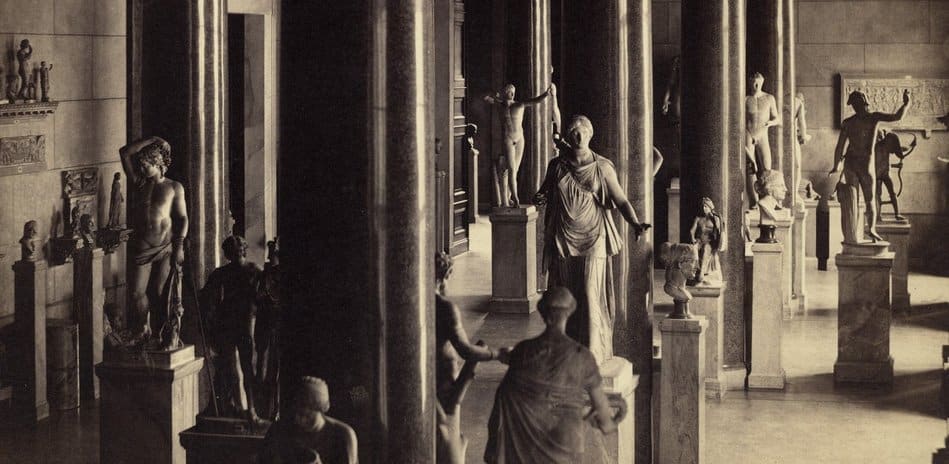
Historical photograph of the Collection of Classical Antiquities in the Altes Museum, with the statue of Artemis Colonna, ca. 1906/1907 Photo: Antikensammlung, Archiv
Schinkel's stroke of genius
The Altes Museum marks a turning point in the architectural history of public art buildings: For the first time, a building was designed specifically as an art museum. Schinkel's design shaped museum architecture for decades to come. Despite major technical and financial challenges - Prussian King Frederick William III demanded extreme economy - Schinkel found innovative, cost-effective solutions.
Looking to the future
The exhibition shows a cross-section of the artworks from the first presentation - sculptures, vases, bronzes, terracottas - and tells the story of a collection that continues to inspire today. At the same time, it asks about the future: how must the museum continue to develop in order to inspire future generations with ancient art?
July 10, 2025 to May 3, 2026