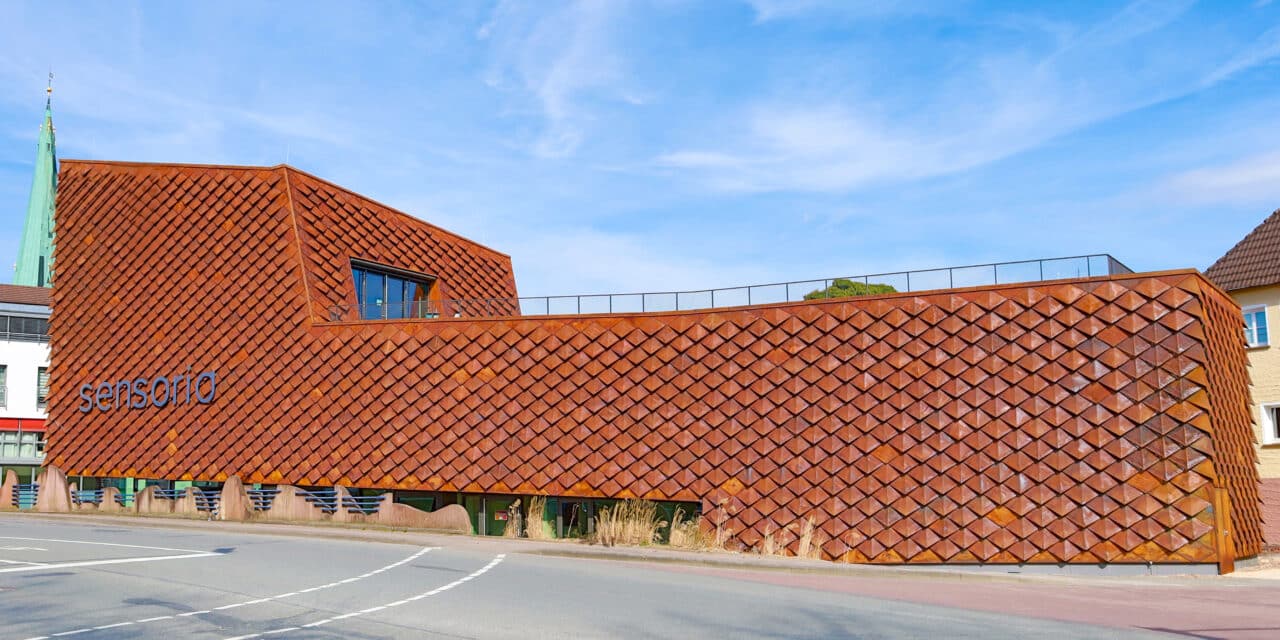
Smells are fleeting – yet they often shape memories more strongly than images or words. A hint of vanilla, the scent of freshly mown meadows or the aroma of exotic spices can evoke entire stories. Sensoria – House of Scents and Aromas is dedicated to precisely this invisible world. The interactive exhibition center in the Weserbergland region of Lower Saxony shows that smell and taste are much more than casual sensory impressions: they are cultural history, science, and emotion all at once.
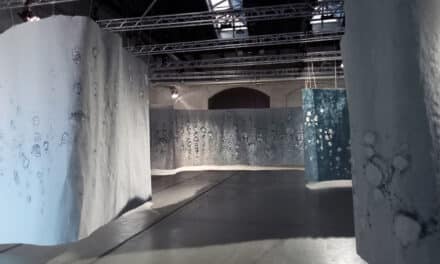
There are historical reasons why the small town of Holzminden became the center of this sensory expedition. As early as 1874, chemist Wilhelm Haarmann succeeded in synthesizing the aromatic substance vanillin for the first time. This discovery marked the beginning of an industry that continues to have a global influence to this day. Haarmann's research later developed into the company Haarmann & Reimer, while shortly afterwards another major player in fragrance and flavor production emerged in the form of Dragoco. Holzminden thus became the cradle of an industry that shapes our everyday lives – from perfume and toothpaste to the taste of vanilla biscuits. This is exactly where Sensoria comes in. Covering around 600 square meters and three floors, the museum guides visitors through ten themed areas in which up to sixty fragrances can be experienced. The tour begins with an immersive introduction: visitors enter a room of the senses where images, sounds, and smells merge. Suddenly, you seem to be standing in the middle of a lavender field, hearing the buzzing of insects and simultaneously perceiving the typical scent of the plants. Shortly afterwards, you are immersed in a forest landscape where the aroma of moss and earth fills the room. From there, the permanent exhibition leads to a "gallery of scents" where important and particularly precious fragrances are presented. At the same time, a journey through time opens up, taking visitors on a trip through the history of aromas – from spices in ancient times to fragrance cultures in ancient Egypt to global trade routes. A walk-in world map tells of the role that spices and essences have played over the centuries in economics, power, and enjoyment.
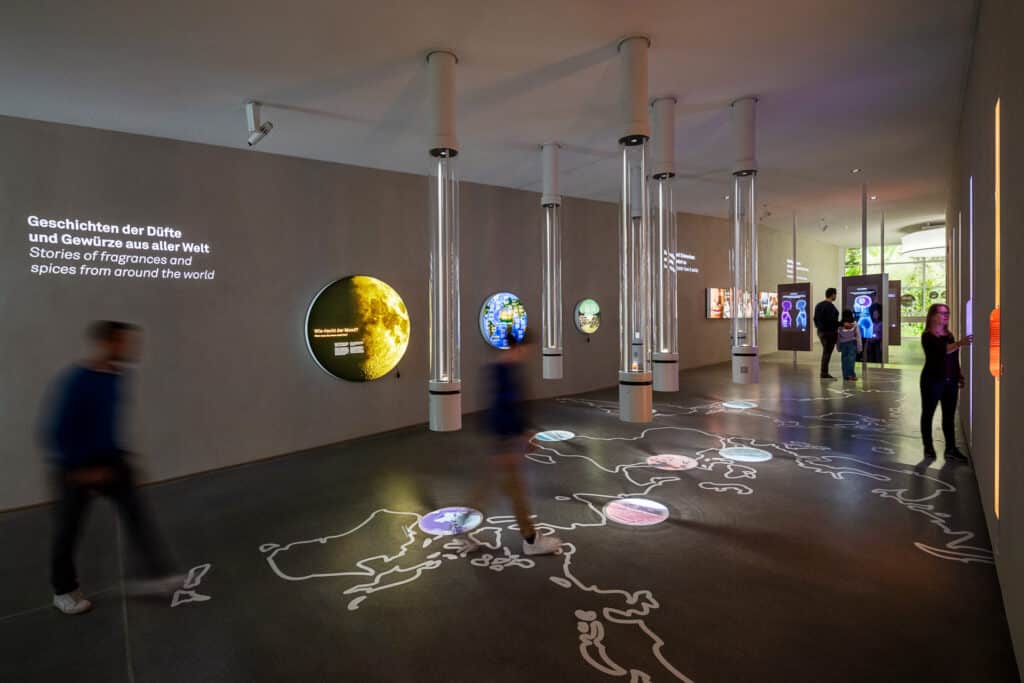
Sensoria – House of Scents and Aromas, view of the permanent exhibition © Juliane Hermann
In addition to this historical perspective, Sensoria also focuses on the science behind our sensory impressions. Interactive installations explain how smell and taste work in the human body and why certain aromas immediately evoke emotions. Mirrors begin to glow as you approach them, showing animated displays of the processes that take place in the brain when we perceive a scent.
But the museum doesn't stop at theory. Interactive stations reveal how much scents and aromas permeate our everyday lives. A supermarket shelf, for example, reveals surprising details about ingredients and flavorings via barcode scanning, while digital installations provide insights into cultural eating habits – from kosher to halal food traditions.
The exhibition concludes with the "Laboratory of Scents," a tribute to the work of perfumers. Here, guests can get creative themselves at a digital scent organ and compose their own fragrance—a personal olfactory calling card that can even be produced in the museum shop.
It comes as no surprise that this concept is attracting international attention. Sensoria has been nominated for the prestigious European Museum of the Year Award 2026 – an award that recognizes innovative museum projects in Europe.
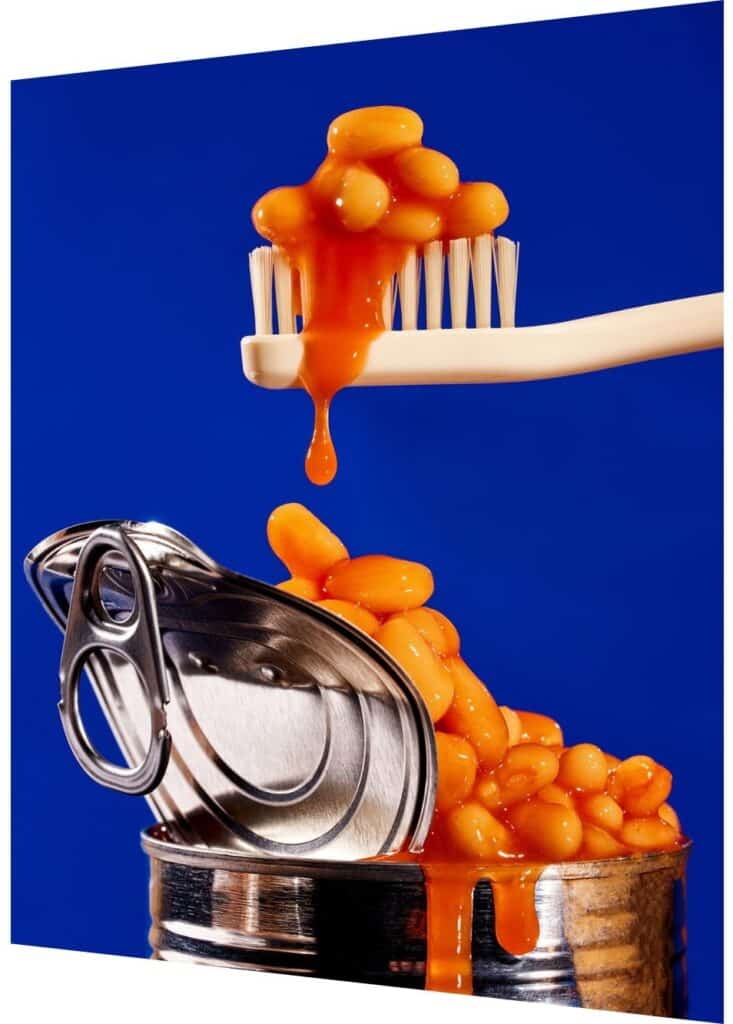
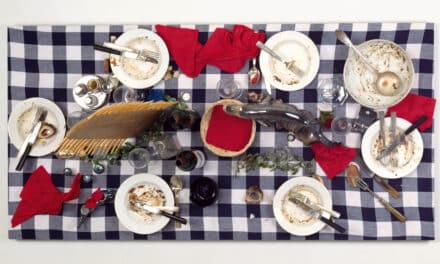
Special exhibition "Hungry Eyes – smell, hear, feel," © Ellis Parrinder
"Hungry Eyes – smell, hear, feel"
A special highlight in 2026 will be the special exhibition "Hungry Eyes – smell, hear, feel," which transforms photography into a multisensory experience. The focus will be on works by British photographer Ellis Parrinder, who is internationally renowned for his precise and humorous food photography. Parrinder has been working for brand manufacturers and publications worldwide for more than two decades. His images are characterized by clear graphic design, bold colors, and surprising perspectives. Food appears not only as appetizing objects, but as aesthetic statements – sometimes ironic, sometimes sensual, always visually impressive.
In Sensoria, however, these photographs are not simply hung on the wall. Instead, the museum expands the medium of photography to include additional sensory impressions. One image is accompanied by a matching scent, another by sound or haptic elements. In this way, a motif can not only be viewed, but also "experienced" in a sense. Visitors hear the crack of a fruit, smell the aromatic notes of a spice, or feel the surface of a food. This creates an unusual combination of art, perception research, and food culture.
The exhibition highlights how closely visual representation and sensory experience are linked. It shows that food photography has long been more than just decorative illustration. Rather, it reflects social ideas of enjoyment, aesthetics, and consumption. Parrinder's works deliberately draw on the tradition of classical still life—only to break with it at the same time with contemporary humor and modern visual language. "Hungry Eyes" is accompanied by workshops, discussion formats, and culinary evenings that bring together photography, cuisine, and creative practice. In this way, the exhibition itself becomes a stage for experiments with perception and taste. Sensoria thus impressively demonstrates how a museum can go beyond classic forms of presentation. Visitors walking through the rooms not only discover the world of scents and aromas, but also rediscover their own senses.
April 25 to October 31, 2026
www.sensoria-holzminden.de
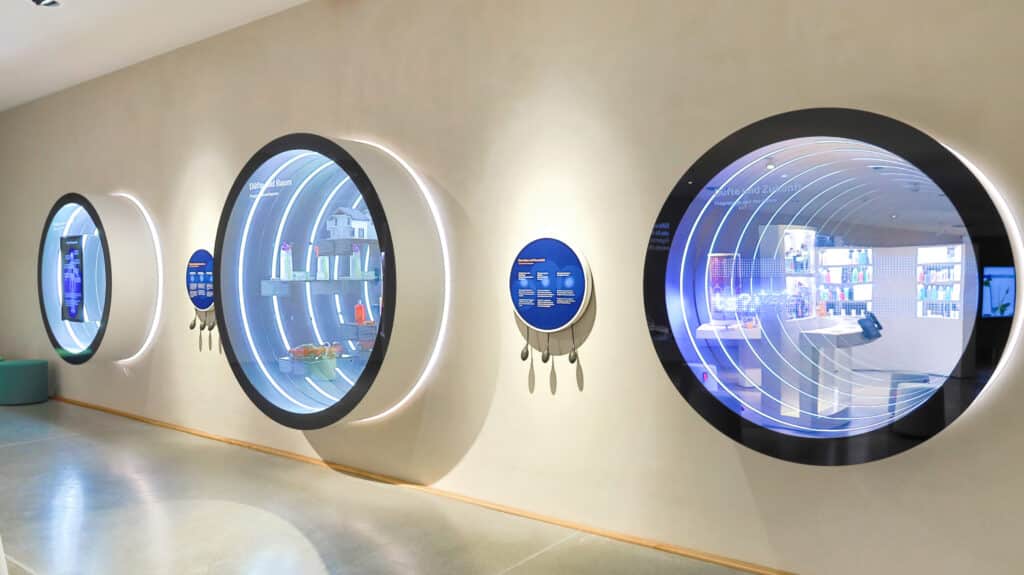
Sensoria – House of Fragrances and Aromas, "What the future holds!" © Sensoria Holzminden