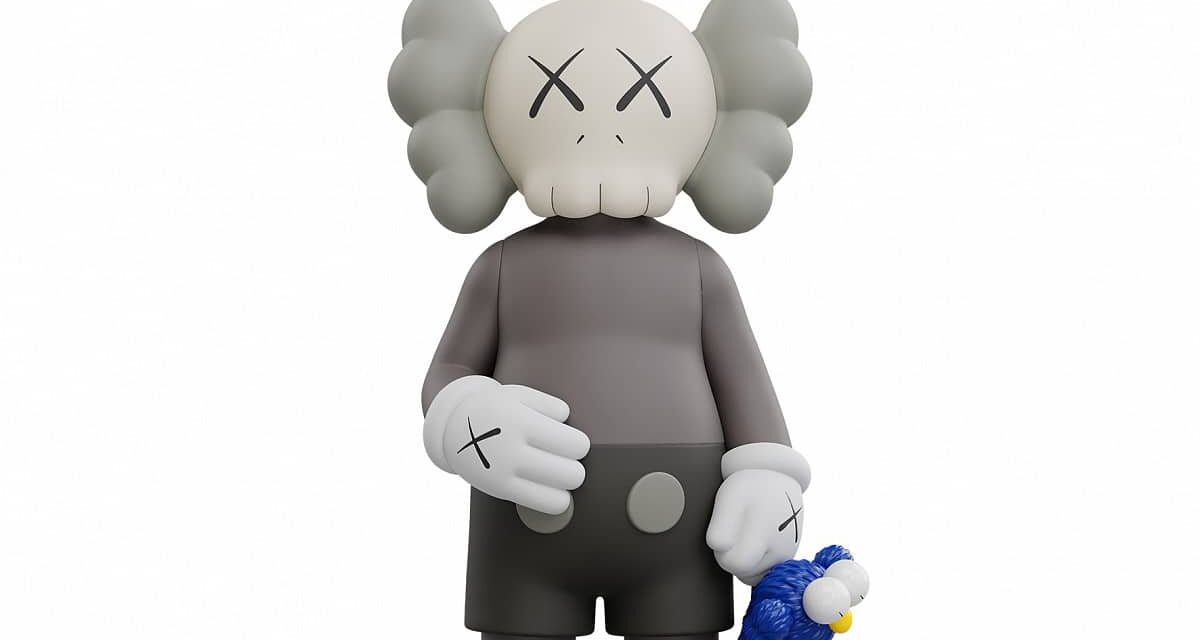
KAWS. Art & Comic examines the interaction between comics, picture stories, cartoons and art. The exhibition places the US-American artist KAWS in a dialogue with selected contemporary positions and emphasizes the artistic autonomy of his characters, which combine street, pop, commercial and public art.
Comics bear the hallmarks of a universal language and exist in many cultures as a catchy way of telling stories graphically, in words and images. As visual artists, Jean-Michel Basquiat, Ad Reinhardt and Kerry James Marshall created almost classic comics. Even before the invention of the camera and (animated) film, caricature, satire and a frame-based narrative in frames were an attractive way of conveying stories: cross-border and transnational, they appeal to all age groups and social classes.
From the 1960s onwards, artists such as Roy Lichtenstein, Claes Oldenburg and Keith Haring radically questioned the boundary between high and low art. Prominent positions in contemporary art range from KAWS and Joyce Pensato to Nicole Eisenman and Peter Saul.
KAWS, who worked as a graffiti artist in the 1990s, painted over posters and advertisements in public spaces by adding his typical markings, crossed eyes, to the faces on posters. He is particularly well known for his oversized sculptures made of bronze, wood or inflatable material. He shows his COMPANIONS and ACCOMPLICEs self-confident, shy or sad - sometimes embracing, sometimes with their hands in front of their faces. They often appear isolated and melancholy, at other times they appear as a group or family.
Comic characters are a recurring theme throughout the exhibition and can be found in the work of a current generation of artists—for example, in Katherine Bernhardt's Pink Panther paintings, Magdalena Suarez Frimkess' ceramic figures, and Isolde Maria Joham's paintings inspired by Asian manga culture. Artists not only use the world of comics as a reference—they also examine the characters and their psychological dispositions in terms of appearance, physiognomy, gestures, and movement.
April 3, 2026, to September 27, 2026