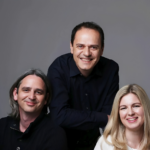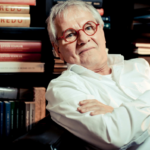
Art from 30 years by Titus Lerner and Franz Politzer spans the current exhibition entitled "Der geteilte Raum" (The Divided Space) at the schäfer + schlehwein gallery. Two artists who could hardly be more different share a space and create the special atmosphere of this double exhibition at the gallery in ART SPACE stift millstatt. Together. In dialogue, as in the demarcation of their art. Franz Politzer shows oil paintings, Titus Lerner sculptures: bronzes and terracottas.
Both are masters of their craft and have exhibited together on numerous occasions. What one leaves out, the other addresses. This may be where the strength of their connection lies. Franz Politzer's finely chiseled landscape paintings consistently dispense with the presence of humans, while Titus Lerner's terracotta and bronze sculptures unambiguously express the complex inner nature of humans without the space surrounding his sculptures playing any role. Together, they form an almost classical ensemble. Not out of step with the times, but timeless in what drives them and what their art depicts. Questions about the deepest meaning of nature—whether human or landscape—are raised: the viewer's gaze is captivated by the complexity created by various mental, conceptual, and creative levels, as well as by the emotional message that characterizes their works. Both artists use forms of representation that leave open the question of the extent to which something is being revealed or fictionalized.
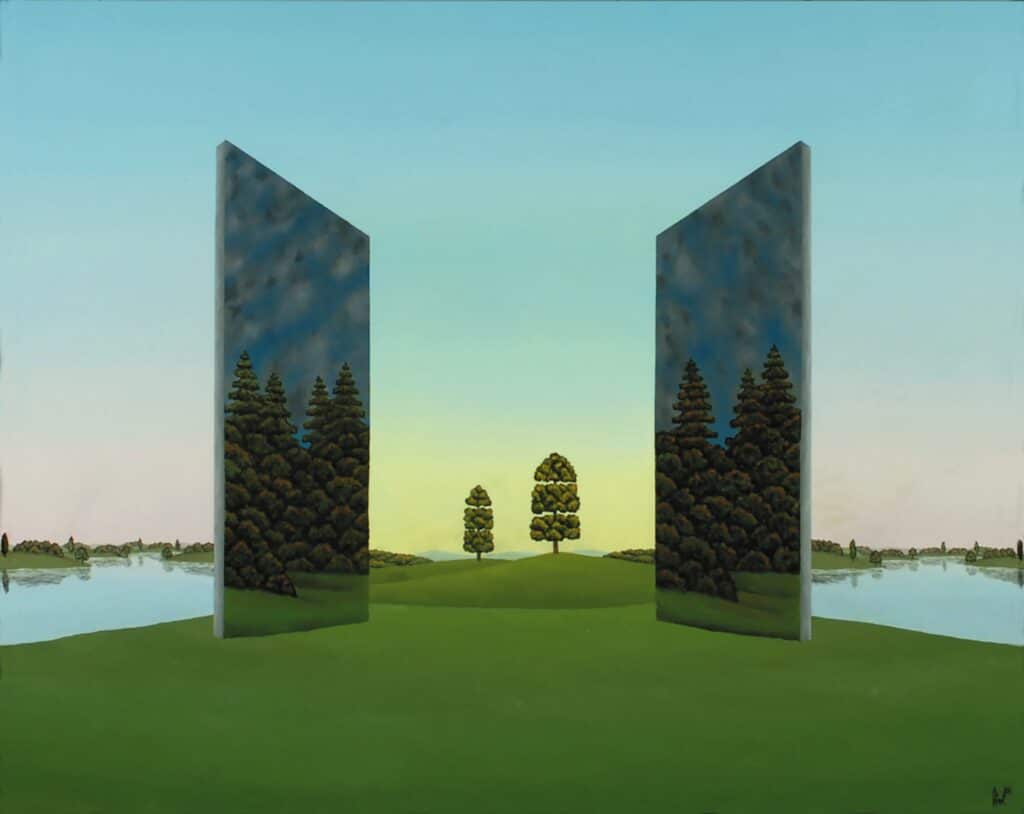
Franz Politzer, The Emphasized Center, 2024, oil painting © schaefer-schlehwein
The legendary light in Franz Politzer's oil paintings, the timelessly vivid skies with their iridescent colors, which, depending on the angle of view, reveal a different dynamic in the flow of the air layers, reinforce the sense of an invisible, darker counterpart. For all that remains of humankind are fragments of buildings as relics and memorials in a natural landscape that is powerfully renewing and reshaping itself. But appearances are deceptive. The beauty of nature in the Anthropocene is not an end in itself—rather, it is a thought-provoking aberration. At second glance, the smooth, razor-sharp aesthetics become a picture puzzle that conceals possible abysses.
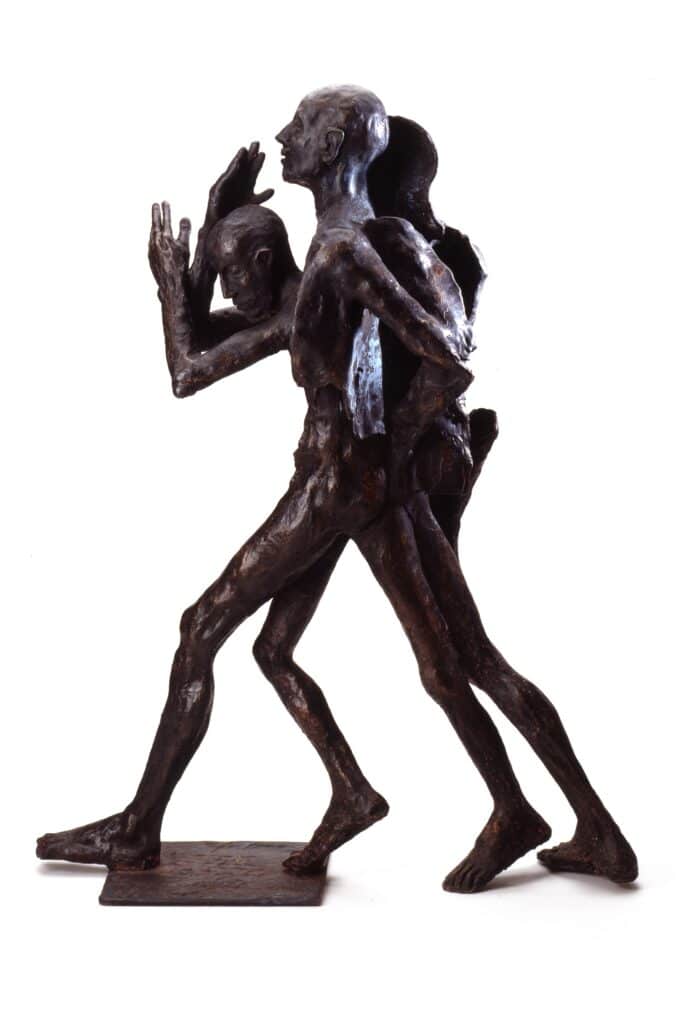
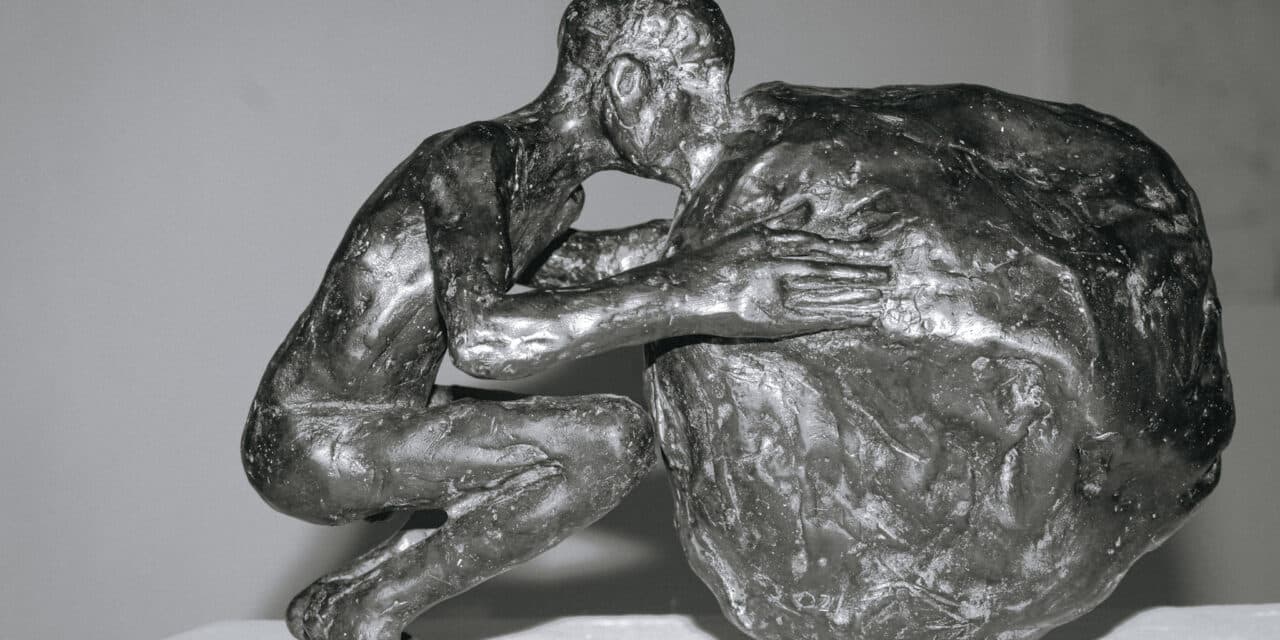
Titus Lerner, Series Moults, bronze © schaefer-schlehwein, 2026
The exploration of the human form and its inner nature is a recurring theme in the work of Titus Lerner. The gloominess of his bronze sculptures carries with it the notion of redemption as another possible state of being for humans. Although this is never depicted, it provides a balancing contrast and is always implicitly present. Titus Lerner comes closest to states of calm and a lighter atmosphere in his series of molting, in which moments of pause are depicted alongside anger and injury. But here, too, the existential search for being and destiny, for possibility and becoming of the human physique and psyche, is a guiding theme. Lerner's sculptures captivate everyone, reflecting the human nature to which we are thrown back in our humanity. Without light there is no darkness, without despair there is no hope.
Opening: March 27, 6 p.m.
Exhibition dates: March 28 to May 2, 2026
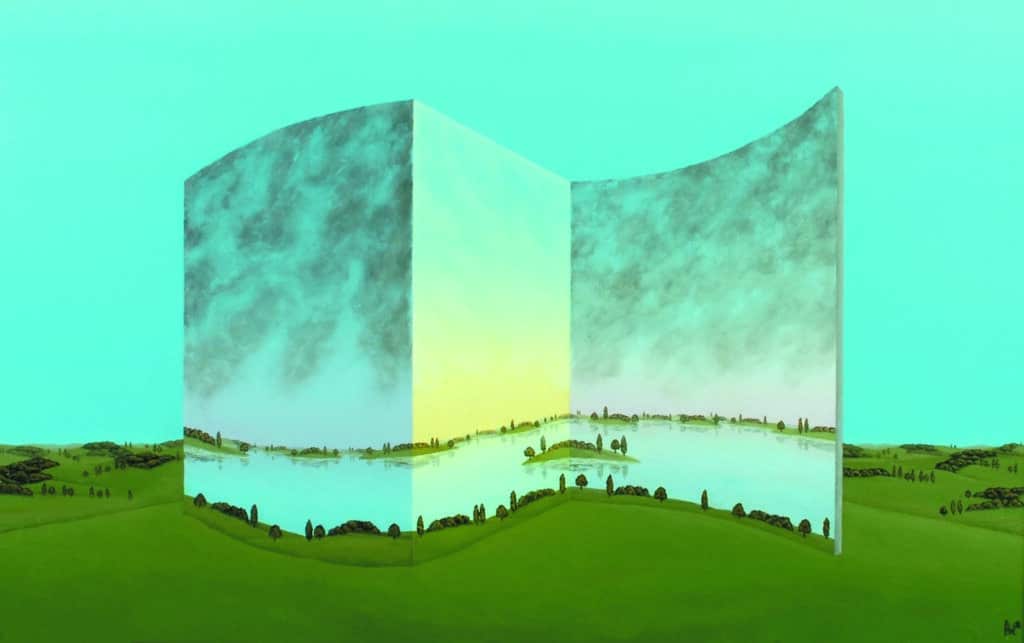
Franz Politzer, The Folded Lake, 2018, oil painting © schaefer-schlehwein, 2026