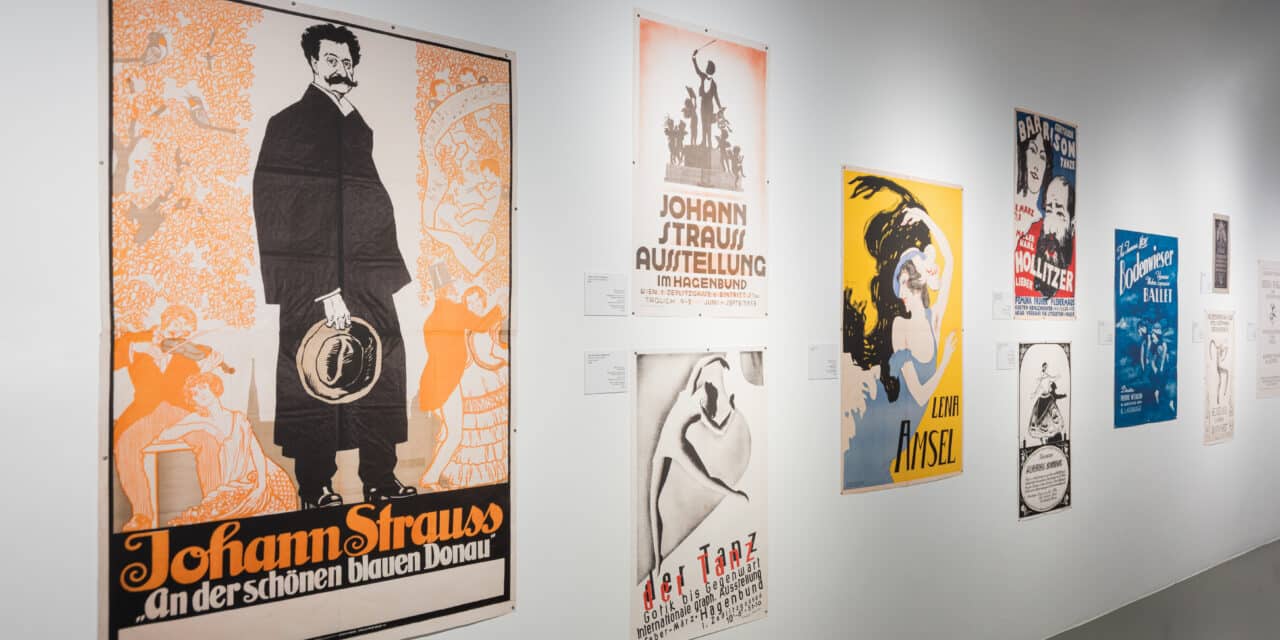
On the occasion of the 200th birthday of Johann Strauss (1825-1899), the MAK Vienna takes a surprisingly contemporary look at the musical legacy of the "Waltz King".
The poster exhibition "Johann Strauss: Intoxication and Ecstasy. Feminist Expressive Dance in Posters 1900-1933" is dedicated to the hitherto little-examined connection between Strauss' music and the emergence of expressionist dance - an artistic movement that found a powerful stage at the beginning of the 20th century, particularly in Vienna.
Over 40 historical posters from the MAK collection bring to life an era in which young dancers liberated themselves from the rigid forms of ballet and the social conventions of the Belle Époque. Inspired by the dynamics of the waltz, artists such as Gertrud Bodenwieser, Grete, Elsa and Berta Wiesenthal, Anny Day-Helveg, Maria Ley and Gertrude Barrison developed a new language of the body: free, expressive, emotional. The body became the medium of a modern aesthetic that set itself apart from both the classical music tradition and patriarchal notions of femininity.
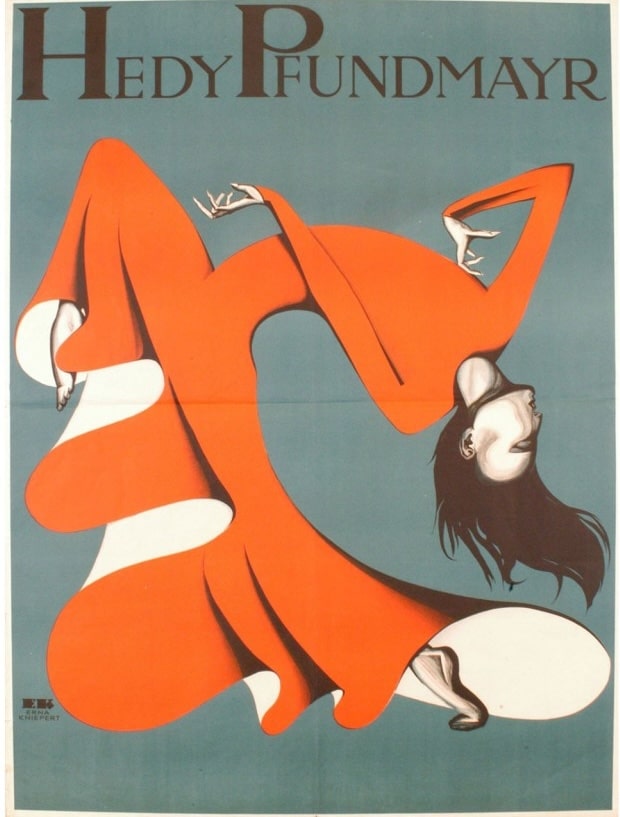
Erna Kniebert, Hedy Prundmayr, 1931, print J. Weiner, Vienna, lithograph © MAK
The posters in this exhibition are impressive testimony to the impact of dance as a means of female self-empowerment - both on stage and in public spaces. They not only show artistically designed advertising graphics for dance evenings, but also the visual strategy with which these pioneering women positioned themselves as artists: self-confident, provocative, forward-looking.
With this exhibition, the MAK builds a bridge between music, design and social movement. It reminds us that artistic expression is always also social expression - and that Johann Strauss, whose waltzes initially filled the ballroom, indirectly contributed to the unleashing of one of the most radical dance forms of the 20th century.
June 17 to November 2, 2025
www.mak.at
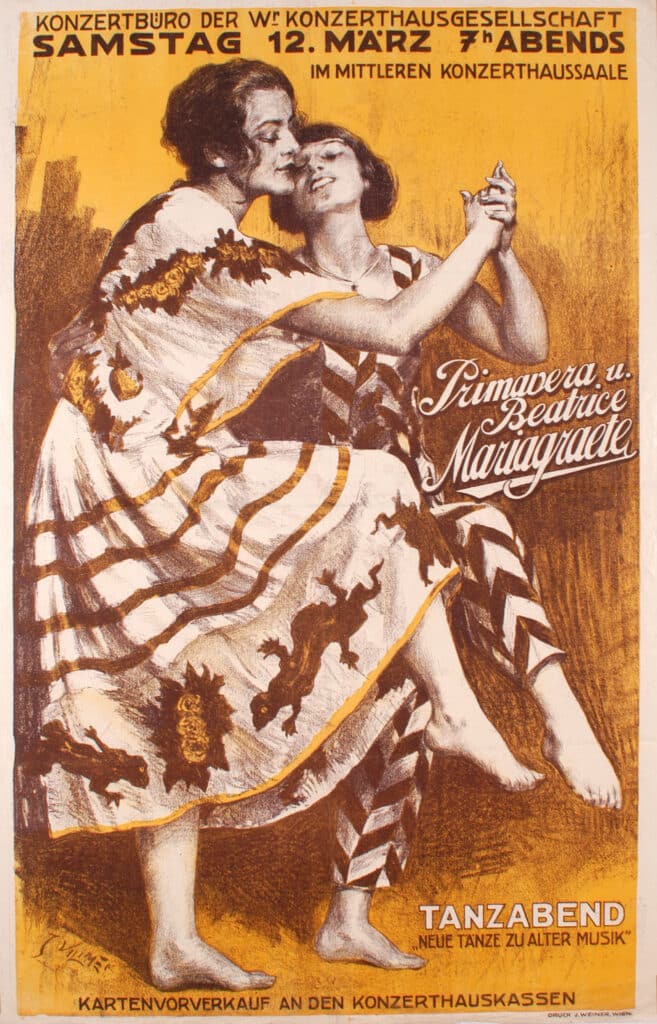
Jan Vilímek, Primavera and Beatrice Mariagraete, dance recital "New Dances to Old Music", 1921, commissioned by: Konzerthaus, Vienna, print: J. Weiner, Vienna, lithograph © MAK