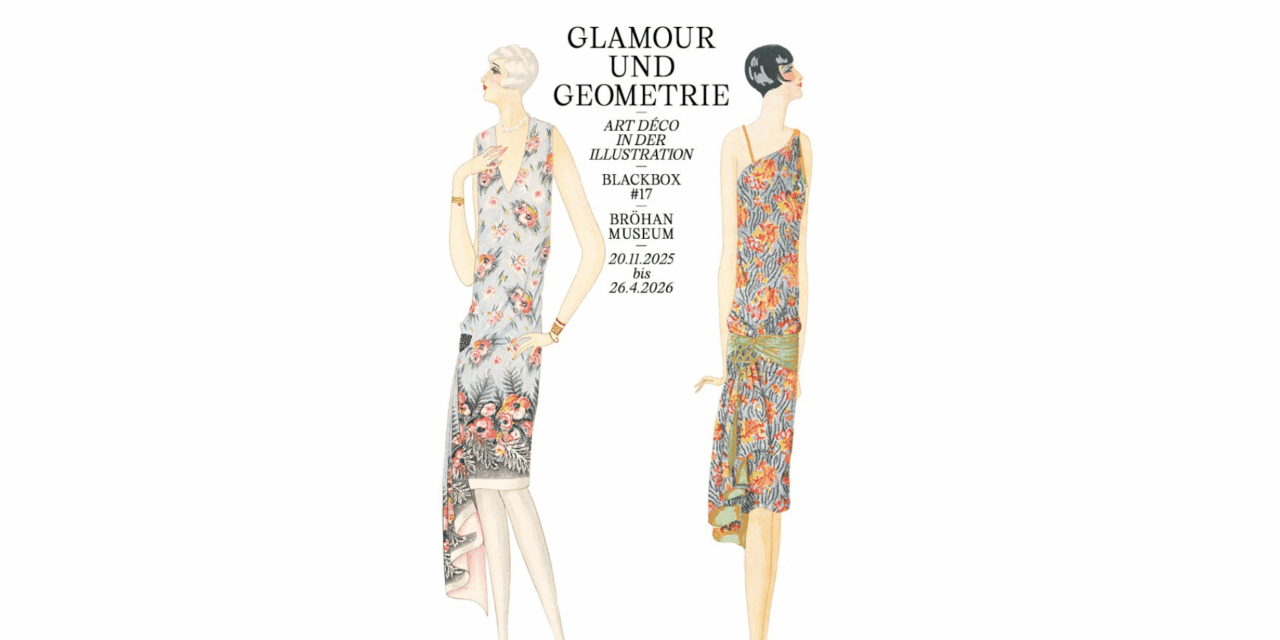
Paris, 1925: The "Exposition internationale des arts décoratifs et industriels modernes" celebrates the triumph of a new aesthetic. Around 15,000 exhibitors from 18 nations present what would later go down in design history as Art Deco at this world exhibition of decorative arts - a style whose name was only derived from the title of the show in retrospect.
100 years later, the Bröhan Museum is taking this anniversary as an opportunity to take another look at the eccentric and elegant design language of Art Deco: The style found a particularly dazzling stage in illustrations for magazines and advertising. These graphic testimonies had a decisive influence on the image of modernism - they made the luxury of the new era visible, multipliable and effective for the masses. Yet they were anything but trivial: fashion magazines of the time were small works of art, printed on fine paper and produced using the elaborate au pochoir process. In this technique, the ink is applied by hand using ink-soaked pads and fine stencils - a process that produces delicate, almost relief-like structures and intense, vibrant colors.
The process was perfectly suited to reproducing the designs of the great couturiers and couturières such as Paul Poiret, Jeanne Lanvin and Madeleine Vionnet without taking away any of their radiance. The renowned fashion houses also had extremely elaborate, often large-format luxury catalogs printed - in gold and silver on heavy laid cardboard. Such exquisite printed products contributed significantly to the glamor and opulent radiance of Art Deco. Alongside fashion, interior design became the preferred expression of style and individuality. The sumptuous furnishings of one's own four walls provided an opportunity to display wealth and refined taste.
The exhibition "Glamor and Geometry" is dedicated to these extraordinary printed products and provides a fascinating insight into the outstanding art of illustration during the Art Deco period. All the works on display come from the Lucius private collection in Stuttgart, which is being shown in Berlin for the first time with this presentation.
November 20, 2025 to April 26, 2026