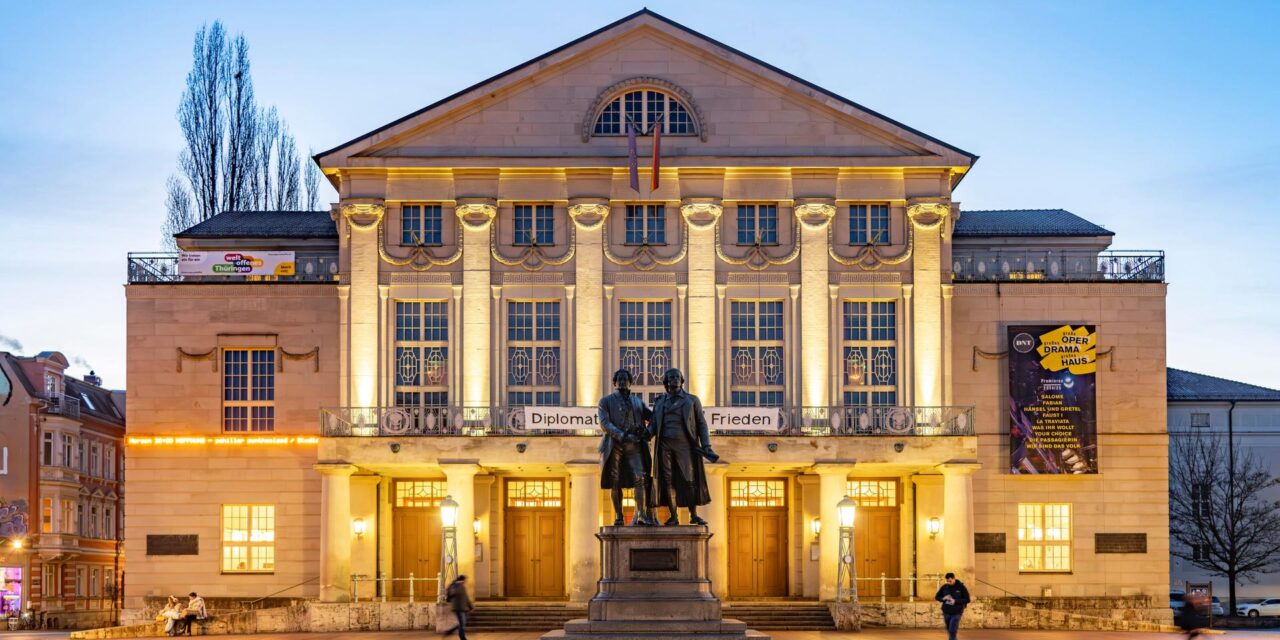
A place where literature, music and history collide: The Deutsches Nationaltheater Weimar combines over 230 years of cultural tradition with the present and at the same time bears witness to dramatic political and aesthetic epochs.
The picturesque Theaterplatz in Weimar is home to the Deutsches Nationaltheater Weimar, once a court theater under the direction of Johann Wolfgang von Goethe and later the stage for important literary and political events. In the 1790s, Goethe worked here with Friedrich Schiller on the renewal of drama, and the premieres of many classics marked the beginning of a new era of aesthetics.
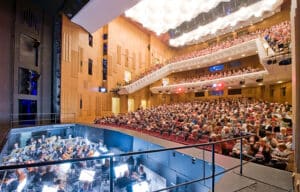
View into the auditorium of the "big house" - Deutsches Nationaltheater Weimar © 2006-2025 Weimar, European City of Culture
In 1907/08, the building was given its current neoclassical design with an imposing columned façade and galleries - an architectural symbol of the importance of the theater in the cultural city of Weimar. It is also politically significant: in 1919, the National Assembly met here and adopted the first German constitution - this historic moment made the theater a symbol of democracy and publicity. Throughout its history, the building has experienced highs and lows - wars, destruction, reconstruction - but it has always remained at the heart of Weimar culture. Today, the theater has several venues and a diverse ensemble for drama, musical theater and dance.
A visit to this house means not only enjoying artistic performances, but also encountering a place where cultural history was written - and continues to be written.