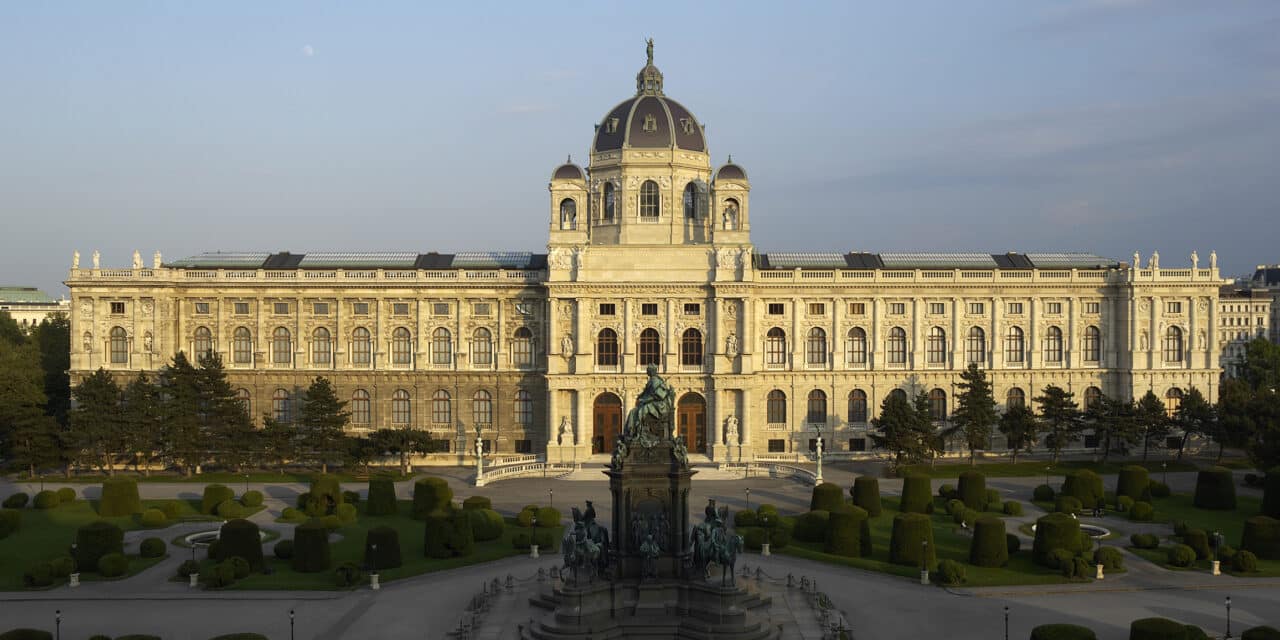
The Kunsthistorisches Museum is one of the largest and most important museums in the world. Its rich collections contain objects from seven millennia, from the time of Ancient Egypt to the end of the 18th century. Special emphasis is placed on Renaissance and Baroque art.
Opened in 1891, the neo-Renaissance building was designed by the architects Gottfried Semper and Karl von Hasenauer and is itself an architectural masterpiece. Together with the Weltmuseum Wien and the Theatermuseum, it forms the KHM-Museumsverband, the largest museum association in Austria.
The association is a scientific institution under public law with full legal capacity and is under the supervision of the Federal Chancellor of the Republic of Austria, which is exercised by the Federal Minister for Art, Culture, the Civil Service and Sport. With around 150 curators, conservators and restorers, it is one of the largest and most important non-university research institutions in Austria.
The Burgring is home to the Picture Gallery, the Kunstkammer Wien, the Collection of Classical Antiquities, the Egyptian-Oriental Collection and the Coin Cabinet. In addition, the collections of the Kunsthistorisches Museum are located in the Neue Hofburg (Collection of Ancient Musical Instruments, Court Hunting and Armory Chamber, Ephesus Museum), in the Hofburg (Imperial Treasury) and in Schönbrunn Palace (Imperial Carriage Museum Vienna).
With around 1.95 million visitors in 2024, the Kunsthistorisches Museum is the most visited federal museum in Austria, making it one of the country's most important cultural institutions. As a vibrant place of art and culture, the KHM plays a central role in communicating European art history and attracts an international audience every year.