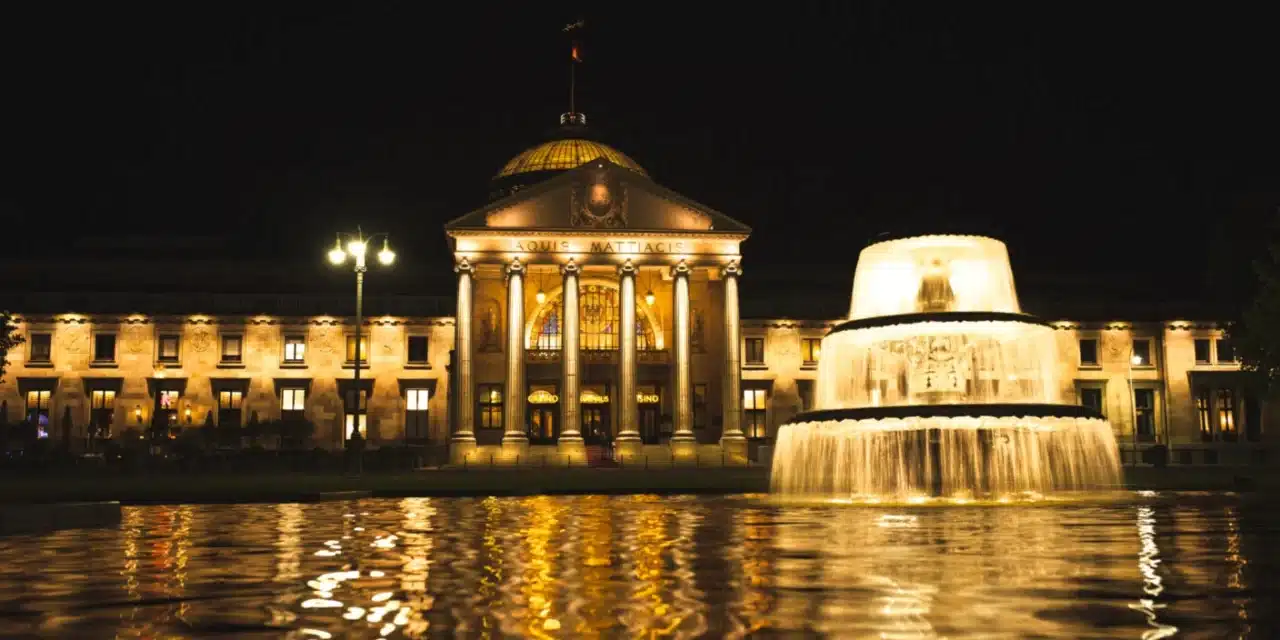
The Kurhaus Wiesbaden rises up in the center of the Hessian state capital. Kurhaus Wiesbaden rises up as an elegant symbol of the city's long spa tradition and social culture. The magnificent neoclassical ensemble—built on the site of an older "social club"—has been the historical and social center of Wiesbaden since its grand opening at the beginning of the 20th century.
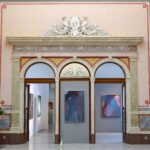
Architect Friedrich von Thiersch, known among other things for his work on the Reichstag building in Berlin, designed the Kurhaus in the representative style of the Belle Époque. It has always combined beauty and functionality: magnificently decorated halls and salons, a spacious foyer under an enormous dome, and artistically designed rooms such as the Muschelsaal (Shell Hall) reflect the opulence and social vibrancy of the world spa town at that time.
Throughout its history, the building has been renovated and restored several times—especially after the destruction of World War II—and since the 1980s, it has been restored to its original splendor with great attention to detail based on historical plans. Today, the Kurhaus is a lively venue for concerts, balls, conferences, and cultural events, as well as a popular meeting place for locals and visitors alike.
Directly adjacent is the extensive spa park—a green, landscaped recreational area—which, together with the classicist portico and the famous spa colonnade, the longest colonnade in Europe, forms a unique ensemble.
When you enter the Kurhaus, you are not only entering an architectural masterpiece, but also a place where history, culture, and social life can still be felt today.