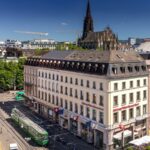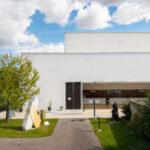
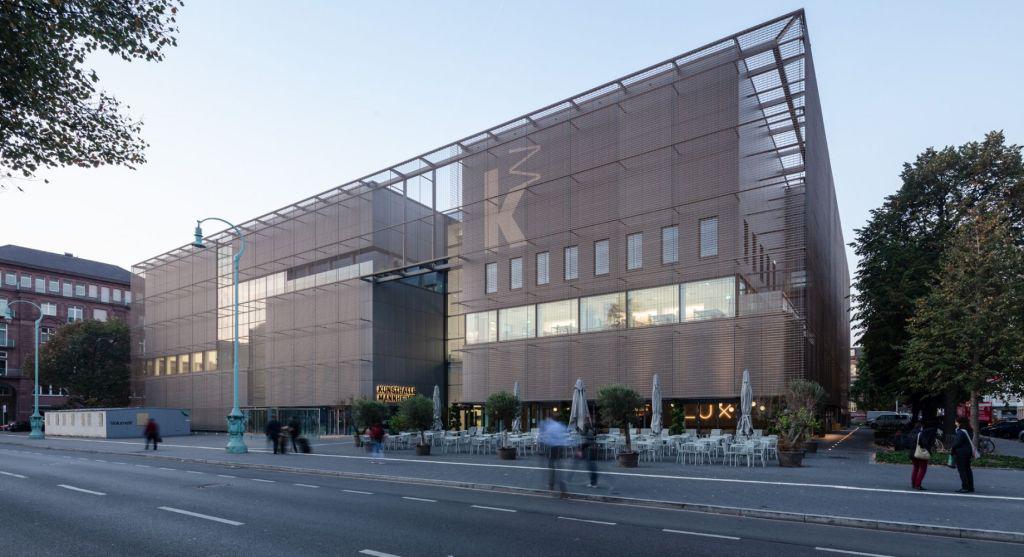
The Kunsthalle Mannheim - a powerful symbol of modernity and the present - rises up on the central Friedrichsplatz, where the art collection, architecture and city merge vividly.
The Kunsthalle Mannheim is one of Germany's pioneering art institutions. Its roots date back to 1907 and it has been shaping Mannheim's cultural landscape ever since with an impressive collection and an ambitious exhibition program. At its heart is a collection that ranges from Romanticism to Impressionism, Expressionism, New Objectivity and contemporary art: works by masters such as Édouard Manet, Vincent van Gogh, Max Beckmann and Francis Bacon bear witness to the museum's artistic aspirations. At the same time, the focus on sculpture and installation art has given the museum an unmistakable form.
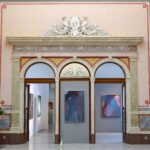
The architecture of the Kunsthalle is just as impressive as its content: the so-called "Hector-Bau" by architects von Gerkan, Marg & Partner was added to the historic Art Nouveau building from 1907. The modern new building with its glass roof, open room structures and spacious exhibition halls stands for the vision of a "city within the city".
Visits here become sensory experiences: Light and spatial design, exhibition dynamics and works of art merge into a journey through color, form and idea.
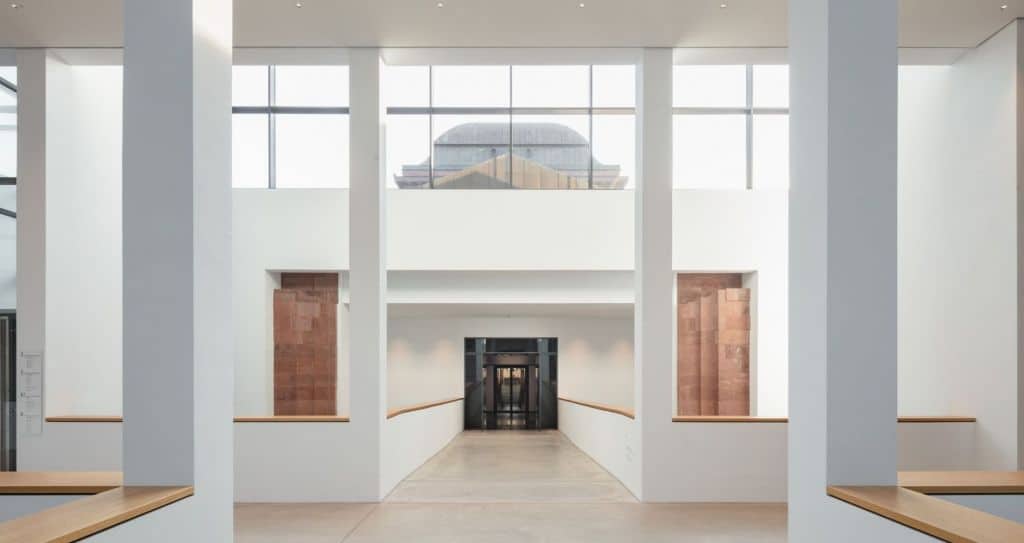
View inside the Kunsthalle Mannheim © HG Esch
Educational programs open the doors wide - families, school classes and art lovers of all ages are invited not only to look, but also to experience and think.
The Kunsthalle Mannheim is therefore not a place of silence in the sense of a backward-looking museum - it is a living space for dialogue, aesthetics and zeitgeist. Anyone who enters this building is immersed in a world that understands art as an expression of today and at the same time poses the questions of tomorrow.