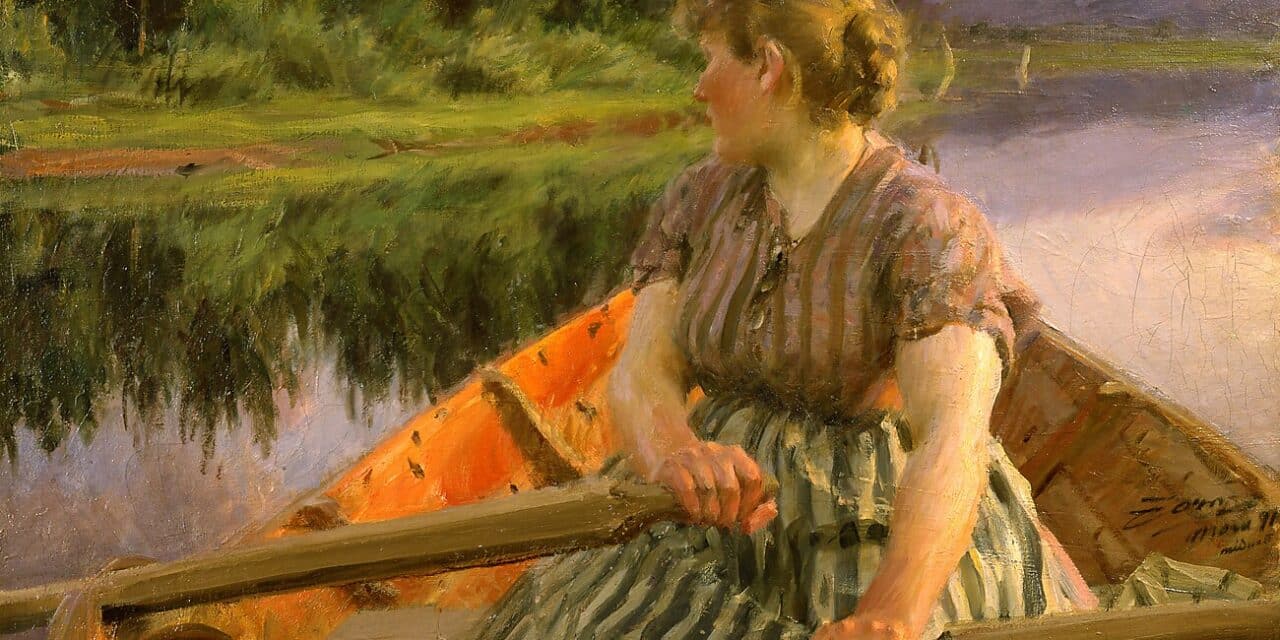
For the first time, the Hamburger Kunsthalle is presenting a representative overview of the multifaceted work of the Swedish artist Anders Zorn (1860-1920), who was one of the most famous artists in the world in the years around 1900!
He became a veritable star painter in Europe and in the United States, two presidents were portrayed by him alongside various heads of American high society. The exhibition comprises around 150 works, including various major works, but also rarely shown paintings and watercolors, his impressive etchings and various photographs created by him. At the invitation of Kunsthalle director Alfred Lichtwark, Zorn visited Hamburg in 1891 to create several atmospheric views of the port, which are also included in the exhibition.
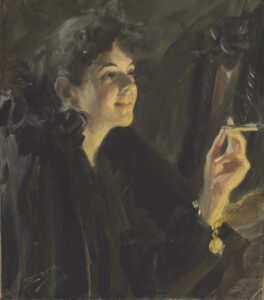
Anders Zorn, Woman with Cigarette, 1892 © Photo: Christie's Images / Bridgeman Images
Having grown up in modest circumstances in the central Swedish province of Dalarna, the talent of the century already caused a sensation during his student years at the Stockholm Art Academy. Zorn followed his urge to travel abroad early on: in the 1880s, he traveled to France, Spain, North Africa and Turkey. And during his years in London, Zorn established himself on the English art market (1882-1885), experienced the breakthrough of Impressionism first-hand in Paris (1888-1896) and took the USA by storm from 1893. Zorn's immense success was guaranteed not only by his flair for contemporary themes but also by his unique technical ability. His works appear incredibly light-footed and exude a fascinating spontaneity - in contrast to the sometimes elaborate, well-calculated creative process. Initially working almost exclusively as a watercolorist, oil painting increasingly became his main field of activity from 1887 onwards.
Zorn was a dazzling, highly versatile artist whose work - particularly in terms of subject matter - is difficult to pin down. Alongside impressionist elements, there are also facets that refer to fundamentally different artistic trends of the time, such as salon painting. Cosmopolitan perspectives also run through Zorn's work, but these are repeatedly intersected by motifs from his Swedish homeland of Dalarna, where he settled in 1896. These became increasingly important in his later work, focusing on the relationship between man and nature, which he lived as a matter of course, and increasingly defined his artistic self-image and identity.
September 26, 2025 to January 25, 2026