There are places that preserve more than things - they preserve attitudes. The Jewish Museum Hohenems is one such place. In the rooms of the Villa Heimann-Rosenthal, between stucco ceilings and memories, the past speaks quietly and forcefully at the same time. Here, history does not smell of dust, but of the present.
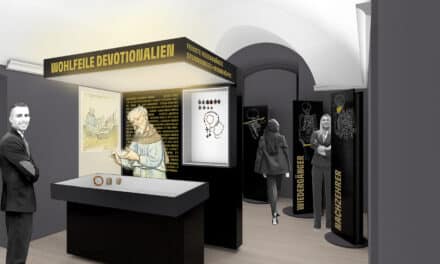
The museum sees itself as the host of a conversation that never ends - about belonging and foreignness, about flight, migration, identity and responsibility. It is not a silent archive, but a resonating space. Its collection tells the story of a small community and its big world: of trade, emancipation, destruction and new beginnings. Anyone who enters here is not just entering an exhibition, but an attitude: the willingness to face up to contradictions. Between remembrance and enlightenment, seriousness and irony, the museum poses questions where others seek answers. It is a house of thought - and of listening. A place where history is not closed, but remains negotiable. Thus Hohenems, close to the border and yet in the heart of Europe, stands as a symbol of what remembrance can achieve: Connection instead of demarcation, openness instead of certainty.
Special exhibition:
The Orientals. Jewish explorers and adventurers in search of the familiar in the foreign
From November 16, 2025, the Jewish Museum Hohenems invites you on a fascinating journey of discovery with the new special exhibition "The Orientalists". The focus is on those Jewish scholars of the 19th century who turned to the "Orient" - not out of colonial curiosity, but out of a deep search for themselves. They researched Arabic, Islamic and Oriental sources - and found reflections of their own culture in them. The early Oriental studies were more than just academic disciplines: they became an act of emancipation. Those who understood the foreign also found a new, self-determined view of their own. The exhibition shows how closely the development of Islamic Studies, Arabic Studies and Oriental Studies was linked to the science of Judaism - with reform, enlightenment and the struggle for recognition in a world shaped by Christianity. This opens up a surprising perspective: Islam and the Arab world do not appear here as an exotic counterpart to Europe, but as co-creators of a common cultural history. "Die Morgenländer" thus questions not only historical prejudices, but also current stereotypes and simplified contrasts - between "the West" and "the Other". The exhibition invites visitors to rediscover these forgotten connections - and to rethink their own view of origins, science and cultural encounters.
November 16, 2025 to October 4, 2026
www.jm-hohenems.at