The exhibition "Jadwiga Maziarska: Assembly" at Muzeum Susch presents over 100 works by the artist from various phases of her career, from her early paintings and reliefs to her later spatial forms and collages. These works reflect not only Maziarska's extraordinary artistic development, but also the way in which she integrated deeper levels of meaning into her work through her choice of materials and the interaction between microcosm and macrocosm.
Jadwiga Maziarska (1913-2003) is one of the most outstanding but often underestimated European artists of the 20th century. Maziarska was an important figure in the Polish art scene, especially in the context of the post-war avant-garde. Maziarska was active in the resistance movement in the 1940s and played an important role in the preservation of artworks from the Second World War period. In the following decades, Maziarska developed a unique artistic approach, working with innovative materials such as wax, sand, fabric and cardboard. From the 1940s onwards, she began working with so-called "matter paintings", giving the textures of her works a whole new meaning.
Her works are often found in the form of collages, reliefs and spatial sculptures, which have a distinctive aesthetic and at the same time address profound philosophical and scientific questions.
The exhibition "Jadwiga Maziarska: Assembly" at Muzeum Susch will present over 100 works by the artist from different phases of her career, from her early paintings and reliefs to her later spatial forms and collages. These works reflect not only Maziarska's extraordinary artistic development, but also the way in which she integrated deeper levels of meaning into her work through her choice of materials and the interaction between microcosm and macrocosm.
June 15 - November 2, 2025
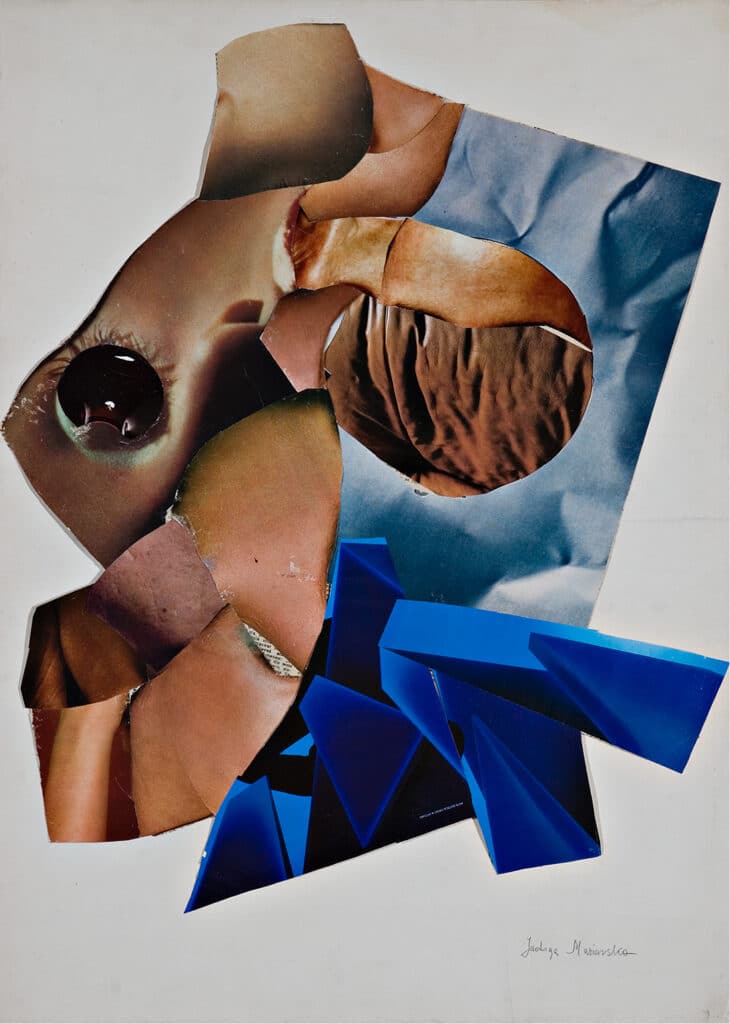
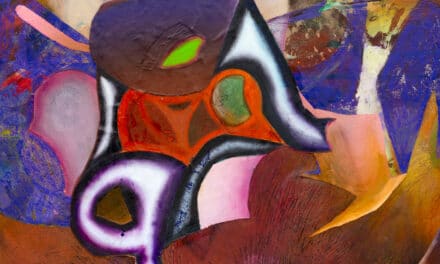
Jadwiga Maziarska, Untitled, ca. 1985, collage, paper, private collection
The MUZEUM SUSCH
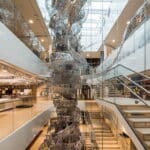
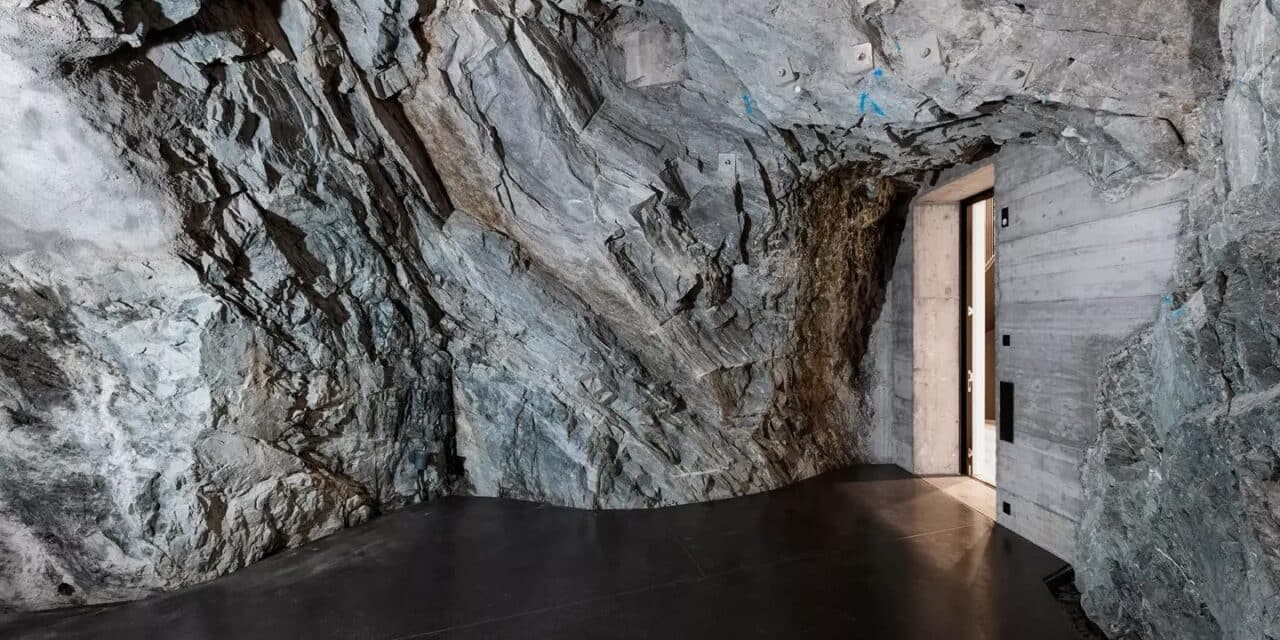
The MUZEUM SUSCH opened its doors on January 2, 2019 in the idyllic valley of the Inn River against the backdrop of the Alps, on the grounds of a medieval monastery: A new addition to the variety of experimental places for art that seek and create references in the picturesque landscape of the Engadin. The museum, consisting of the former rectory and the reception and farm buildings, was part of a rural monastery that was built in 1157 on the Flüela Pass and thus on the pilgrimage route to Rome and Santiago de Compostela, and a brewery was added in the 19th century. For the museum, these existing structures were carefully restored and expanded with new additions to create an inspiring complex for artistic production and mediation that invites visitors to take instructive tours and offers space for exhibitions and experimental forms of presentation, performances, conferences, lectures and events as well as an interdisciplinary studio program.
The MUZEUM SUSCH, a new venue for experimental art in the Engadin, is located in the beautiful Inn Valley. The museum comprises the former rectory as well as the reception and farm buildings, which originally belonged to a monastery. This monastery was founded in 1157 on the Flüela Pass, an important pilgrimage route to Rome and Santiago de Compostela, and was extended in the 19th century to include a brewery.
The MUZEUM SUSCH focuses on art by women and places particular emphasis on research into women artists from Eastern Europe from the 1960s, 1970s and 1980s. Exciting guided tours through the exhibitions complement the museum's varied program.
The MUZEUM SUSCH is a place for the discursive and exploratory character of art in the tradition of the Kunsthalle as a field of experimentation. Founded by Grażyna Kulczyk, it is specifically (though not exclusively) characterized by a deep understanding of the position of women artists and is committed to the search for matrilineal connections in art and the emotional understanding of often excluded, overlooked or misinterpreted positions. The museum aims to contribute to the recognition and greater visibility of these positions. This aspect has been underrepresented in the museum landscape in reunified Europe and it is one of the central qualities of the museum to redefine the canonical as well as the marginalized - not with a single, dominant voice that forces the established into silence, but as a polyphonic, influential force that gives resonance to other voices.
www.muzeumsusch.ch
You are currently viewing a placeholder content from YouTube. To access the actual content, click the button below. Please note that doing so will share data with third-party providers.