
From July 27, 2025, the Knauf Museum Iphofen will be showing the exhibition "Celts in Franconia". The second special exhibition this year is dedicated to the archaeological heritage of Celtic culture in the center of the vast settlement area. Who were the Celts, how and where did they live and what happened in Franconia between the 5th and 1st centuries BC? For the first time, the exhibition comprehensively explores the omnipresent traces of Celtic history in Franconian territory with numerous archaeological exhibits that are otherwise not on display in this density. The finds from the so-called Latène culture demonstrate the sophisticated craftsmanship and artistic expression of the highly developed Celtic society.
The life of the Celts
Archaeological finds are attributed to the Celts by laymen in an almost inflationary manner. This once again demonstrates the great fascination that they still exert today. The "KELTOI" were the first people north of the Alps to appear in Greek written sources around 550 BC. Behind them was a developed, organized society that lived together in open settlements, but also in hilltop castles such as the Vogelsburg or in cities, the so-called oppida such as on the Staffelberg. Using models, digital installations and numerous archaeological finds from the places where the Celts lived in Franconia, the exhibition creates a picture of everyday life, the facets of which include crafts and art as well as the social elites and their connections to foreign lands. Life sketches drawn for the presentation illustrate typical Celtic occupations and scenes of everyday life as well as aspects of faith. Together with the archaeological finds, they create a detailed picture of Celtic settlement in Franconia.
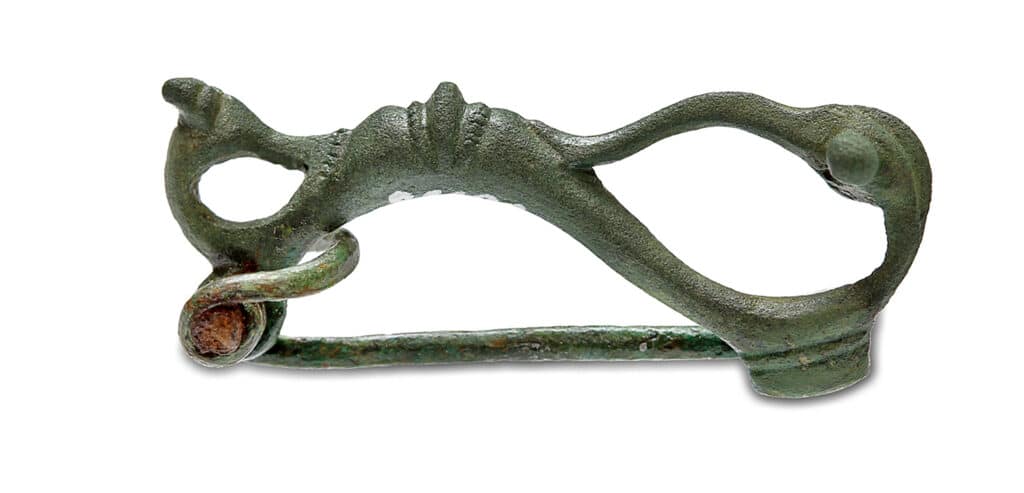
Animal head brooch from the cemetery of Landersdorf in Middle Franconia, on loan: Naturhistorische Gesellschaft Nürnberg, photo: Markus Schußmann
Society and craftsmanship
At its head was a nobility that defined itself as a warrior class, resided in castles or in prominent locations and showcased its position with "exotic" luxury goods from the Mediterranean. While the common people as farmers in the countryside formed the economic backbone, the craftsmen resided in large central settlements controlled by the nobility or in the fortified oppida. Their high quality and aesthetic standards made their products sought after. The spectrum ranged from pottery, bronze and iron work, not least weapons, to glasswork and medicine. Pieces of jewelry such as a necklace made of bronze beads from Ehrenbürg near Forchheim in Upper Franconia impressively demonstrate the skill with which bronze was worked. Countless garment clasps, so-called fibulae, with elaborate decorations in the shape of animals, humans or demons bear witness to how people wanted to protect themselves with mystical and supernatural powers. The same applies to amulets such as the cattle pair pendant from Landersdorf in Middle Franconia, which stood for fertility, or the boar figurine from Karlstadt in Lower Franconia, which was probably intended to transfer the animal's power to the owner.
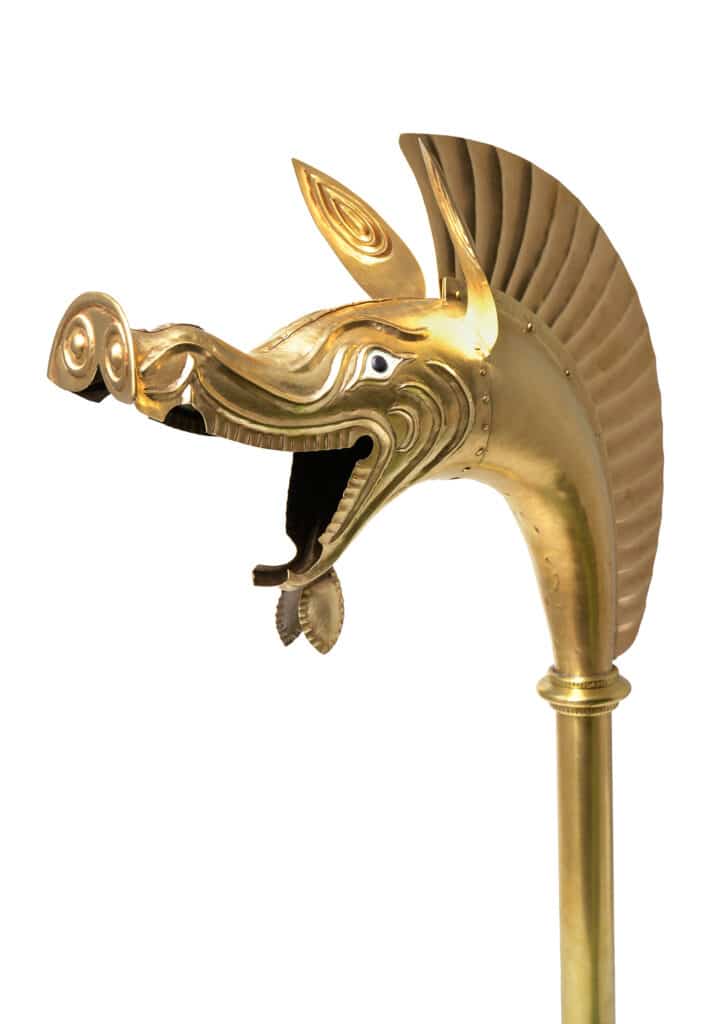
Celtic war trumpets, The boar depiction conveys the extroverted, untamed nature of the Celtic view of life and religion, and shows that in pre-Roman times, otherworldly powers were rarely depicted anthropomorphically. Photo: Benedikt Feser
How the Celts disappeared
The Celts were crisis-tested. Soon after 400 BC, a climatic collapse led to a series of catastrophic crop failures in what is now Frankish territory, causing severe damage to the flourishing culture at its peak. Large parts of the country were abandoned after civil war-like events. This development took place during the period of the historically recorded Celtic migrations, in the course of which their war bands first invaded Italy and later reached Greece and Asia Minor. The abandoned areas in Franconia were once again home to other Celtic tribes in the 3rd century BC, who established their own settlement methods, burial customs and other material goods. At the turn of the 1st century BC, however, Germanic war bands reached the region for the first time and upset the economic balance. Military clashes brought trade to a standstill and ultimately led to the abandonment of the central settlements. Large sections of the population returned to a farming way of life and mixed with the increasing numbers of Germanic tribes. The Celts disappeared as an independent culture in Franconia.
July 27 to November 9, 2025
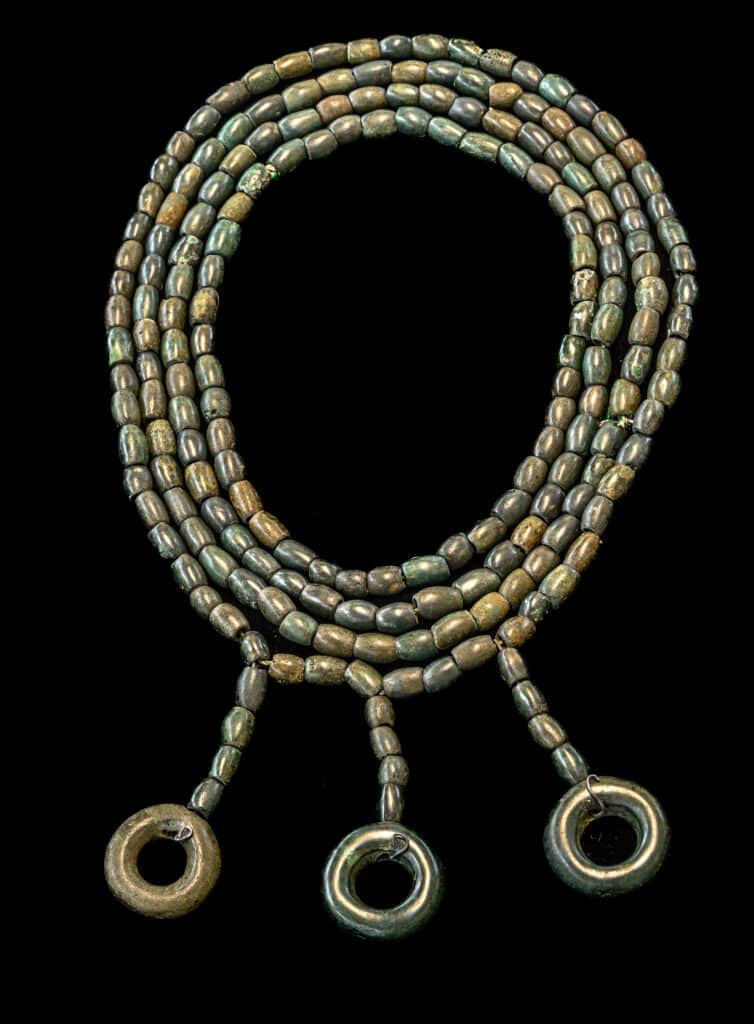
Magnificent necklace made of bronze beads from the Ehrenbürg near Forchheim in Upper Franconia, on loan: Museum Ebermannstadt Photo: TMO - Bilderwelten, Tom Schneider
The Knauf Museum Iphofen
At the end of the 1960s, the plaster manufacturer and patron of the arts Dr. Alfons N. Knauf began converting a magnificent baroque building from 1688 in Iphofen into a private museum. Dr. Knauf, who was fascinated by the study of plaster throughout his life, spent ten years traveling the world's major museums together with his brother Karl Knauf, collecting plaster casts of their most exclusive exhibits. Today, the Knauf Museum Iphofen presents over 200 replicas of the renowned museum pieces from all over the world. Since its opening on June 30, 1983, visitors have been able to marvel at relief collections from the great cultural epochs of mankind, dating back to 3,500 BC. In addition to the permanent exhibition, the Knauf Museum Iphofen regularly develops exclusive and unique special exhibitions on its own initiative. The museum cooperates with numerous internationally renowned art museums.
www.knauf-museum.de