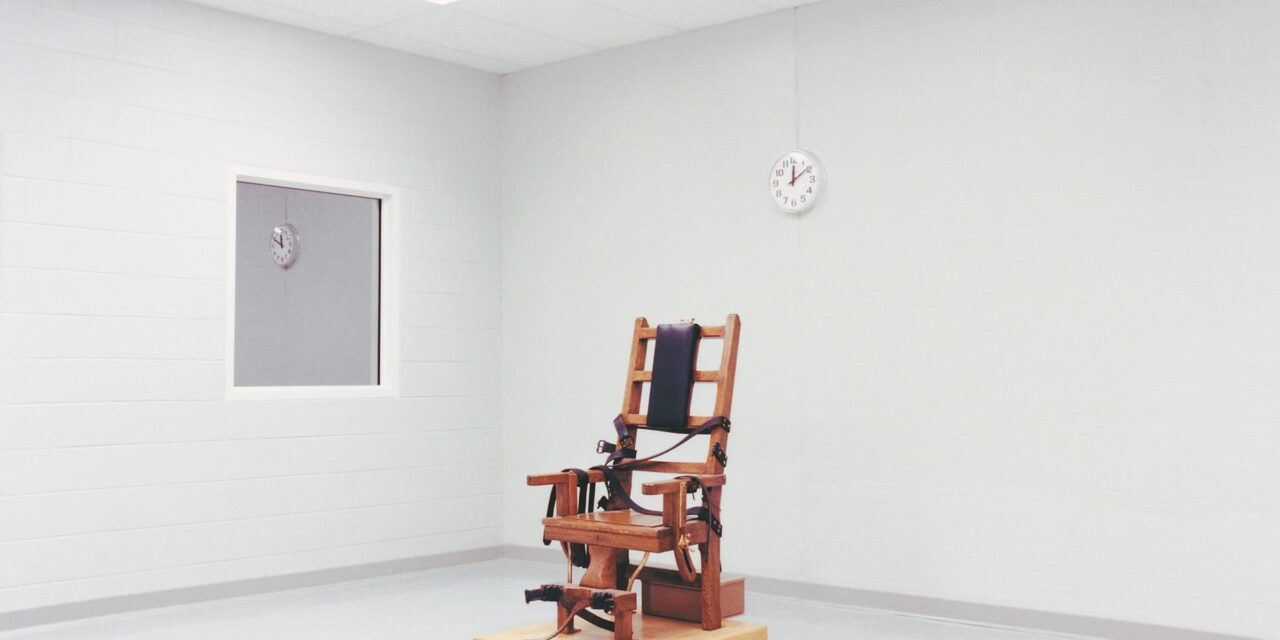
War events, omnipresent in the media and seemingly endless, shape our viewing habits and dominate public perception. In addition to clearly visible violence, such as the brute destruction of buildings and cultural assets, the sight of civilian victims or images of never-ending streams of refugees, the exhibition also focuses on the often invisible facets of violence.
Structural, psychological or gender-specific violence, especially against women and marginalized groups, as well as the resulting trauma and mental suffering often remain hidden. Ideological and religious hatred, which is passed down through generations and particularly affects women, is also often invisible or deliberately suppressed. Shame and social ostracism often protect the perpetrators, while the consequences for those affected are profound and long-term.
(In)Visibility of Violence aims to investigate these unequal power structures and visual regimes that underlie violence: What social, political and media mechanisms make violence visible or invisible? How is violence documented, instrumentalized or censored? What creative and artistic approaches can be used to make violence perceptible? How are strategies such as alienation, censorship, documentation or spectacularization used to depict or conceal violence?
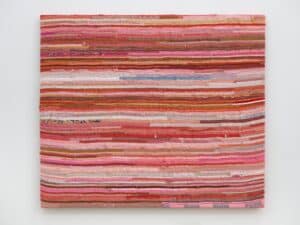
Kresiah Mukwazhi, the high priests, 2024, Bra straps on canvas, 120×140 cm, photo: Simon Vogel.
The exhibition ties in with the cooperation with the Research Center for Transformations of Political Violence (TraCe) initiated in October 2024, which began with the dialog panel "Depictions of Excessive Violence - Between Disturbance and Attraction" at the Kunsthalle. The exhibition will be accompanied by a journal published jointly by the KUNSTHALLE GIESSEN and researchers from the TraCe Research Center.
August 23 to November 2, 2025