The new permanent exhibition at the Liszt Museum Raiding was opened with a festive ceremony on May 15. Numerous guests from the worlds of culture and politics as well as many Liszt enthusiasts were on hand to celebrate this special moment together - the start of a new chapter in the museum dedicated to the life and work of one of the greatest musicians of the 19th century.
Following a comprehensive redesign, the museum now presents itself with a new permanent exhibition entitled "Le Concert c'est moi - The concert is me". Visitors are invited to discover Franz Liszt as a person, musician and myth in a new, intense way - emotionally, multimedia-based, profound. The exhibition concept was curated by Theresia Gabriel and the two directors of the Liszt Center Raiding, Eduard and Johannes Kutrowatz. The renowned set and costume designer Christof Cremer is responsible for the artistic design. The result is a museum experience in three parts that combines historical depth with contemporary storytelling - personal, approachable and full of musical radiance. Liszt's birthplace - roots, grand piano and Liszt and the piano Liszt's beginnings become tangible in his originally preserved birthplace in Raiding. Here, the exhibition focuses on his origins and the emotional connection to his birthplace.
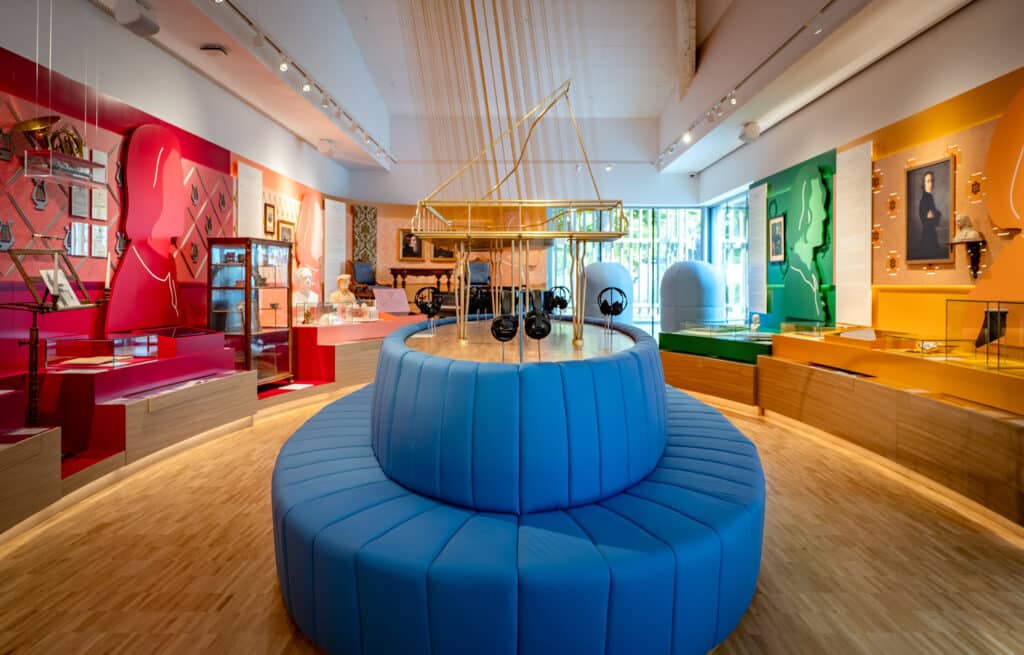
The Liszt Salon in the new extension at the Liszt Center Raiding © Andreas Hafenscher
Another focus is the so-called "Lisztomania", the overwhelming enthusiasm with which fans reacted to the artist in the 19th century. Locks of hair, cigar butts and devotional objects as accessories bear witness to the music star's fame. Key turning points in Liszt's life are also recounted: A virtual walk leads to original locations in Budapest, Weimar and Bayreuth - commented on with quotes from his great-great-granddaughter Nike Wagner. The first solo piano recital in music history, his transformation into a sacred composer, his political charity concerts and his tireless travels through Europe - over 600 concerts in 230 cities.
A special highlight is the legendary Hoffmann grand piano on which Liszt gave his last concert in Rome. It all began here, in little Raiding, in 1811.
Liszt Salon
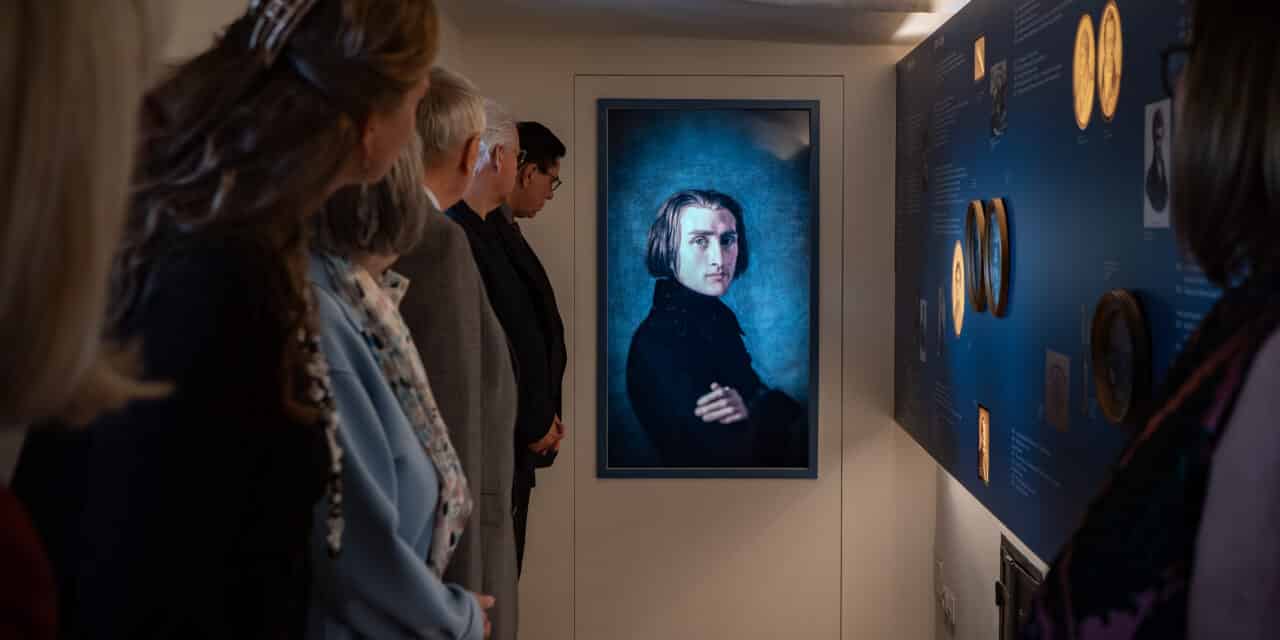
The new Liszt Salon takes you on a journey through the most important stages of Franz Liszt's life: Vienna, Paris, Rome, Budapest, Weimar and Bayreuth. The multimedia production shows not just places, but moments - concert successes, encounters, turning points. We encounter Liszt as a celebrated virtuoso, passionate benefactor, ardent European and musical innovator. Whether as court conductor in Weimar, as a sacred composer in Rome or as a supporter of young talent in Budapest - Liszt's life was characterized by movement, influence and change. Instrument collection in the Konzerthaus - discover worlds of sound In the Liszt Konzerthaus, directly opposite the museum, a new perspective on the 19th century opens up - through the sound of contemporary instruments. The collection of historical keyboard instruments - on loan from the Liszt Society - takes you back to the time of Franz Liszt. A table piano, similar to the one on which Liszt played his first notes and for the purchase of which his father Adam Liszt once sold his gold watch. A grand piano from the Erard piano manufactory, which revolutionized piano playing with the invention of the double repetition mechanism.
A meeting place - for music lovers, culture enthusiasts and the curious
With this new orientation, the Liszt Museum presents itself as a place of lively music education, European cultural history and personal discoveries. The exhibition appeals to music fans as well as school classes, tourists and anyone who wants to be inspired by the power of an extraordinary life.
From May 16, 2025, all year round
Tue to Fri: 9 am to 5 pm
Sat, Sun & public holidays 10 am to 5 pm
www.lisztmuseum.at
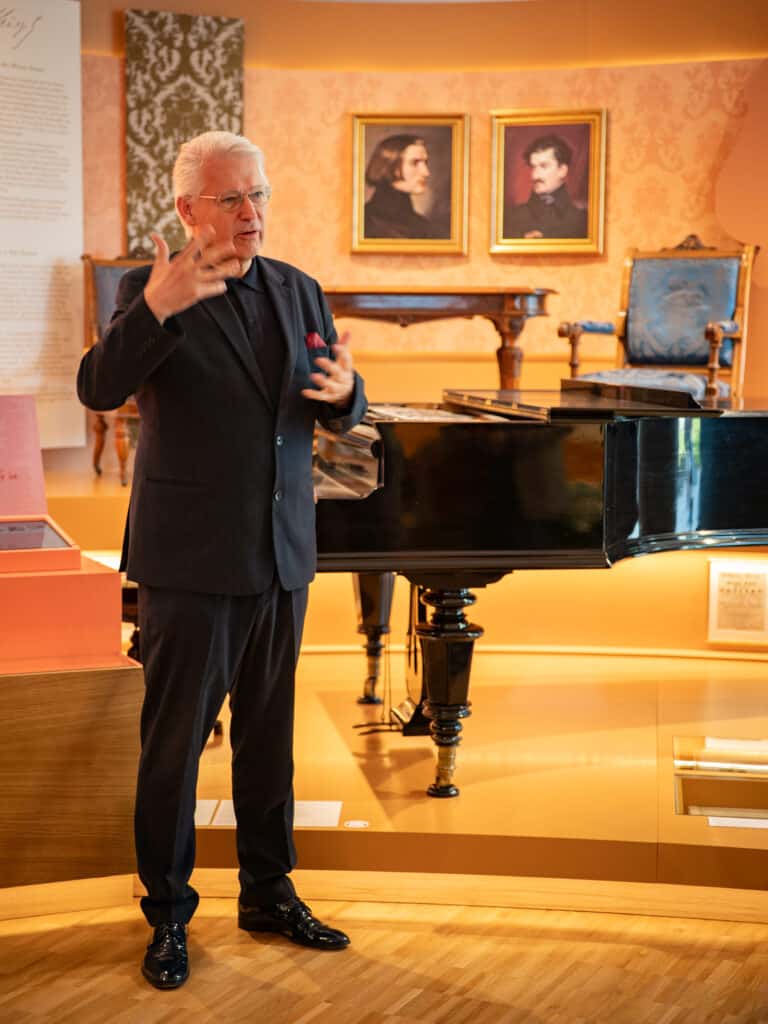
Curator Eduard Kutrowatz talks about the exhibition in the Liszt Salon © Andreas Hafenscher