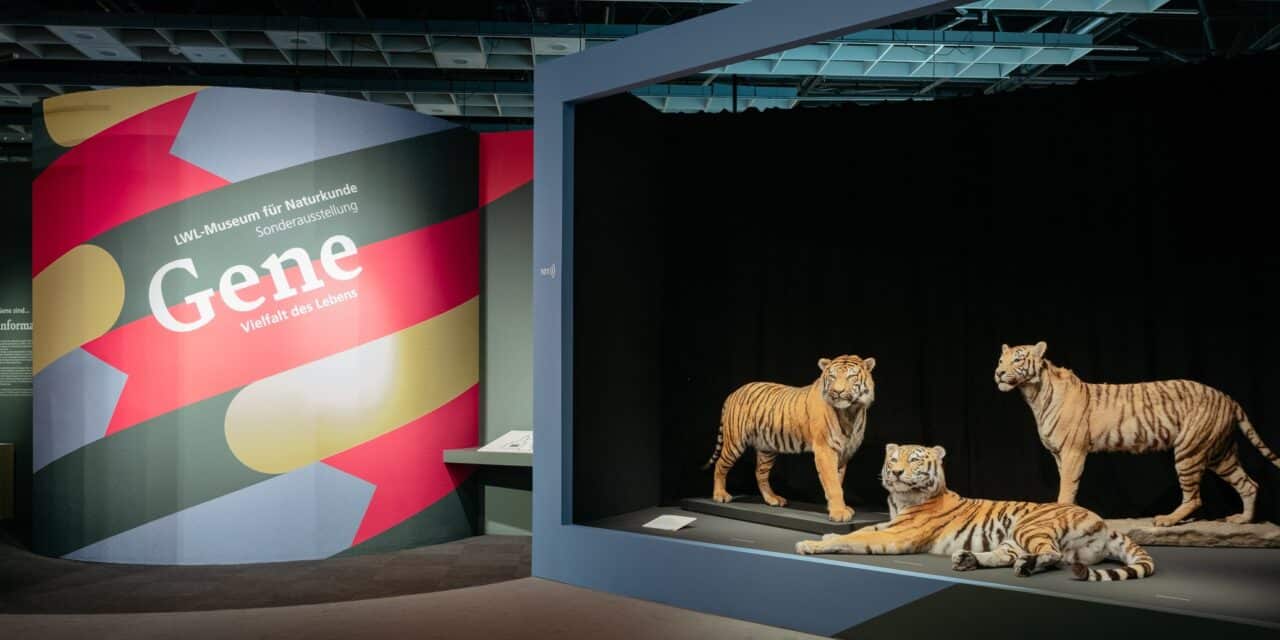
They are tiny, inconspicuous, and invisible to the naked eye—and yet they determine everything that lives. Genes write the score of life without ever appearing themselves. The special exhibition "Genes—Diversity of Life" at the LWL Museum of Natural History in Münster brings this hidden world to life and transforms scientific knowledge into a sensory exhibition experience.
Covering around 850 square meters, a space opens up that seduces rather than instructs: into the microcosm of the cell, where genetic information is stored, changed, passed on, and drives the inexhaustible game of diversity. Architecture, light, and media technology merge into a production that makes the invisible visible—and the complex understandable, without simplifying it. What is a gene? How do differences arise between individuals, species, and entire life forms? And what role do the environment, chance, and time play?

Special exhibition "Genes – Diversity of Life" © LWL Museum of Natural History, Münster
The exhibition explores these questions with great narrative care. Milestones in genetics are linked to everyday life, historical findings to current debates on epigenetics, genetic engineering, and medical innovations. Over 1,200 exhibits unfold a panorama ranging from Gregor Mendel's pea experiments to modern molecular biology. Among the most impressive moments are objects that connect science and culture in unexpected ways: a mighty oak tree becomes a symbol of genetic control, a lock of Ludwig van Beethoven's hair tells of identity, illness, and the legibility of history in the genetic code. Interactive stations invite visitors to intervene in genetic processes themselves—for example, on a large-format, sensor-controlled gene wall that brings different gene types to life.
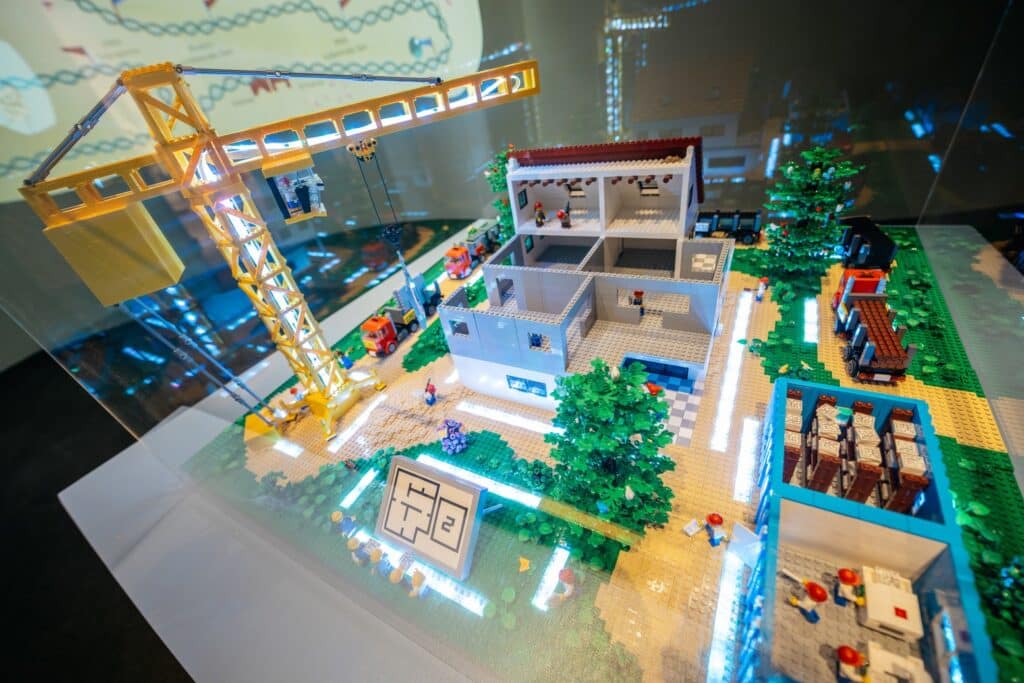
Special exhibition "Genes – Diversity of Life" © LWL Museum of Natural History, Münster
Playful approaches such as a Lego display of protein biosynthesis show how order, chance, and creativity interact at the very heart of life. The exhibition's consistently inclusive approach is remarkable. Tactile models, Braille, audio guides, subtitled films, and numerous interactive stations open up access for people with different needs. Families, children, and curious visitors will find something to interest them, as will those who want to delve deeper into current issues in genetic research—from the quiet Snoozel room to the experimental Gene LAB.
This makes "Genes—Diversity of Life" much more than a scientific exhibition. The exhibition invites visitors to reflect on origins, change, and the future—and on the fragile balance from which all life arises. Those who leave will not only see the world differently, but also themselves.
Extended until January 10, 2027
www.gene.lwl.org
You are currently viewing a placeholder content from YouTube. To access the actual content, click the button below. Please note that doing so will share data with third-party providers.