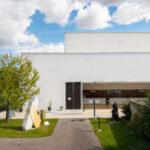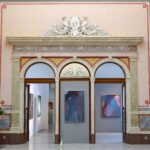
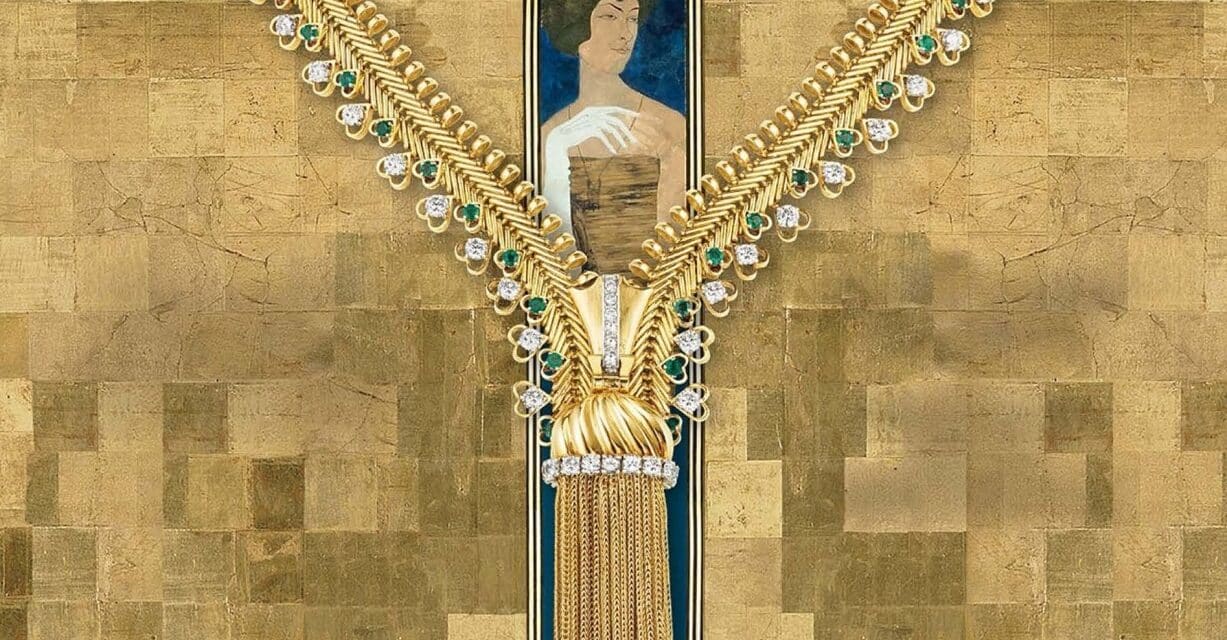
With GLANZSTÜCKE. Van Cleef & Arpels Haute Joaillerie × Masterpieces from the MAK Collection, the MAK – Museum of Applied Arts presents a high-caliber exhibition that brings museum treasures and haute joaillerie together in an exchange that is as sensual as it is insightful. From June 10 to September 27, 2026, the Lower Exhibition Hall will be transformed into a place of sparkling encounters between history and the present, ornament and innovation, material and vision. The show was curated by Alexandrine Maviel-Sonet and Anne-Katrin Rossberg—an intense exchange that reveals surprising parallels.
The focus is on the dialogue between unique, rarely exhibited objects from the MAK collection and jewelry art from the 120-year history of Van Cleef & Arpels, the traditional house founded in 1906 on Paris' Place Vendôme, which stands for technical sophistication and poetic design like no other.
The project is the result of an intensive exchange between the museum and the Maison—driven by a shared passion for outstanding design and craftsmanship excellence. Two institutions that at first glance belong to different worlds discover their deep structural connections in dialogue: a love of detail, precision in the handling of materials, and the pursuit of timeless beauty.
Around 500 selected exhibits are brought into relation with one another—more than 300 from the Van Cleef & Arpels Patrimonial Collection and over 200 from the MAK Collection. The latter ranges from medieval textiles and Baroque crafts to the pioneering designs of the Wiener Werkstätte. The Patrimonial Collection, which comprises over 3,000 jewelry creations, watches, and precious objects, documents the stylistic and technical development of the Maison from its beginnings to the present day.
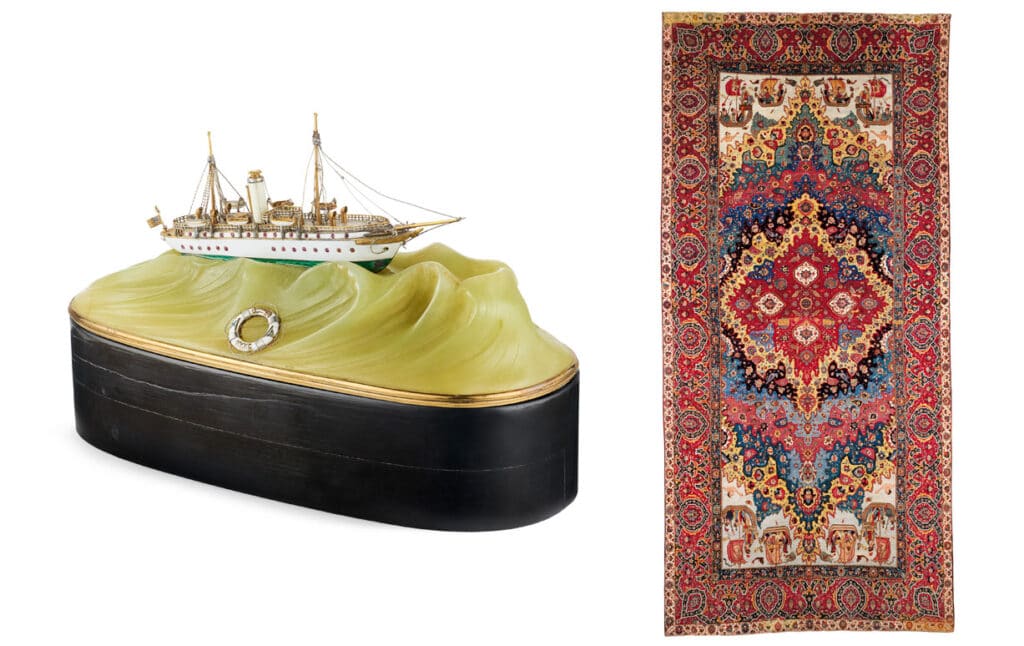
Chapter Wanderlust:
Left: Small-scale model of the yacht Varuna, 1906, yellow gold, silver, jasper, wood, enamel © Van Cleef & Arpels Collection
Right: So-called Portuguese carpet, Central Asia, early 17th century, cotton, wool MAK © MAK Small-scale model of the yacht Varuna, 1906, yellow gold, silver, jasper, wood, enamel © Van Cleef & Arpels Collection
What connects these objects across centuries is their exceptional craftsmanship and visionary design. Surprising parallels emerge in the juxtapositions: formal rhythms that are reflected in textile patterns and gemstone settings; color schemes inspired by nature and the cosmos; motifs that reflect travel, architecture, or floral ornamentation. Similar sources of inspiration can often be identified—cultural trends, social upheavals, or technical innovations that have shaped both arts and crafts and jewelry design.
GLANZSTÜCKE makes it clear that applied art is not a static legacy, but a living process of further thinking and reformulation. By juxtaposing historical masterpieces and sparkling haute joaillerie creations, a field of tension is created in which the past and present illuminate each other. The exhibition thus becomes a journey of discovery through materials and ideas – and a celebration of the creative power that connects design across eras.
With the exhibition GLANZSTÜCKE. Van Cleef & Arpels Haute Joaillerie × Masterpieces from the MAK Collection, the MAK – Museum of Applied Arts opens a fascinating dialogue between museum collections and contemporary jewelry art. Around 500 exhibits—approximately 300 from the Van Cleef & Arpels Patrimonial Collection and around 200 from the MAK's holdings—unfold a panorama of applied art from the Renaissance to the present day in six thematic chapters. The scenography, developed by Atelier Tsuyoshi Tane Architects, leads visitors on a labyrinthine journey through six thematic areas: Wanderlust, Architecture, Rhythm, Clear the Stage, Metamorphosis, and Nature & Cosmos.
In the Wanderlust section, a scale model of the sailing yacht "Varuna"—designed by Van Cleef & Arpels in 1906—meets the so-called Portuguese carpet from the early 17th century. Precious materials, exotic motifs, and a longing for distant worlds connect both objects across centuries.
Architecture draws attention to construction and function. Van Cleef & Arpels' minaudière, patented in 1933—a sophisticated toiletry bag with an ingenious interior design—meets a classicist gaming table by David Roentgen from 1775. Both objects combine technical sophistication with aesthetic elegance.
In the Rhythm chapter, geometric fabric patterns from the Wiener Werkstätte unfold their modernist austerity alongside stylized flower clips from the late 1930s. The formal reduction of Art Deco appears here as a continuation of the radical design ideas that were formulated in Vienna around 1900.
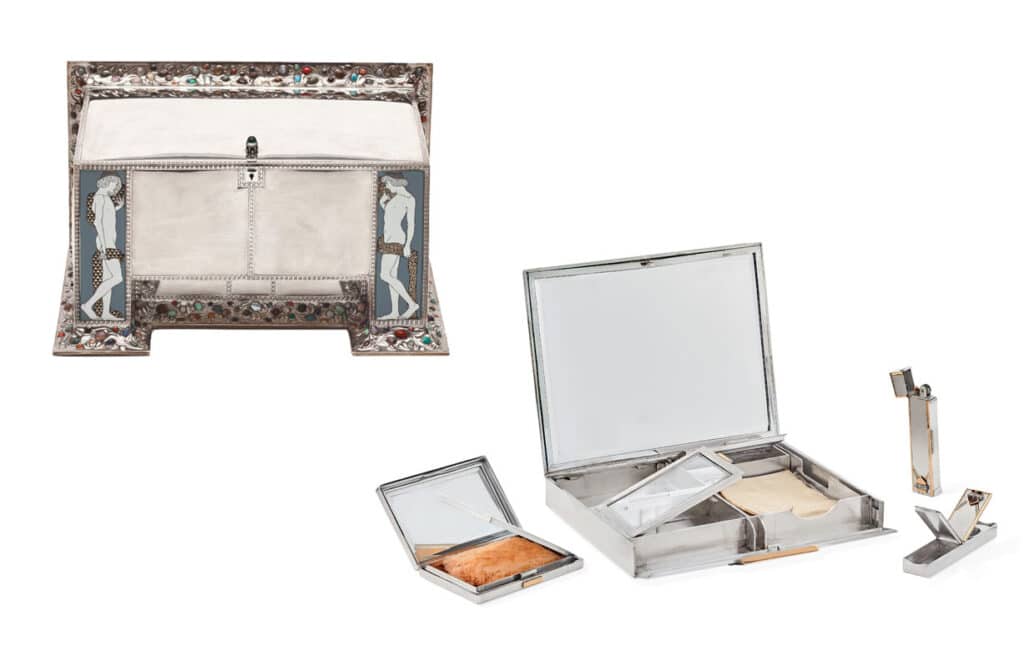
Architecture:
Left: Koloman Moser, decorative box, 1906, executed by Wiener Werkstätte Silver, enamel, wood, semi-precious stones MAK © MAK/Georg Mayer
Right: Minaudière, 1935, Stryptor, yellow gold, silver, diamonds © Van Cleef & Arpels Collection
Clear the stage! is dedicated to the staging of body and movement. A 19th-century ball gown with sculptural silver embroidery stands alongside poetic fairy figures such as the clip "Little Winged Fairy," which symbolized hope and lightness during World War II. Here, jewelry becomes a narrative medium, fashion a stage for social dreams.
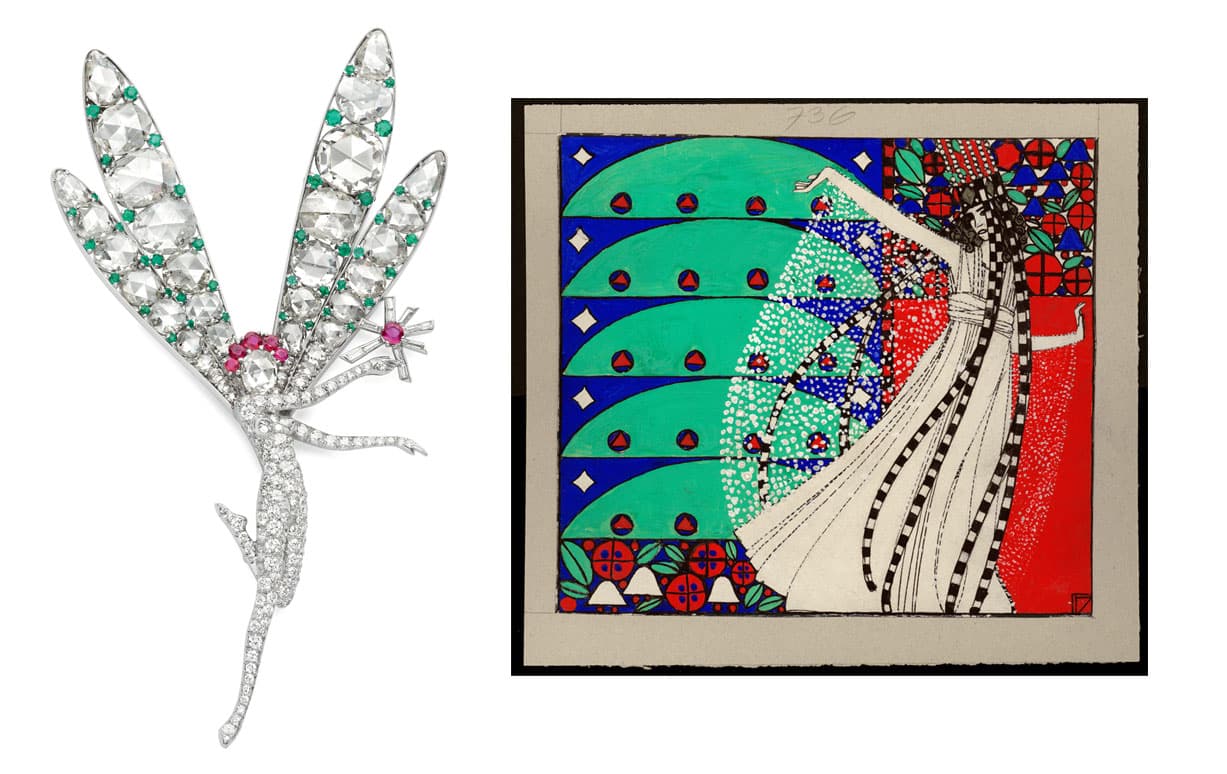
Stage Clear:
Left: Little Winged Fairy Clip, later named Spirit of Beauty, 1941, platinum, gold, emeralds, rubies, diamonds © Van Cleef & Arpels Collection
Right: Fritz Zeymer, illustration for the first program booklet of Cabaret Fledermaus, 1907 Gouache MAK © MAK/Georg Mayer
The theme of metamorphosis addresses changeability and transformation. A screen by Koloman Moser enters into dialogue with the legendary Zip necklace—a creation patented in 1938 and inspired by the zippers found on modern clothing. Design appears as a permanent process of reinvention.
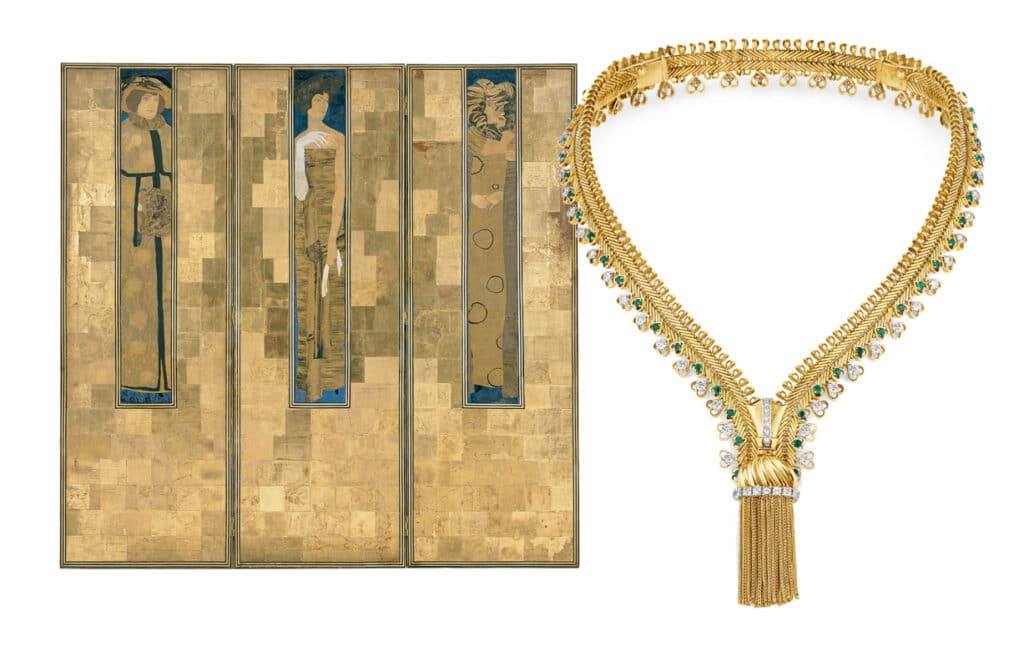
Metamorphosis:
Left: Koloman Moser, Screen, 1906, executed by: Wiener Werkstätte/Karl Beitel/Therese Trethan Wood, gold and dyed paper, braid MAK © MAK/Georg Mayer
Right: Zip necklace, 1955, convertible into a bracelet, yellow gold, platinum, emeralds, diamonds © Van Cleef & Arpels Collection
The exhibition concludes with Nature & Cosmos. The clip "Chrysanthemum" (1937) demonstrates the mysterious mystery setting technique, in which gemstones appear to be set weightlessly. Opposite it is an armillary sphere from 1553 from the MAK collection—an instrument between science and ornament that makes the movement of the celestial bodies visible.
GLANZSTÜCKE is much more than a juxtaposition of precious objects. The exhibition shows how applied art has asserted itself over centuries as a field of experimentation for innovation, poetry, and technical mastery. It makes it clear that excellence knows no era—but arises from dialogue.
Opening: June 9, 2026
Exhibition dates: June 10 to September 27, 2026
www.mak.at