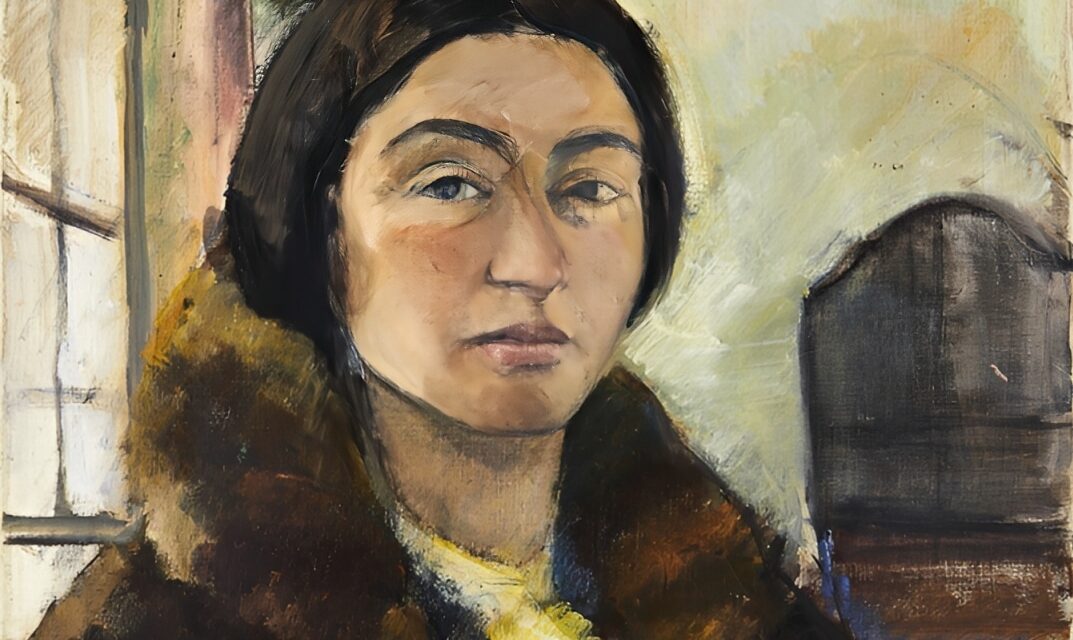
When artist Valesca Röver (1849–1931) founded an art school for women in the heart of Hamburg in 1891, state educational institutions were still exclusively reserved for men. Röver herself had studied at the private Académie Julian in Paris and was to write an important chapter in art history with her own school.
After initially being located at Stadthausbrücke, it moved to Glockengießerwall 23, directly opposite the Hamburger Kunsthalle. There, female artists now studied and worked in close proximity to the most important venues of the city's art scene.
The dawn of modernism shaped the teaching program. Röver hired young teachers who were interested in Impressionist techniques and progressive imagery, including Arthur Illies and Ernst Eitner. In the fall of 1904, their former student Gerda Koppel took over as head of the school, a position she held until 1938. Among the students were Alma del Banco, Gretchen Wohlwill, Harriet Wolf, Lore Feldberg-Eber, and Annemarie Ladewig. Having since moved to Mittelweg 169, the institution was then run by Gabriele Schmilinsky until 1954.
The exhibition Women Make School is dedicated to this important educational institution and focuses on Valesca Röver and her successors as well as the works of its remarkable graduates. It sheds light on the training and working conditions of female artists in the modern era and at the same time reveals the networks that shaped their careers. To build a bridge between modern and contemporary art, the artist Anne Bracht was invited to the Kunsthaus. With her tape art, she creates a visual relationship between the works and styles of the artists and their teachers. Anne Bracht lives and works as a freelance artist in Hamburg.
January 24 to May 25, 2026
www.museen-stade.de