With the exhibition He Toi Ora. Beseelte Kunst der Māori, the Museum Fünf Kontinente München invites you to an extraordinary encounter from October 17, 2025 to May 10, 2026. The show not only opens up a view of 80 impressive works of Māori culture, but also raises questions about origin, memory and responsibility.
In the understanding of the Māori, art is never just material, but always spiritual. Carvings, jewelry or weapons carry a connection to the ancestors, are animated and alive in the present. He Toi Ora - "a living art" - therefore also means making these connections visible and tangible again.
But how can it be clarified today from which Iwi (tribal groups) the works preserved in the Munich museum originate? The search for clues proves to be complex: almost all of the objects came to Munich via London between 1825 and 1914 - often without precise details of their origin. The exhibition approaches these questions with a detective's instinct: historical documents, photos of the previous owners, the motives for collecting, analyses of the woods used and the interpretation of the artistic carving motifs reveal pieces of a larger puzzle.
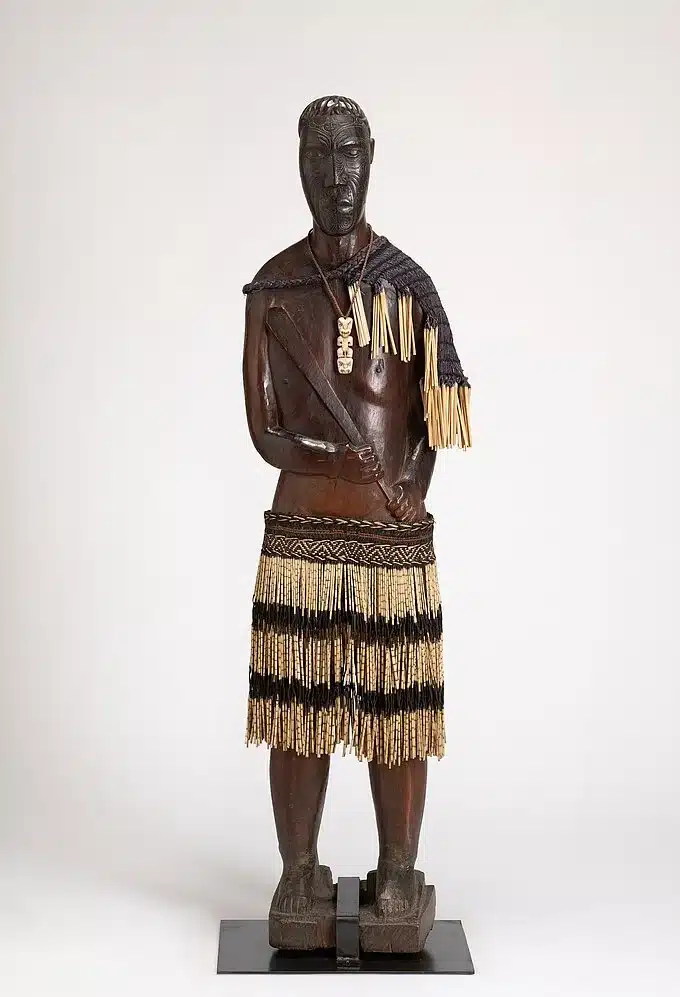
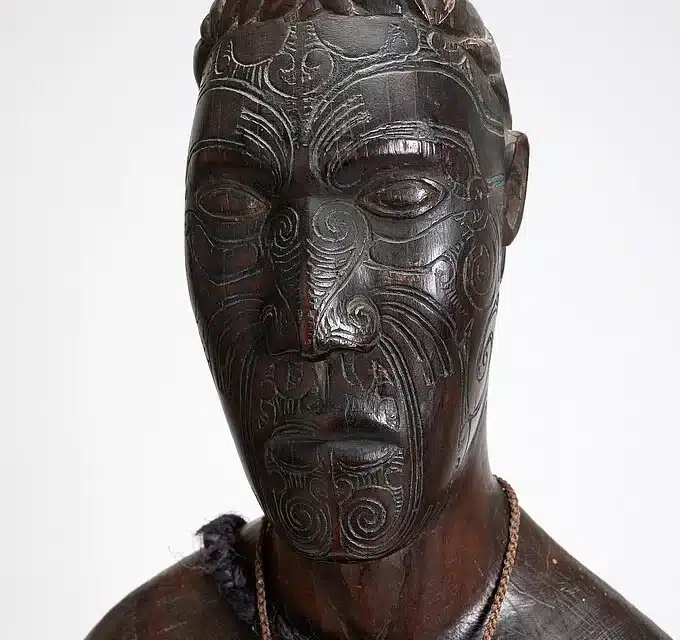
Post figure Tāwhaki, Toatoa wood, height 168 cm, ca. 1880, purchased from Ludwig Bretschneider, 1965, © Museum Fünf Kontinente. Photo: Nicolai Kästner
Collaboration with indigenous experts is central to this. The Oceania curator of the museum and David Jones from Iwi Rongowhakaata worked closely together to develop the exhibition. This combination of scientific research and traditional knowledge characterizes the concept: visitors can explore carving patterns themselves using microscopes and at the same time gain insights into the Māori philosophy.
The exhibition shows the diversity of Māori art: ornately decorated jewelry boxes for people of rank, greenstone jewels, fine capes, weapons and everyday objects, as well as figures with symbolic tattoos. The story of the post figure Tāwhaki is particularly touching. It could be clearly assigned to a meeting house near Gisborne and exemplifies the dialog between past and present. The last room of the exhibition is therefore dedicated to the ancestor Tāwhaki and the Iwi Rongowhakaata - with films, interviews, a photo installation and contemporary Māori artworks that illustrate the living relationship with the objects.
He Toi Ora makes it clear that Māori art is not stuck in the past, but is part of an ongoing cultural conversation - animated, connecting and alive.
October 17, 2025 to May 10, 2026
www.museum-fuenf-kontinente.de