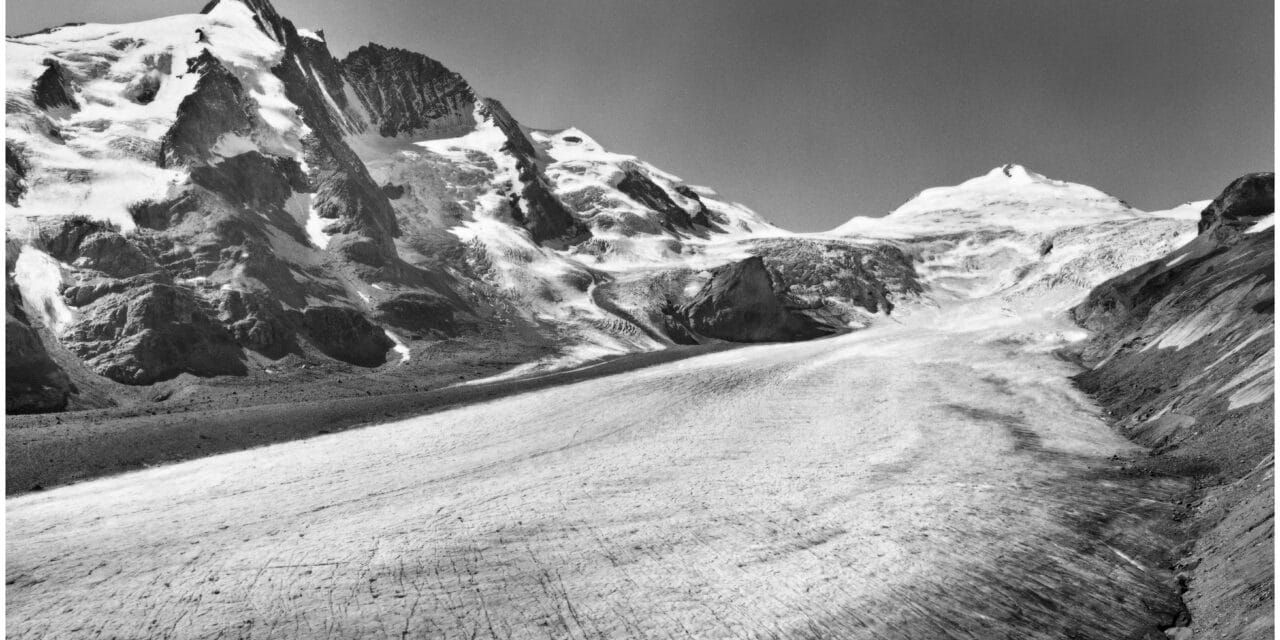
Glaciers are sensitive climate indicators. More than 99% of the world's glaciers are melting. Their retreat shows how rapidly our climate is warming. A certain amount of glacier retreat is natural in warm periods, but this process has accelerated dramatically in recent decades. The glaciers in our Alps are also melting rapidly and inexorably. Even at high altitudes, there is hardly any snow left over the summer, so no new ice can form.
The glaciers in the Alps date back to the last ice age. After growing during the "Little Ice Age", they reached their last peak around 1850. Today, their ice is rapidly disappearing. According to measurements and forecasts by the Alpine Association, Austria could be largely ice-free in 40 to 45 years.
The photo exhibition makes it clear that climate change has long since arrived - even here - and is extremely tangible. In unique pairs of images, Jürgen Merz shows glaciers "before and after". He meticulously tracks down the locations of 19th and early 20th century photographers, where they found magnificent glacier landscapes at the time. Decades later, Merz encounters completely changed landscapes in the same places, from which the "eternal ice" has long since disappeared. Never before has the extent of glacier retreat in the entire Alpine region been so shockingly and vividly demonstrated as in the comparison of current images with their historical counterparts.
Jürgen Merz is a glacier photographer and approaches the white giants from different perspectives. He produces classic landscape images, but also seeks out historical locations where photographers captured the panorama over a hundred years ago. With his comparative images, he wants to show the beauty that is disappearing in the mountains as a result of climate change and thus make people think.
Another focus of his work is the documentation of glacier caves. The search for abstract structures and patterns in the ice at close range, but also using drones from a bird's eye view, rounds off his portfolio as a photographer.
November 20, 2025 to January 10, 2027