The appointment of Fatima Hellberg as General Director marks the beginning of a phase of programmatic reorientation for mumok, which in a remarkable way is both a return to the past and a blueprint for the future. The curator and cultural manager is focusing on a triad of collection emphasis, spatial opening and the active facilitation of new art. Her goal: a museum that not only shows, but responds - to its time, its audience and its own history.
Hellberg formulates this approach with a clarity that has a programmatic effect: "A museum lives through what it takes in and what it gives back." The mumok should once again become more of a resonating space that makes connections visible - between eras, ideas and people.
The collection as a starting point
The foundation of the new strategy is the collection, which Hellberg describes as the "engine". It aims not only to show the holdings, but also to activate them: through long-term, changing presentations, through new perspectives and through synergies between large and small narratives. The collection thus becomes an archive of the present - not just a repository, but a space for thought.
In doing so, Hellberg deliberately harks back to the pioneering days of the museum. Werner Hofmann's impulse to place "the monument next to the document" becomes the leitmotif of a curatorial language that not only explains art, but thinks from it. "Our history is not a legacy that stands still," Hellberg emphasizes. "It is a foundation on which new things can grow."
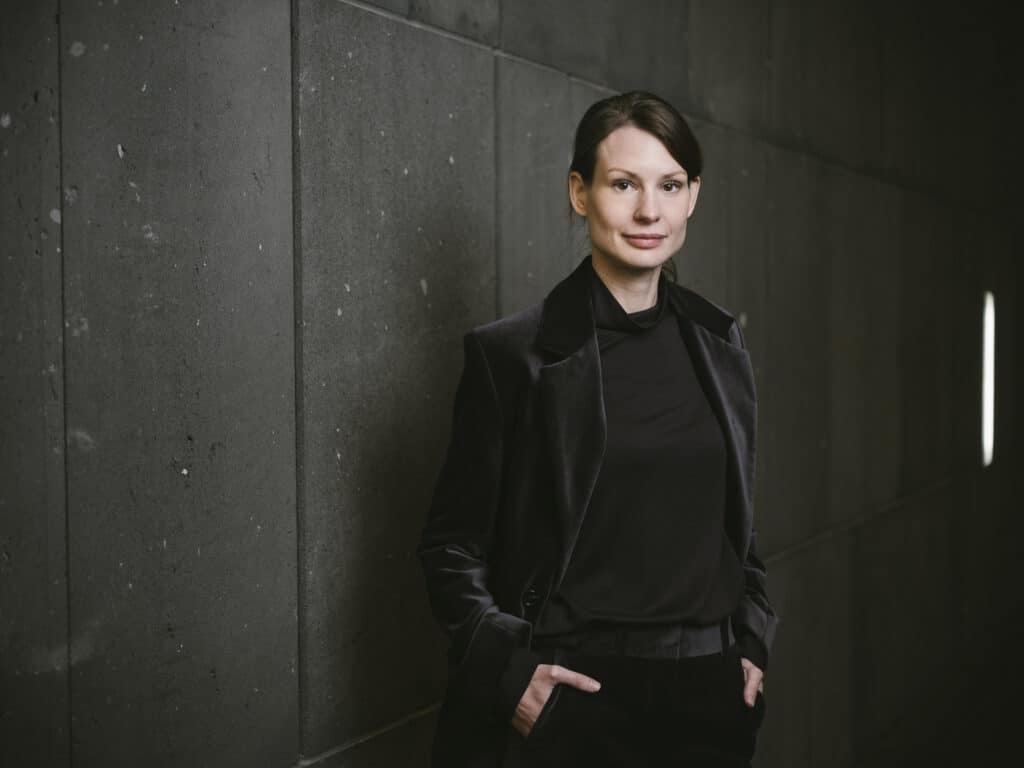
Fatima Hellberg © Niko Havranek / mumok
The museum as an extended experience space
Parallel to the reorientation of the content, the museum is also being opened up spatially. The public zones - from the foyer to the café - are being redesigned to establish the museum as a welcoming, permeable place. A central area for education, workshops and participative formats will be created on level -3. An "action and reflection space" that makes art tangible, not just visible.
Enabling space for new art
A third pillar is the support of new productions. In future, mumok will increasingly act as a place of artistic creation - through commissioned works, long-term collaborations and studio formats. With Lukas Flygare, previously at the MMK Frankfurt, Hellberg will have a chief curator at her side who brings international experience and will strengthen the programmatic depth.
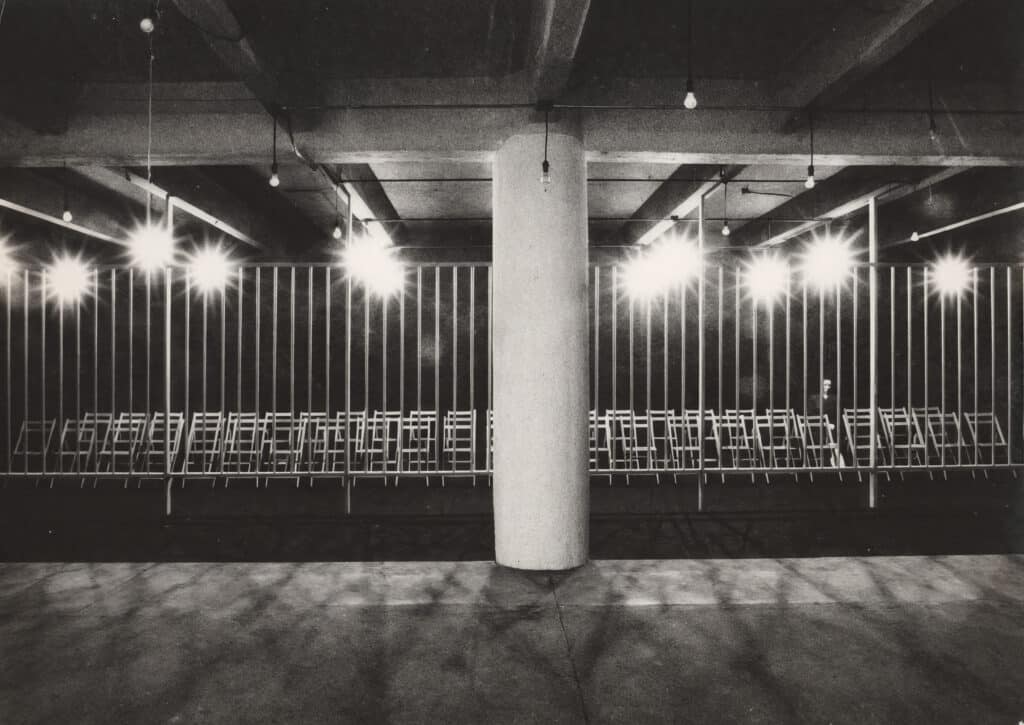
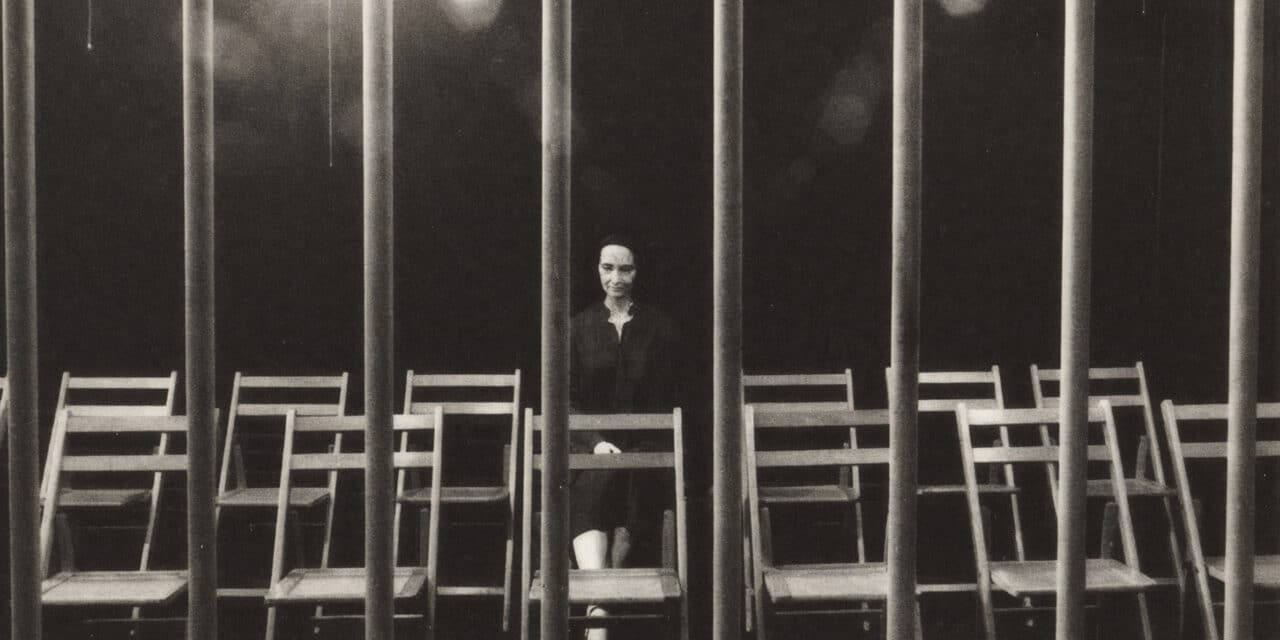
Kate Millett, Terminal Piece, 1972, mumok - Museum moderner Kunst Stiftung Ludwig Wien, Photo: Chie Nishio / The Kate Millett Trust
"Terminal Piece" - an opening with a signal effect
The major exhibition "Terminal Piece", opening on June 19, 2026, is the first visible expression of this repositioning - and a strong cultural-political statement.
The starting point is Kate Millett's installation of the same name from 1972, a key feminist work that addresses structures of power, perception and participation. The architecture of the work - cage, stage, protective space or control apparatus - changes with the viewer's perspective. The fact that Hellberg chose this particular work as the first purchase of her tenure is anything but symbolic: Millett's themes, once part of a global emancipation movement, are once again highly topical today.
At the same time, "Terminal Piece" choreographs the structure of the entire building. Each level of the mumok becomes an "act" and creates a walk-in narrative between theater and exhibition.
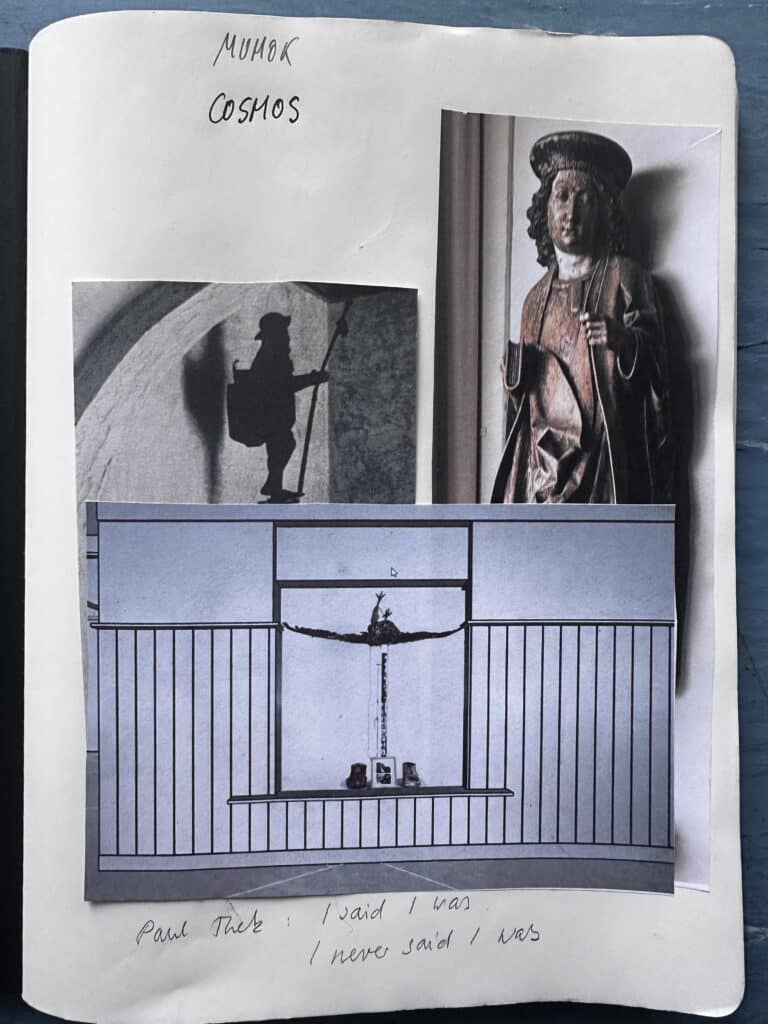
Anna Viebrock, page from the notebook for the exhibition Terminal Piece, 2025, photo: Anna Viebrock
Stage designer Anna Viebrock has designed the entrance section as a complex spatial experience that makes the front and back stage of the museum visible at the same time. Works by Lutz Bacher, Paul Thek, Rudolf Schwarzkogler and others are presented here in new constellations - many of which have not been exhibited for years.
At the same time, the first major solo museum exhibition by Georgian artist Tolia Astakhishvili, whose works understand spaces as a structure of memory, transformation processes and hidden stories, will open. In her show, the "figure of the child" becomes the leitmotif of an ambivalence of autonomy and dependence - a conceptual echo of Millett's questions.
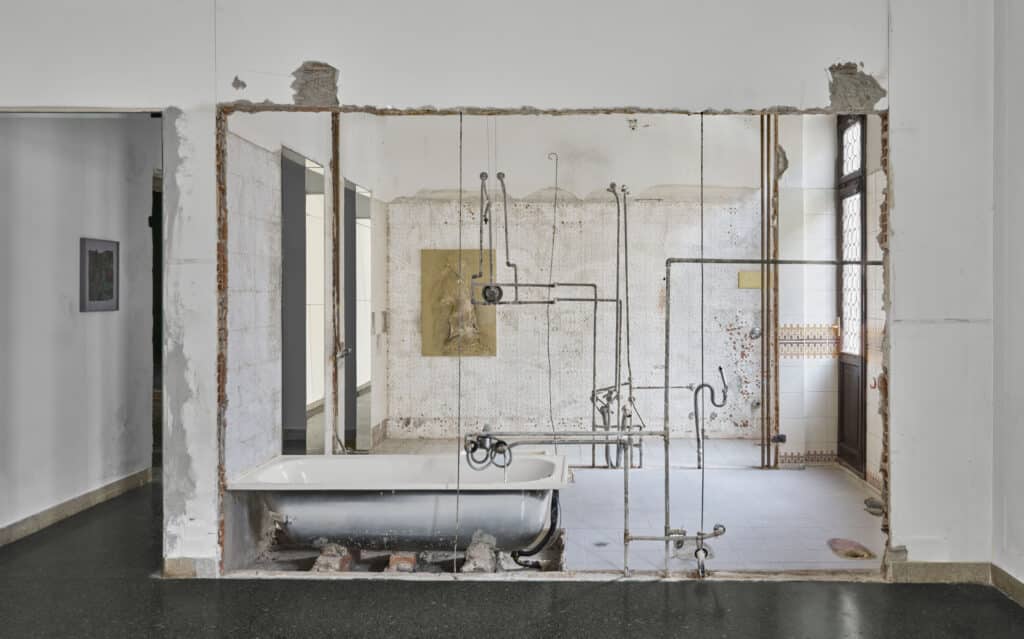
Tolia Astakhishvili, my emptiness, 2025, Segmented walls, exposed pipes, bathtub, dimensions variable of other spaces, 2025, Segmented walls, mirror, dimensions variable, I have to tell you my dream before I wake up too much, 2018-2024, acrylic, oil, canvas, Maka Sanadze, untitled, edited magazine pages, Courtesy the artist, Nicoletta Fiorucci Foundation and LC Queisser, Tbilisi, Cologne, Photo: Tolia Astakhishvili Studio
Hellberg formulates her vision not as a break, but as thinking ahead. No loud effects, but "precision in looking and listening", as she emphasizes. With this attitude, she positions mumok as a museum that is aware of its social responsibility - and does not respond to this with overwhelming aesthetics, but with clever, dialogical formats.
"Terminal Piece" marks much more than a large exhibition: it is the first hub of a museum that is once again networking, opening up and inviting - and that is placing its future on a strong, flexible foundation.
from June 19, 2026