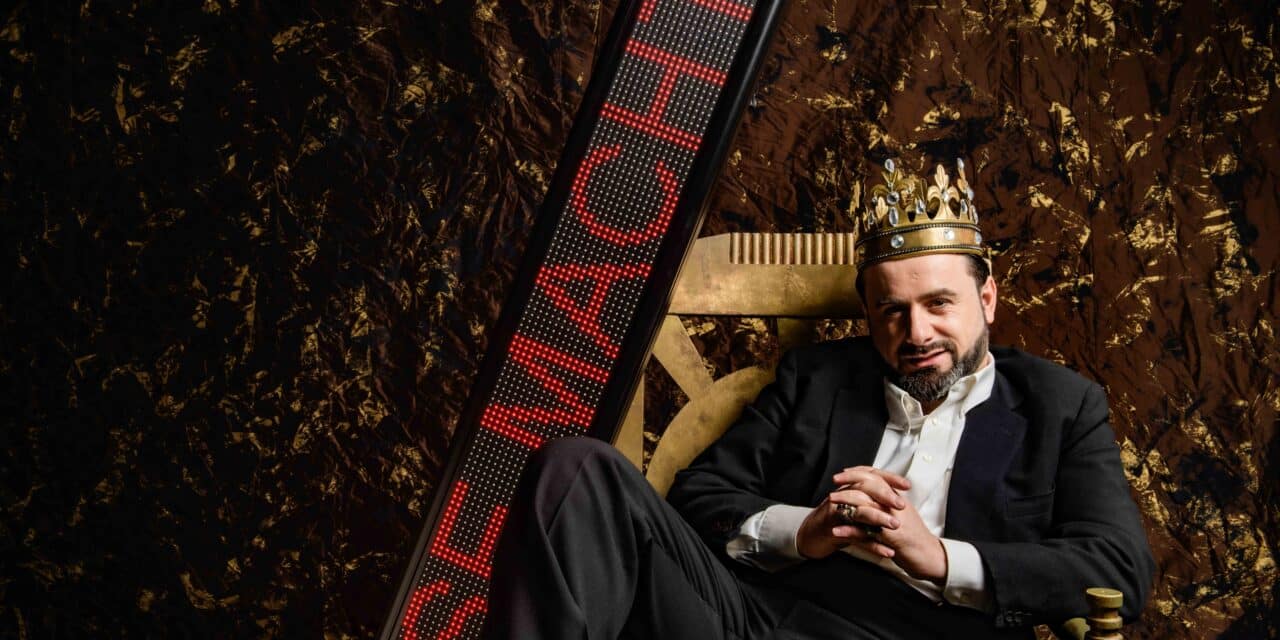
Roland Schwab 's production focuses on the themes of imprisonment and power. The prison serves not only as a backdrop, but also as a metaphor: in the apparent game for power, violence becomes a prison from which no one can escape from a philosophical perspective.
After the victory of Nabucco, King of Babylon, over the Hebrews, he takes them into captivity. Meanwhile, his daughter Fenena, who is in Hebrew captivity, has turned her back on her father and chosen her lover Ismaele, the nephew of the king of Jerusalem. Abigaille, Nabucco's second daughter, on the other hand, craves power. When she learns that she is not Nabucco's biological daughter, she decides to get her sister out of the way. When Nabucco finally declares himself a god and loses his mind, she seizes her chance: she tricks her father into imposing the death penalty on all Hebrews - including his biological daughter. Fearing for her life, Nabucco regains his sanity and liberates the Hebrew people.
The story of NABUCCO is rooted in the Bible. King Nebuchadnezzar II is said to have lost his mind after defeating the Hebrews and finally found himself again through God. In 1842, Giuseppe Verdi achieved an overnight breakthrough with this material. It is said that the Milan audience was able to identify with the people of the Hebrews: Milan was under Austrian rule at the time of the premiere in 1842. The choral number Va, pensiero from the third act of the opera - known today primarily as the "Prisoners' Chorus" - was read as a hymn to freedom. Verdi therefore owed his success not least to the political potential of his opera.
Premiere October 3, 2025
Further performances: October 18, 19, 24 and 31, November 2, 9 and 14, December 11, 2025, February 21, March 6, April 5, 2026