ATTENTION: The exhibition "Against the Current. Pasolini - Berg - Hrdlicka", which officially ended on November 9, was visited by a total of 10,025 enthusiastic art lovers. Due to numerous requests, the exhibition can still be viewed by groups of visitors on special guided tours (by prior arrangement) until the end of 2025!
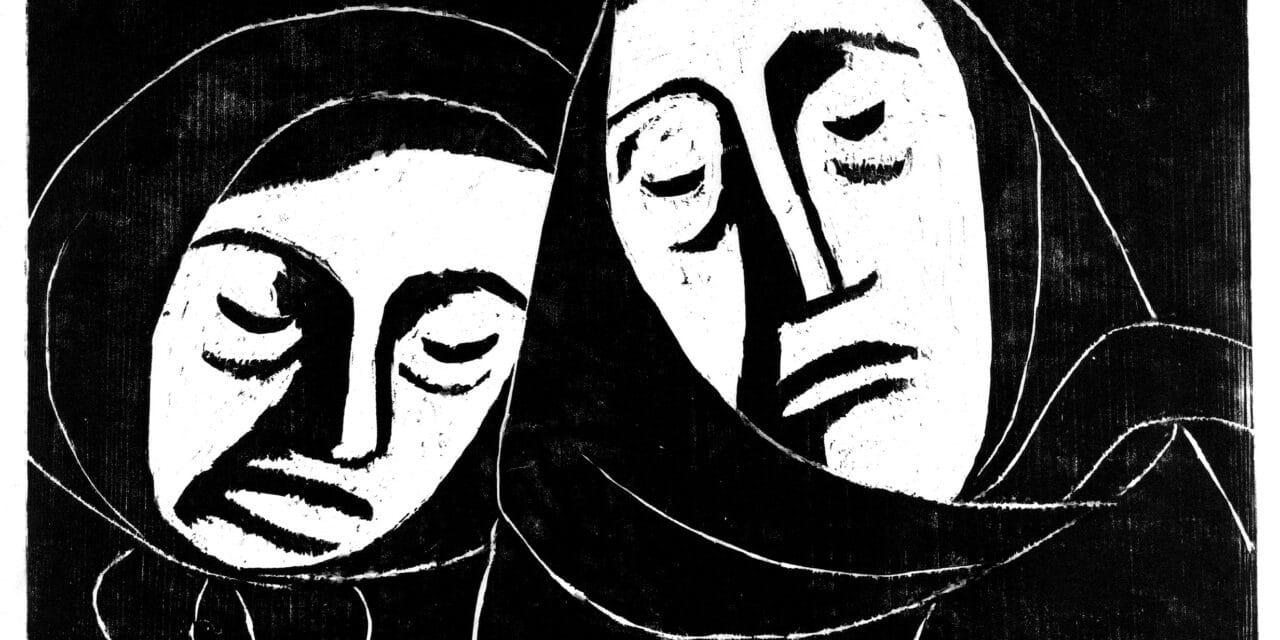
Pier Paolo Pasolini lamented the disappearance of a rural world throughout his life. Werner Berg also had to realize the loss of this world in 50 years of his work. The show confronts pictures, films and quotes from both artists and also presents Alfred Hrdlicka's cycle "Pasolini". Alongside the works of Werner Berg (1904-1981), the core of the exhibition is formed by his texts, in which he affirms his rejection of affluence and belief in progress. His critique of civilization is juxtaposed with text panels containing quotations from Pier Paolo Pasolini (1922-1975).
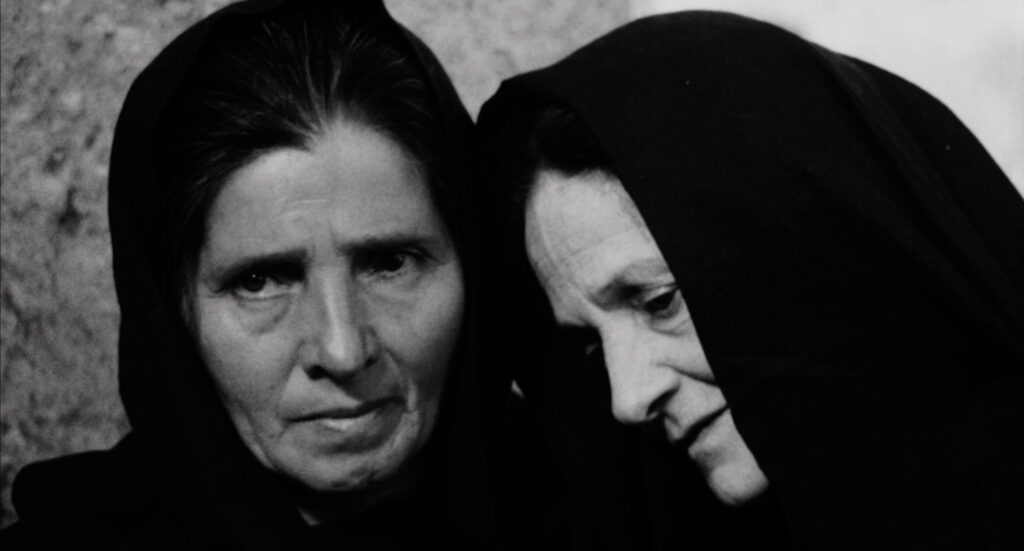
Pier Paolo Pasolini, still from the film Il vangelo secondo Matteo, 1964 © Societa Compass, Roma
The two artists never met throughout their lives, but they came to similar conclusions in numerous reflections. Without uniting the two with their very different lives, the complex show reveals their work. They can both be seen as prophets of changes that threaten the world today.
The writer and director Pier Paolo Pasolini - the 50th anniversary of whose death will be celebrated in 2025 - experienced a time as a young adult in the rural world of Friuli, which he was forced to leave at the age of 27 and in which he saw an exemplary way of life throughout his life. He also worked tirelessly to preserve dialects and regional characteristics.
At the age of 27, Werner Berg opted for an abandoned life of self-imposed poverty in a remote, originally marginalized area of society. In a radical, real-life realization, he condemned a bourgeois way of life with its primacy of possessions and goods, as well as conventions and conformism. As a simple, hard-working farmer among his slow-moving neighbors, he documented the peculiarities of his adopted homeland and its language group.
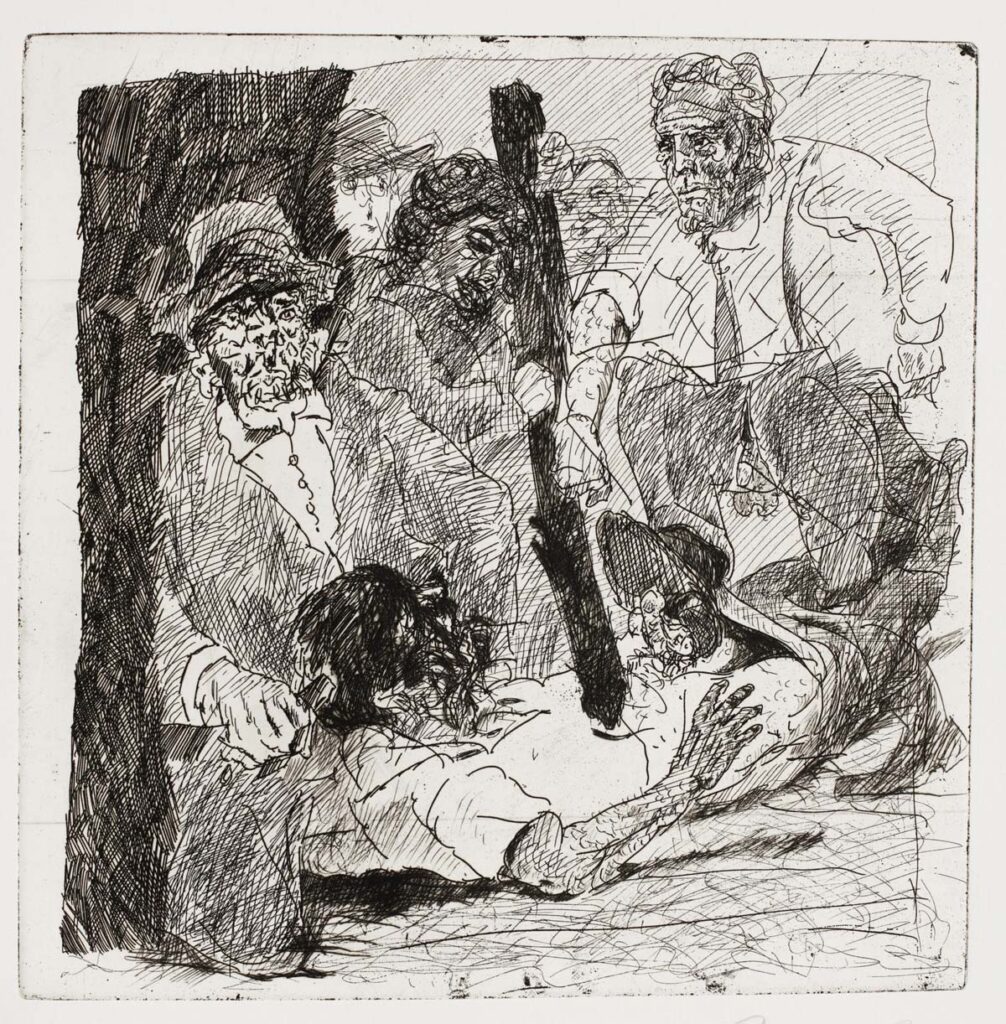
Alfred Hrdlicka, Version of political femicide III, 1983 © Archive Alfred Hrdlicka, Vienna
In his harrowing cycle "Pasolini", Alfred Hrdlicka (1928-2009) impressively and disturbingly depicts Pasolini's life-defining theme of homosexuality and the shock of his murder in over 40 etchings. The tragic fate of the great Italian artist and intellectual, marked by decades of hostility, thus becomes an intrinsic part of the exhibition. The region around the Tagliamento and the area of Carinthia to the south of the Drava river prompted the two artists to gain general insights in the face of an anthropological turning point. Independently of each other, they note the loss of an archaic culture that has existed for centuries as a result of the complete industrialization and general levelling of the last peripheral areas. Juxtapositions of stills from Pier Paolo Pasolini's films and two of his early films, which can also be seen, with works by Werner Berg also demonstrate the correspondence.
The art façade campaign will also be carried out in 2025. Large-scale façade designs will extend the exhibition in the city center. Such an extension of the presentation in the museum into the public space, which defines an entire urban ensemble, is now a unique feature of the cultural town of Bleiburg/Pliberk.
May 1 to November 9, 2025
In the sculpture garden of the museum a corresponding exhibition by Hans-Peter Profunser will be shown. Born in Lienz and raised in Berg im Drautal, this extraordinary artist initially trained as a machinist. It was not until 1988 that he began his remarkable career as a sculptor. More than one hundred solo exhibitions and participations in exhibitions at home and abroad, participation in symposia and numerous awards bear witness to Profunser's artistic creative power. Many of his works can be found in private and public collections, while over twenty sculptures can be admired in public spaces. His two large-format metal sculptures "Begegnung/ srečanje" and "Die Getriebenen" have been welcoming travelers to the cultural city of Bleiburg/Pliberk at the northern border of the municipality for years.
www.wernerberg.museum
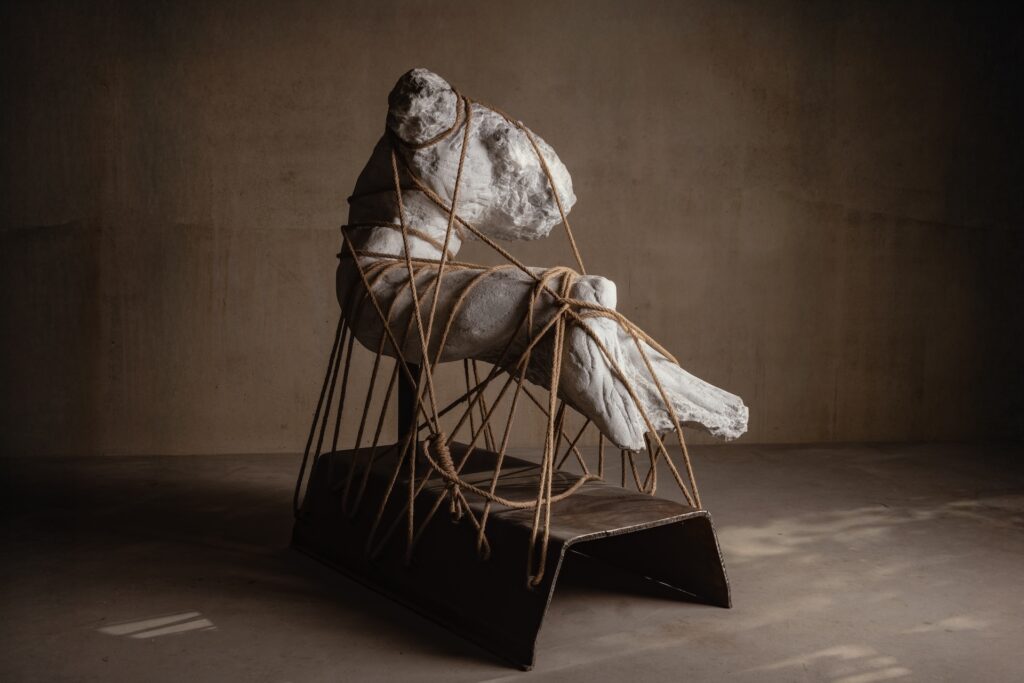
Hans-Peter Profunser, embroidery, steel, hemp ropes; Krastal marble, photo © Thomas Taurer