With the exhibition "Modernism at the Zoo", the Franz Marc Museum presents for the first time a fascinating insight into the role of zoological gardens as a source of inspiration for modern art. With more than 100 paintings, sculptures, prints, sketches and photographs by artists such as Franz Marc, August Gaul, Oskar Kokoschka, Paul Meyerheim, Renée Sintenis, Paul Klee and August Macke, the exhibition shows how zoos became central places of artistic creation. The exhibition also includes historical materials such as posters and books that illustrate the importance of zoological gardens as a reflection of social and cultural developments around 1900.
The zoo as a place of art and society
In the early 20th century, zoological gardens were not only tourist attractions, but also a central place of urban life. Here, the boundaries between nature and culture, wilderness and civilization blurred, which attracted modern artists in a special way. They used the animals as motifs for a new, experimental visual language that broke away from academic traditions and concentrated on the essentials.
The exhibition shows how artists such as Franz Marc, Oskar Kokoschka and August Gaul depicted animals as an expression of a longing for originality and authenticity. At the same time, topics such as colonialism and animal ethics are addressed, which are also closely linked to the history of zoological gardens.
Art as a change of perspective
The works in the exhibition invite a change of perspective: they show the animal not just as an object, but as a sentient being and thus open up new perspectives on the relationship between humans and animals. At a time of global ecological crises, an examination of these works offers a historical reflection on man's relationship with nature.
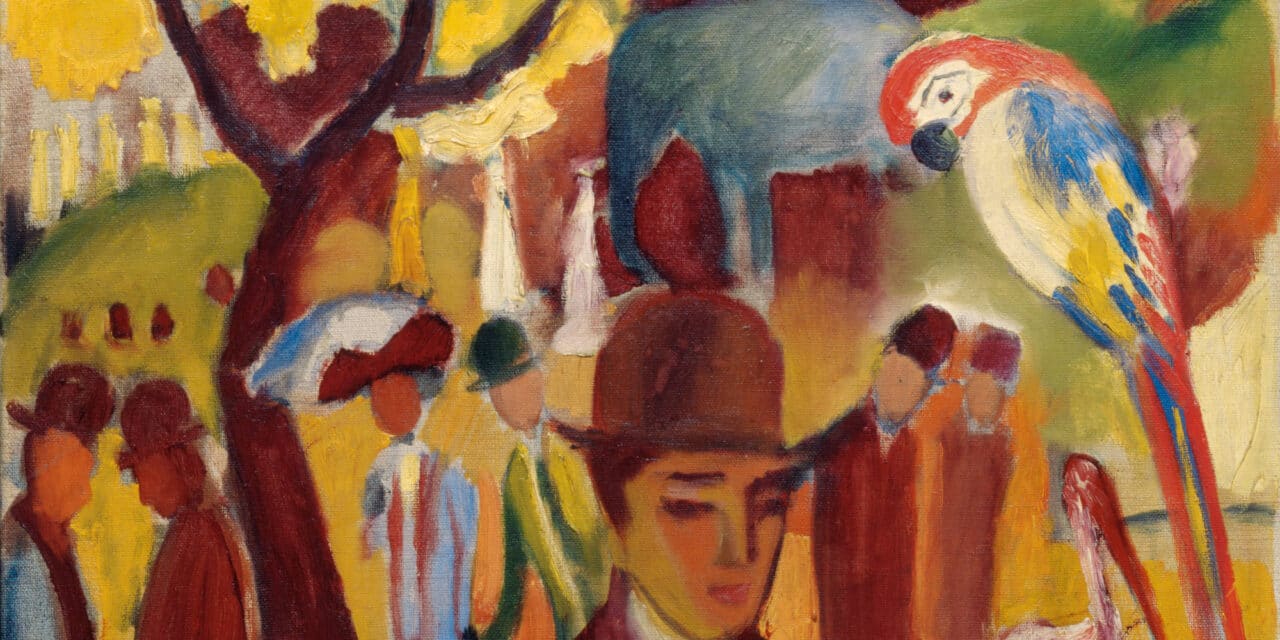
The exhibition is divided into seven chapters covering topics such as the zoo as an urban attraction, the enthusiasm for aquariums and underwater life, the depiction of 'exotic' animals and the connection between art and nature conservation. Particular highlights include works such as Franz Marc's "The Infinite Being (Gazelles)", Oskar Kokoschka's "Tiger Lion" and August Macke's "Small Zoological Garden in Brown and Yellow", which present the animal as a central motif of artistic modernism.
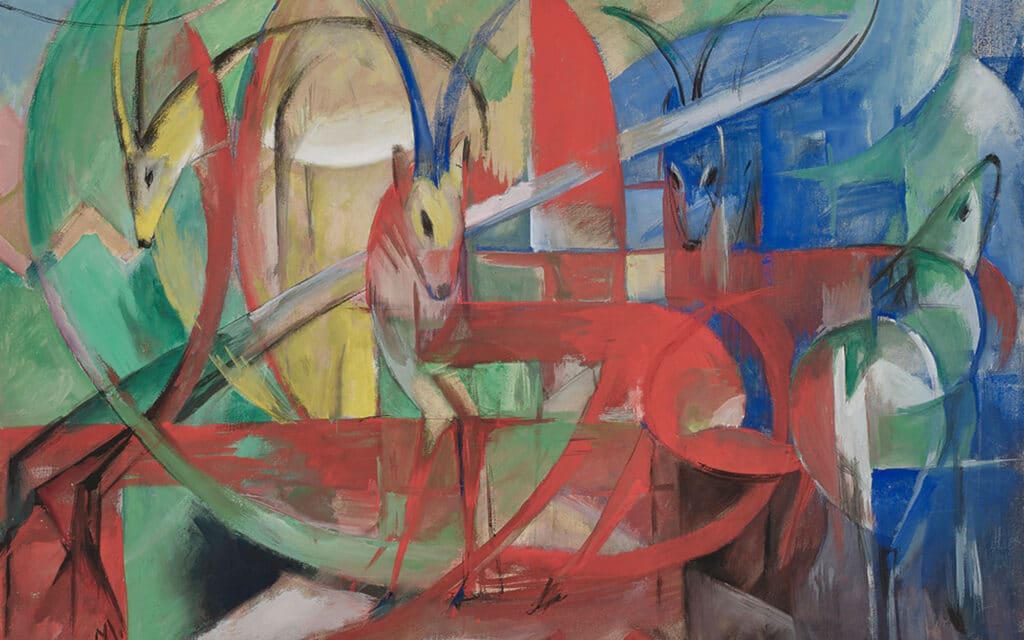
Franz Marc, Infinite Being (Gazelles), 1913-1914, Franz Marc Museum, on permanent loan from a private collection, photo: collecto.art
Historical relevance and contemporary significance
The exhibition not only shows the artistic significance of zoos as a source of inspiration around 1900, but also raises questions that are still relevant today: How do humans influence nature? What responsibility do we have towards the animal world? The examination of modern art opens up new perspectives on the role of zoos and their ambivalent history.
For the presentation, the Franz Marc Museum was able to acquire important loans from numerous German and international museums as well as public and private collections and bring them together in Kochel. The lending institutions include the Belvedere in Vienna, the Folkwang Museum in Essen, the Kunstmuseum Bern, the Museum Frieder Burda in Baden-Baden, the Lenbachhaus in Munich, the Oberösterreichisches Landesmuseum in Linz, the Ziegler Collection at the Kunstmuseum Mülheim, the Städel Museum in Frankfurt and the Zentrum Paul Klee in Bern.
June 29 to November 9, 2025