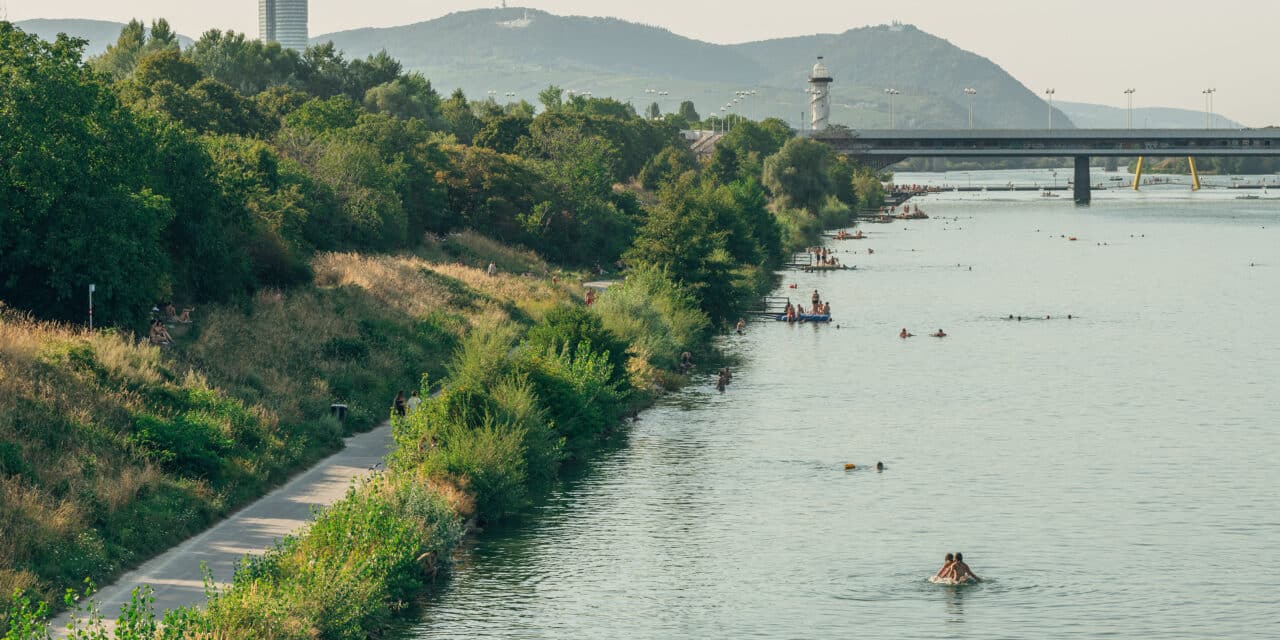
The Danube Island—built between 1972 and 1988 together with the New Danube to protect Vienna once and for all from devastating floods—is now an integral part of the cityscape. However, when the project was given the green light in 1969, it was neither planned nor foreseeable that on warm summer days, more than 200,000 people would be visiting the island, which is over 21 kilometers long and up to 250 meters wide.
Originally conceived as a purely technical flood protection project and highly controversial politically, the Danube Island only developed into a diverse natural and recreational area on the water over the course of more than 30 years of planning and construction. Ideas for high-rise buildings, a military training area, and a central railway station on the island were rejected, as was the design of the island as a purely hydraulic dam without access to the New Danube. Numerous protagonists advocated for a design that was as close to nature as possible, not least against the backdrop of the growing environmental movement of the 1970s.
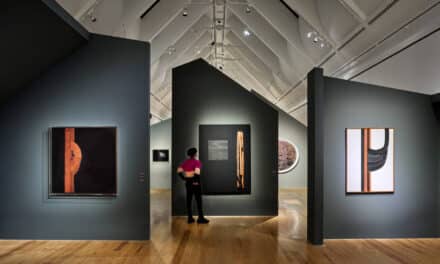
The exhibition at the Wien Museum highlights the history and present of this special landscape, which today ranks among the most important open spaces in the growing city and serves city dwellers of all ages and backgrounds for a variety of activities. The prehistory of efforts to provide effective flood protection for Vienna and the "wild" use of the former floodplain, which already anticipated much of the later use of the Danube Island, are also topics of interest, as are the complex planning and construction history of the island, which is unique in its dimensions, and its central ecological and social significance in today's increasingly dense and hot city.
March 26 to August 30, 2026