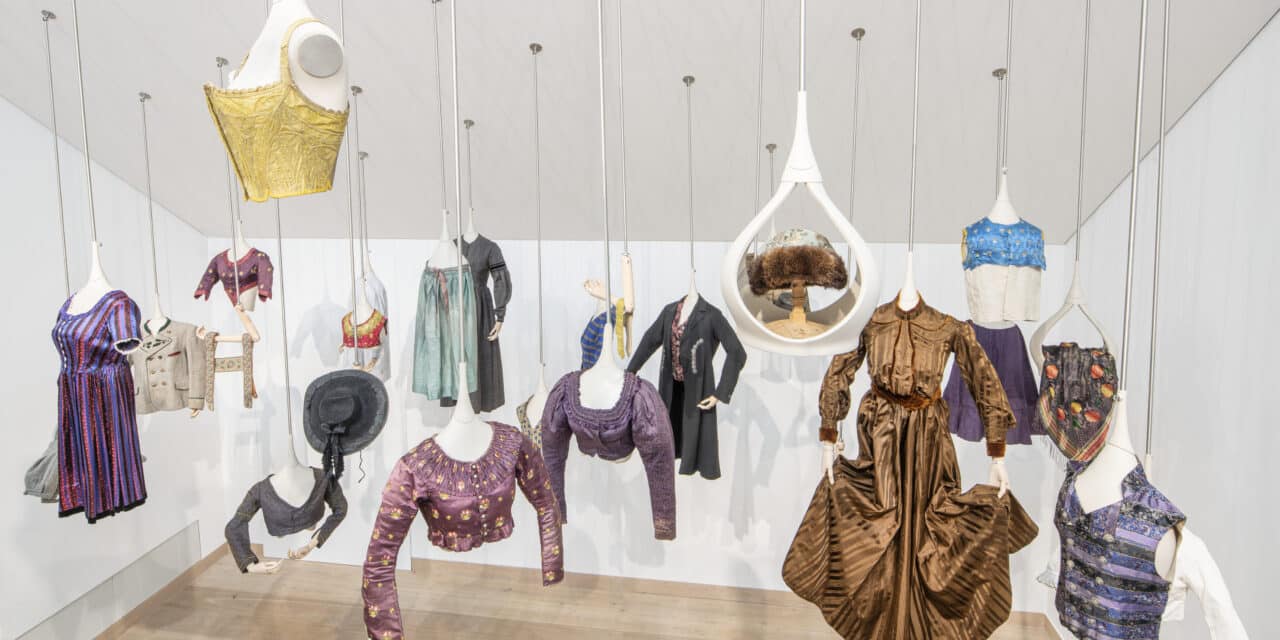
To mark its 100th anniversary, the Werdenfels Museum is showing the special exhibition "Thousands of objects and much more history - culture, art and tradition from 5000 BC to the present day". Visitors can expect a fascinating journey through 7000 years of cultural history. The focus is on 200 special exhibits: 100 objects that people wore on their bodies and 100 that they used to shape their surroundings. The exhibition spans the entire building and offers new perspectives on historical artifacts with a unique traditional costume exhibition, interactive experiences and artistic interventions. The museum's history also becomes legible as cultural history - in times of revolutionary technical innovations, the museum should preserve and pass on traditions and lore for younger generations. This challenge is certainly particularly acute again today.
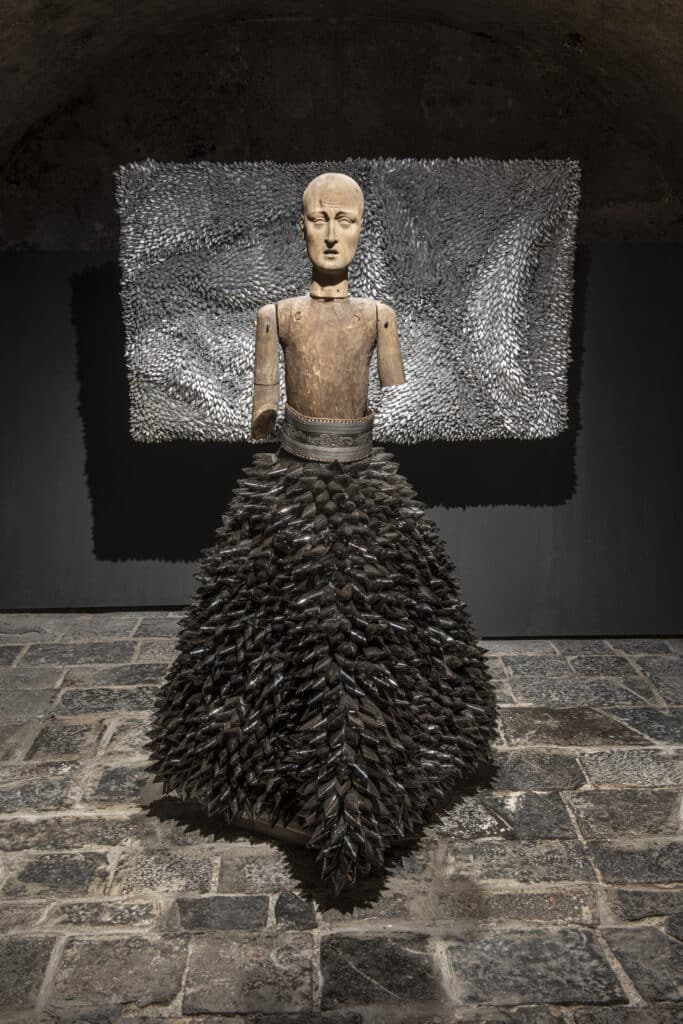
Exhibition view, Stephan Hann, Intervention © Museum Werdenfels/Anton Brandl
In addition, contemporary artists set new accents within the historical framework:
- Berlin object artist Stephan Hann examines historical textiles with his transformations.
- With her installation "Ausgewickelt - Follow The Girls", Rita de Muynck reflects on the swaddling of babies and its historical significance.
- Sculptor Marie Ostler combines glass and mountain landscapes and plays with the boundaries of reality and fiction.
- The painter Alejandro Valbuena explores the subconscious in his installation in the historic bedroom.
- The light art installation by Michael Gene Aichner illuminates the work of Fritz Pfaffenzeller, the founder of the "Villa Orient".
- Soundscapes by Michael Popp and Thomas Hoffmann connect the past and the future through acoustic experiences.
The anniversary exhibition aims to arouse enthusiasm for the fascination of the cultural-historical museum, which is not only a place of preservation but also of living experience. Visitors are invited to marvel, discover and immerse themselves in the history of the region. An extensive supporting program accompanies the exhibition and offers in-depth insights into the world of historical objects and their significance for the present.
April 12 to November 9, 2025
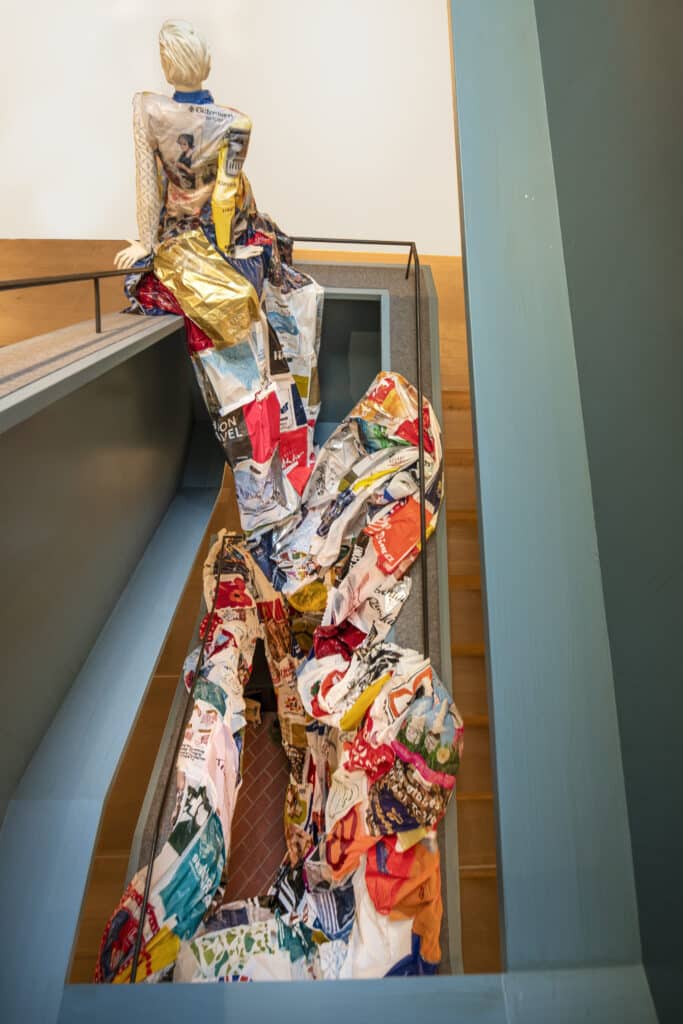
Exhibition view, Stephan Hann, Intervention © Museum Werdenfels/Anton Brandl
"Brilliance and transparency - reverse glass art from modern times to the present day
The exhibition "Brilliance and Transparency - Reverse Glass Art from Modernism to the Present Day" shows how modern and contemporary artists have adapted the technique of reverse glass painting. It traces the development of this art form since the Blaue Reiter and highlights different perspectives on glass as a material.
In the early 20th century in particular, a surprising number of artists such as Gabriele Münter, Walter Dexel and Oskar Schlemmer used glass as a new medium of expression, which is closely linked to its extraordinary material properties and changing symbolism. Contemporary artistic positions illustrate the continuing relevance of reverse glass art.
The museum
The origins of the Werdenfels Museum date back to 1895, when the district drawing and carving school in Partenkirchen set up a "collection of samples and antiquities". This comprised around 300 historical works of art and everyday objects, which served as teaching material for the students. In a time of increasing industrialization, these objects were intended to preserve and promote traditional craftsmanship.
With tourism flourishing at the turn of the century, there was a growing need to document the history and culture of the region on a permanent basis. Despite the economic challenges of the early 1920s, committed citizens worked together with the Werdenfels district to realize the vision of a museum of their own. Thanks to numerous donations - including from abroad - the "Werdenfelser Bezirksmuseum" was opened on May 21, 1925 on Rathausplatz. It comprised nine rooms, furnished as living and collection rooms. The museum association was founded in the same year.
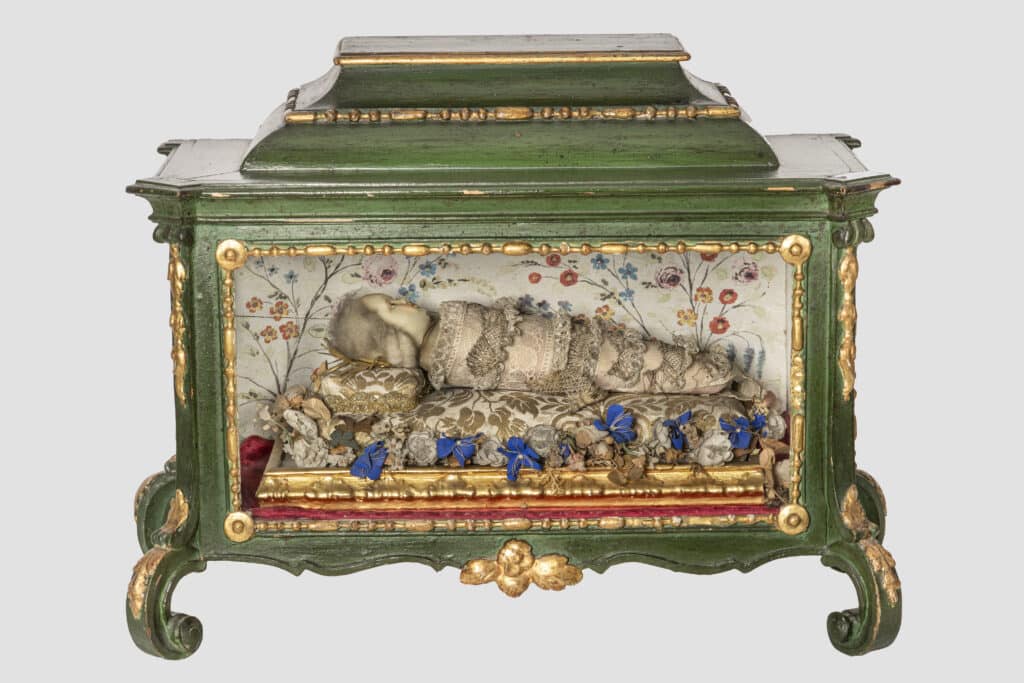
Fatschenkind © Museum Werdenfels/Anton Brandl
In 1973, the museum moved into the historic trading house "Zum Schlamp" in Ludwigstraße due to the constantly growing collection. Here, the original parlors designed back in 1925 were faithfully rebuilt and a special exhibition room was created. In 2018, a modern extension was added with office, storage and event rooms as well as a spacious special exhibition area. Today, the museum covers around 1600 square metres and is now a focal point for the interface between tradition and today. The nucleus of the collection was a "sample and antique collection" of around 300 pieces built up by the "Partenkirchen Technical School for Woodcarving" since 1895. Today, the collection has grown to well over 10,000 objects. The permanent exhibition illustrates the history of the district of Garmisch-Partenkirchen and life in the villages in 19 rooms with countless exhibits and ensembles. Folk art, handicrafts and works of art of international importance, as well as rural tools and traditional furniture take you on a journey through past eras back to the 16th century. Due to its age, the building itself provides the ideal setting for your tour.
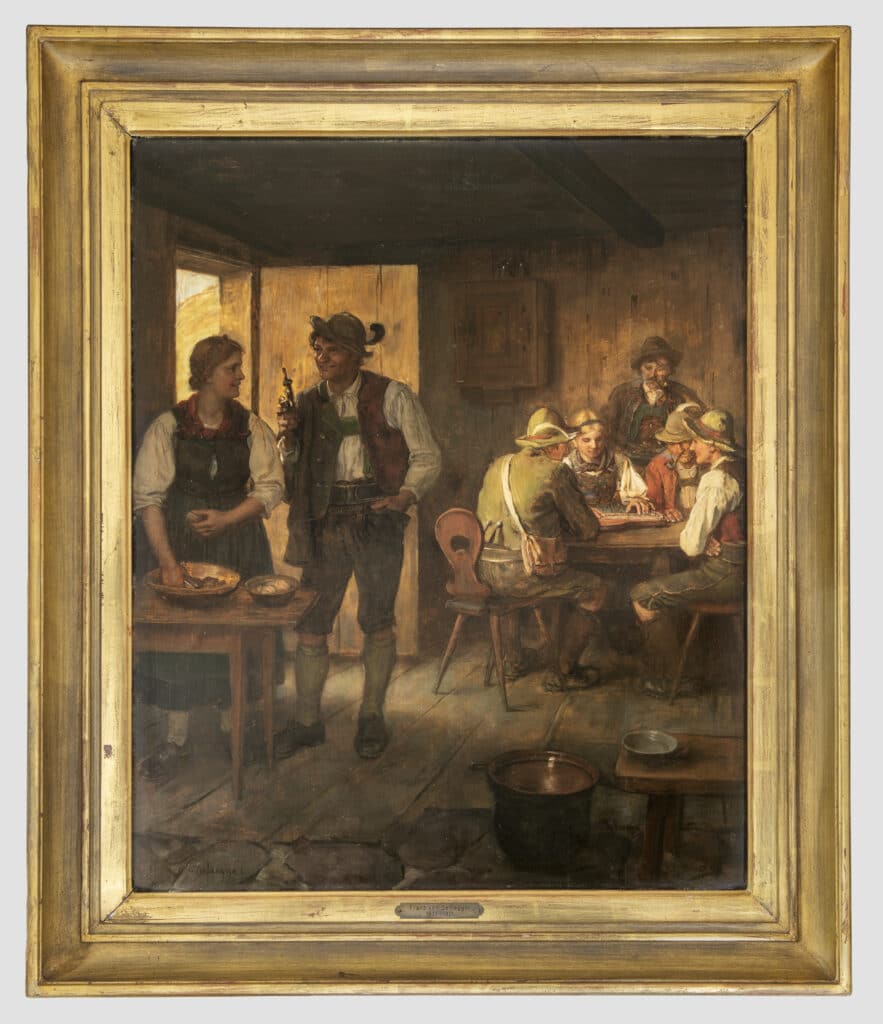
Franz Von Defregger, the zither player © Museum Werdenfels/Anton Brandl