A departure that changed art history: 120 years ago, four architecture students in Dresden founded a community of artists that was to become the epitome of German Expressionism. Under the name "Brücke", Ernst Ludwig Kirchner, Erich Heckel, Karl Schmidt-Rottluff and Fritz Bleyl sought new paths beyond academic conventions in 1905. They wanted to build bridges - between art and life, between the inner and the outer, between the individual and the community.
The Franz Marc Museum in Kochel am See is dedicating a major anniversary exhibition to this historic departure from November 23, 2025. Under the title Wild Colors, Free Spirit, around 50 works will be on display, including important loans from the Ravensburg Art Museum and private collections. The show tells the story of a movement whose radical energy still resonates today - and at the same time raises new questions.
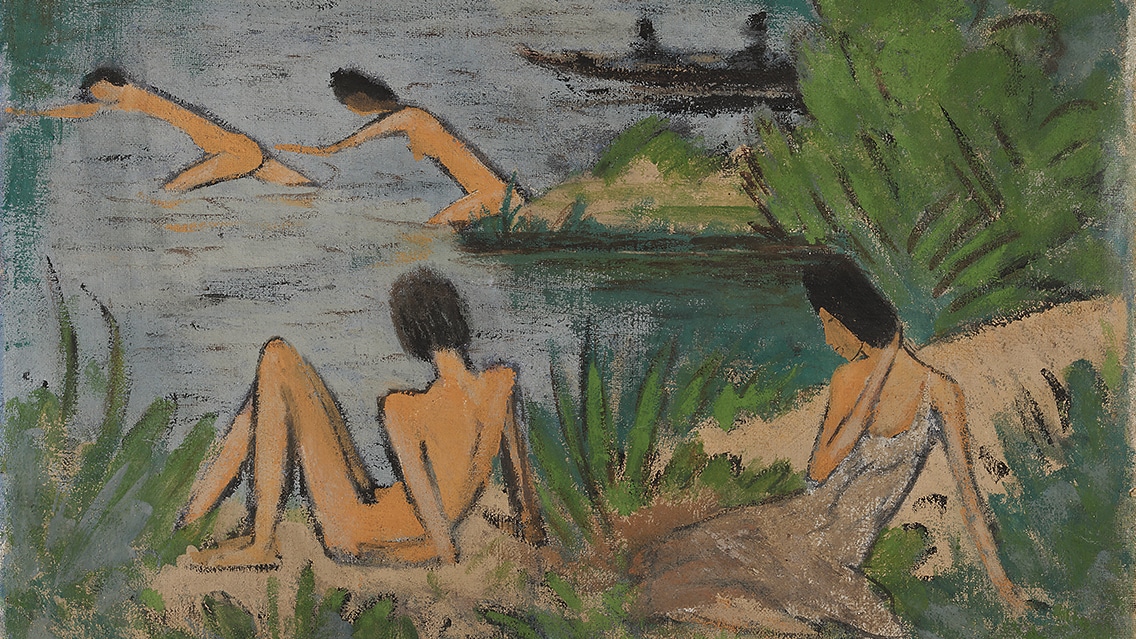
The Brücke artists wanted nothing less than a renewal of life through art. In bright, unbridled colors, they sought an undisguised expression of feeling. The group's program, formulated in 1906, called for the overcoming of "outdated academic art" in favour of the "direct" and "unadulterated". This idea was reflected not only in painting and graphic art, but also in their communal approach to life - in shared studios, nude studies with model friends, in a free approach to physicality and nature.
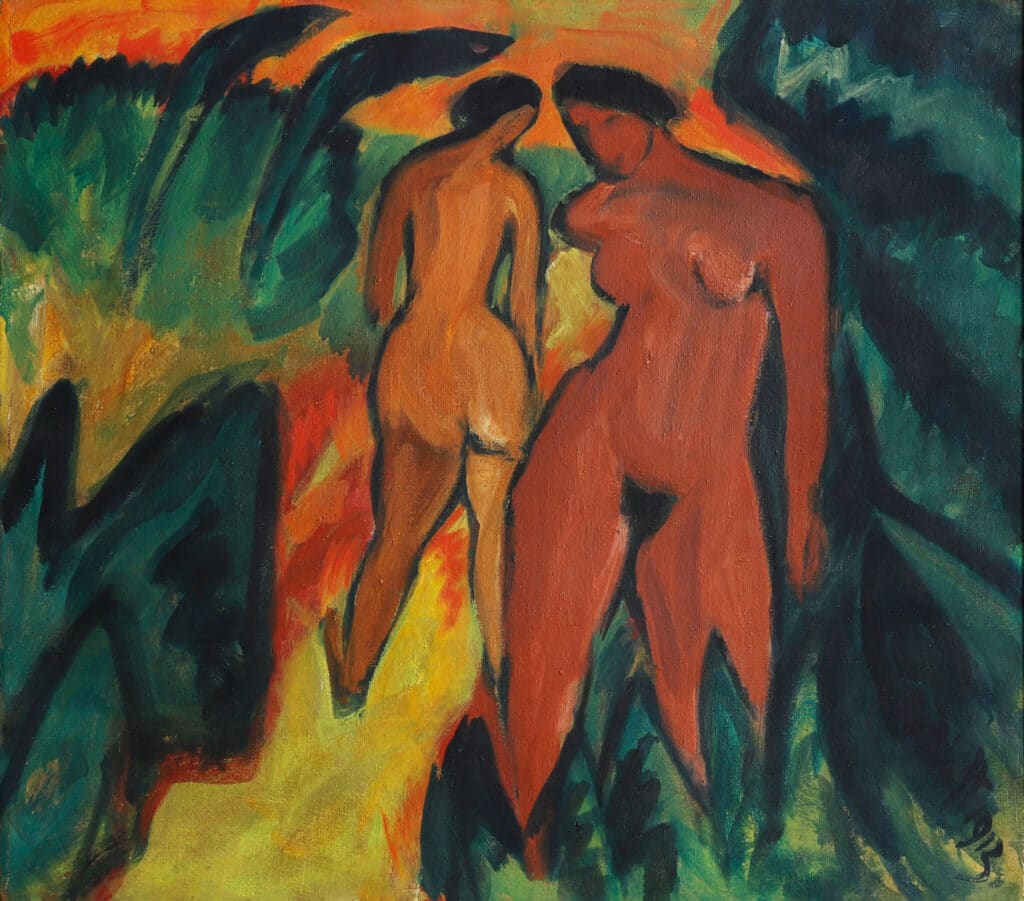
Karl Schmidt-Rottluff, Two Nudes in the Green, 1913, Ravensburg Art Museum, on permanent loan from a private collection in southern Germany
The exhibition is divided into thematic chapters that trace the development of the group from the early Dresden years to the Berlin period. The initial focus on nature and rural motifs - bathers at Lake Moritzburg, nudes in the countryside - contrasts with the vibrant cityscapes of the 1910s. Kirchner's nocturnal street scenes and Pechstein's portraits reflect the tension between vitality and alienation, between the longing for originality and the attractions of the modern metropolis.
At the same time, the show also reflects the ambivalences of Expressionism. The Brücke artists' fascination with non-European art, which they idealized as the epitome of the "natural" and "pure", today reveals the colonial view of their time. Aspects that have been critically discussed in recent research are also addressed - such as the treatment of female and child models and the question of power relations in the artistic communities.
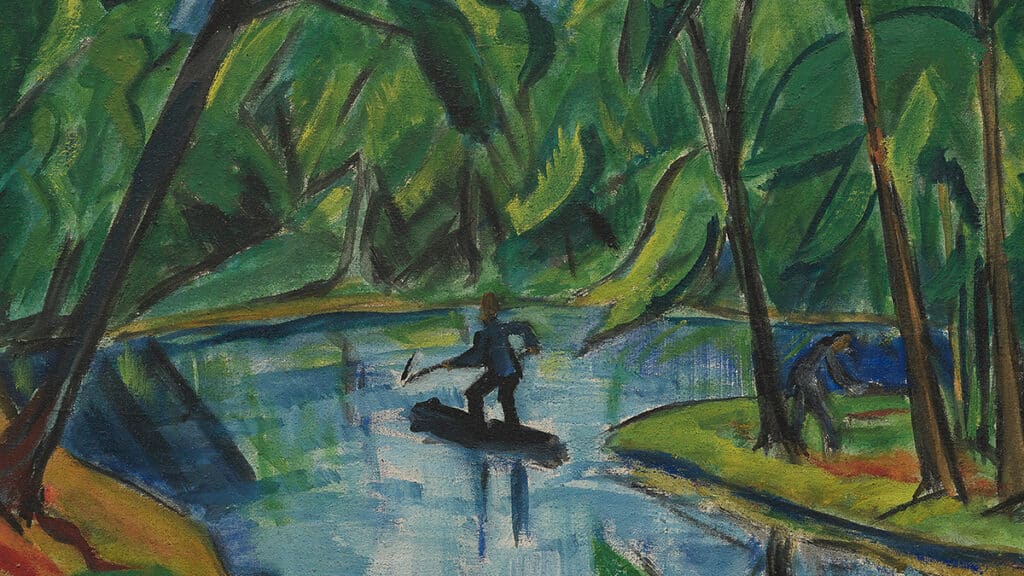
Erich Heckel, Parksee, 1914, Franz Marc Museum, Kochel a. See on permanent loan from a private collection, photo: © Collecto.art
The Franz Marc Museum takes up these perspectives without diminishing the creative power of the bridge, but rather making it tangible in its historical complexity.
Wild Colors, Free Spirit is thus more than a homage to Expressionism. The exhibition shows how the Brücke created a new visual language from the tension between rebellion and idealism - a language of emotion, stubbornness and freedom. At a time when art once again has to deal with social upheaval, the questions posed by this generation seem astonishingly contemporary.
November 23, 2025 to April 12, 2026
www.franz-marc-museum.de