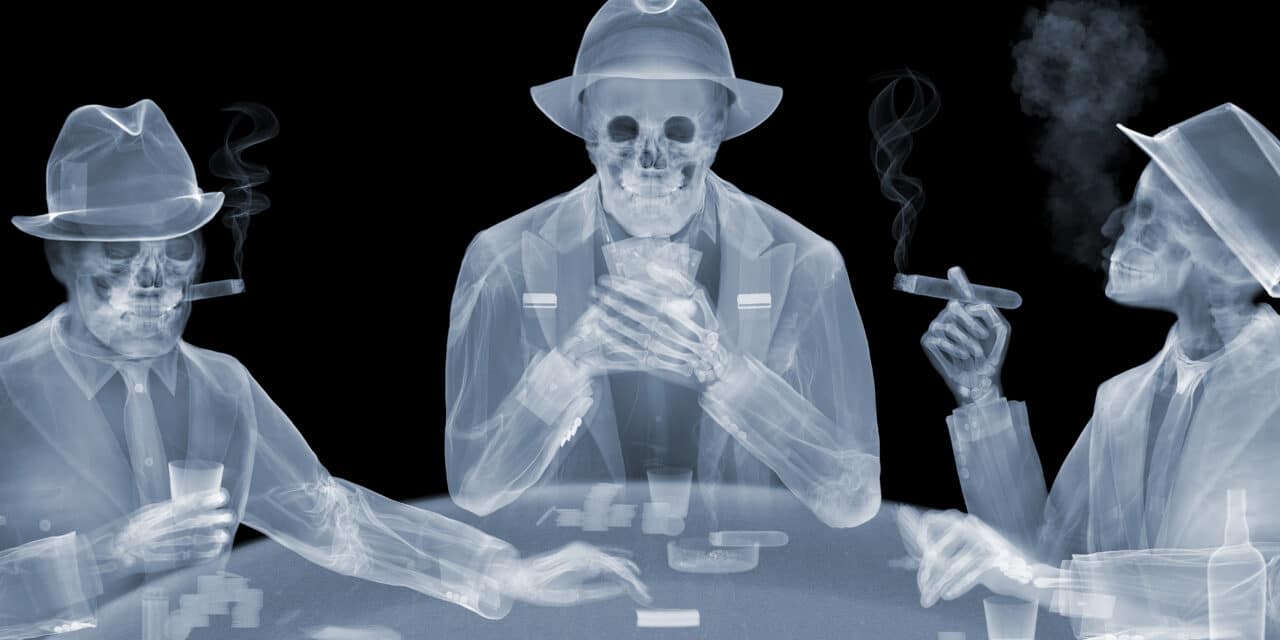
The Völklingen Ironworks opens its doors for an exhibition that takes us into the invisible world behind the surfaces: "X-RAY. The Power of X-Ray Vision" is the first comprehensive exhibition to illuminate all facets of the view behind the obvious - from physics and medicine to art, culture and literature. Since Wilhelm Conrad Röntgen discovered the rays named after him on November 8, 1895, a new dimension of perception has opened up: a view that penetrates matter, makes the hidden visible and shifts the boundaries between inside and outside, between reality and imagination.
Röntgen's groundbreaking discovery spread around the world at lightning speed. Special editions in five languages enabled physicists and laymen alike to repeat his experiments. His decision to forego patents accelerated the worldwide dissemination and made him the first Nobel Prize winner in physics just one year later. It became clear early on that X-rays were not just a physical phenomenon, but had cultural, artistic and philosophical implications: from the "glass man" of the 1920s to medical teaching models and X-ray images in fashion, advertising and literature - the rays changed the way we see the world.
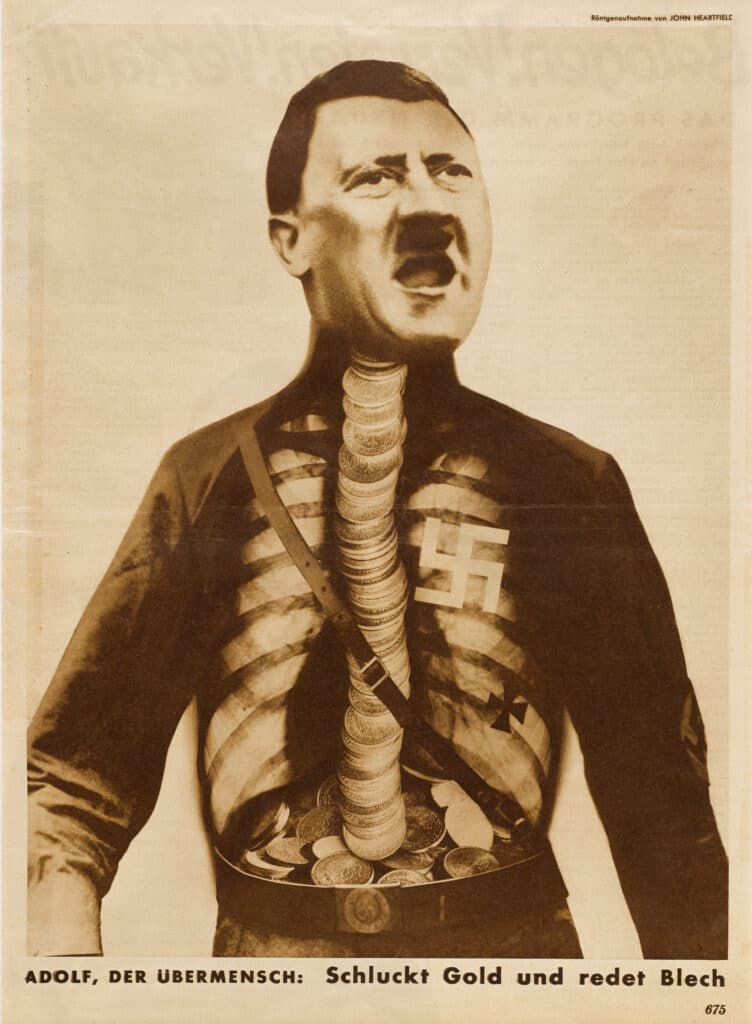
John Heartfield, Adolf, the Übermensch: Swallows gold and talks tin, 1932 © The Heartfield Community of Heirs / VG Bild-Kunst, Bonn 2025
The exhibition unfolds chronologically and thematically: starting with Röntgen's early laboratory set-ups, the first experiments in film and photography and the popular culture of the late 19th century, the focus ranges from the role of radiology in the First World War to artistic adaptations in the 20th and 21st centuries. Iconic positions from Meret Oppenheim to Wim Delvoye and contemporary artists show how the medium of the X-ray has changed our view of identity, death, transience and the invisible structures of our everyday lives. Skulls, skeletons and the "Glass Man" appear as mirrors of human existence, while digital installations, glass window projects and interactive X-ray modifications bring the creative possibilities of rays into the present.
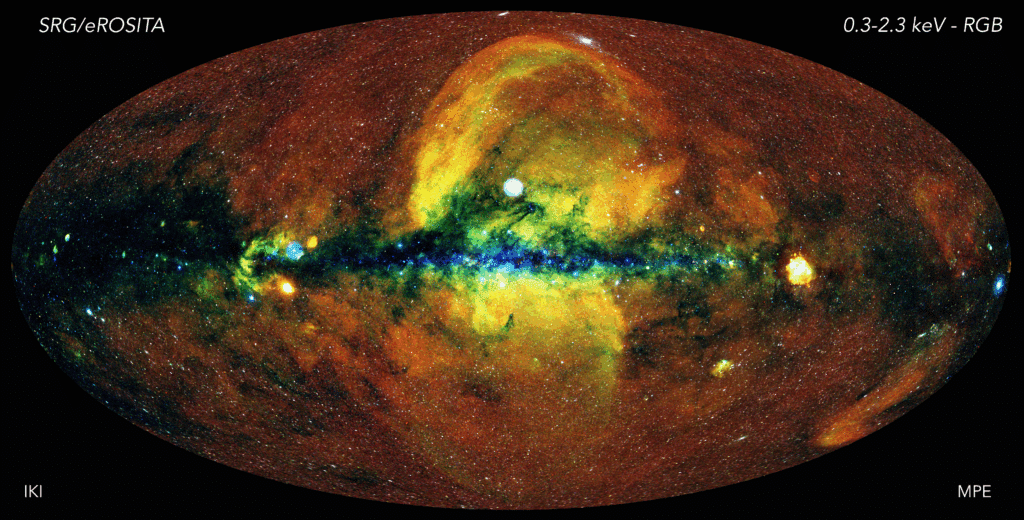
The high-energy universe as seen with the eROSITA X-ray telescope © Jeremy Sanders, Hermann Brunner and the eSASS team (MPE); Eugene Churazov, Marat Gilfanov (on behalf of IKI)
In addition to artistic positions, the scientific applications also become tangible: from historical pedoscopes for determining shoe sizes to modern X-ray satellites such as eROSITA, which explore black holes and galaxies, to high-resolution CT scans. The exhibition shows how X-ray vision constantly oscillates between the micro and macro worlds and expands our understanding of matter, space and time. A catwalk with X-ray fashion, a labyrinth of transparent brick walls and interactive stations make the physical experience part of the concept.
"X-RAY" is a kaleidoscope of seeing beyond the obvious: physics, art, cultural history, literature, architecture and technology merge into a fascinating journey of discovery that sharpens the eye and makes the invisible tangible. An exhibition that teaches us that a whole world lies hidden beneath the surface - and that we only have to learn to perceive it.
November 9, 2025 to August 16, 2026
https://voelklinger-huette.org