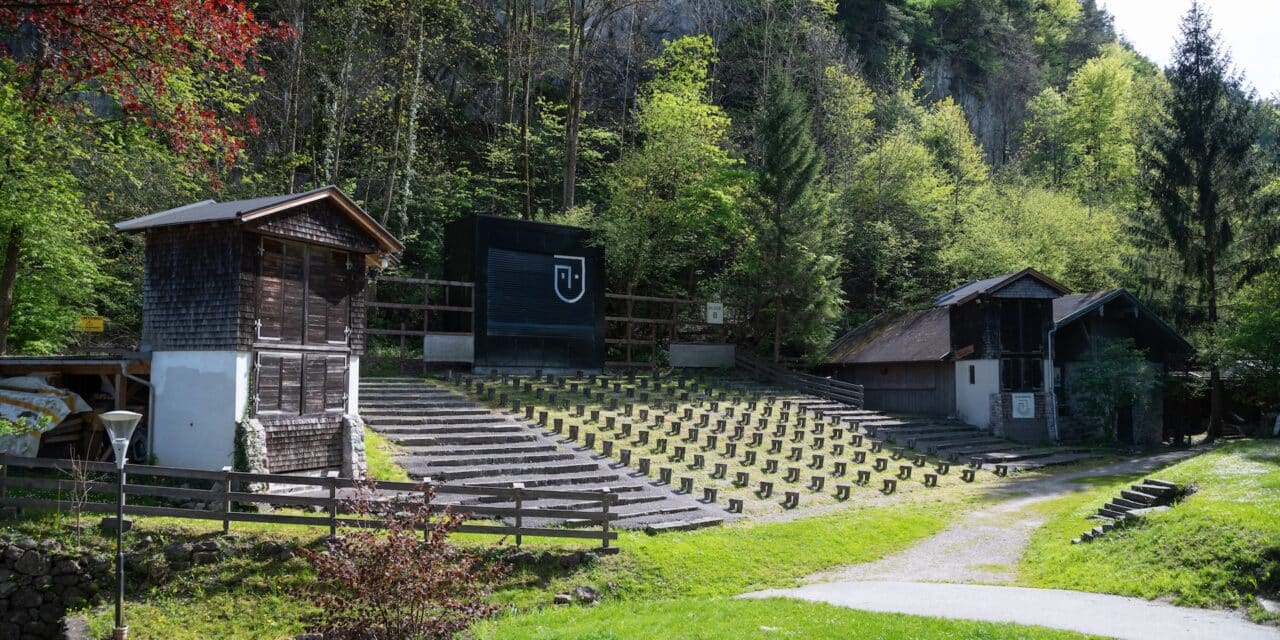
In the summer of 2026, a medieval legend will be brought back to life on the Schlossberg hill in Rattenberg. The Schlossbergspiele Rattenberg theater festival presents "Notburga – die Feierabendheilige" (Notburga – the after-work saint), a world premiere that combines myth, social criticism, and poetic folk theater. The play was written by Barbara Aschenwald, who presents her first full-length play with this work, while Markus Völlenklee takes on the role of director.
The story is told by an old, weary angel who lives on Schlossberg hill—a remnant of a time when people still sought answers in images and myths. His disheveled robe and broken wing reflect a world that has changed. Instead of heavenly signs, economic constraints and social power structures dominate today. But it is precisely in this tension that the story of Saint Notburga unfolds.
Notburga is a figure caught between poverty and dignity, between social advancement and a deep fall. As a servant girl, she gives the beggars outside the castle the leftovers from the count's table – an act of Christian charity that conflicts with the economic interests of her new mistress Ottilie. Under the rule of Henry II, the world order changes: property, obedience, and economic control replace compassion and solidarity. Notburga is banished from Rottenburg for her disobedience and suddenly finds herself without a home, without protection, and without prospects. In the poetic imagery of the play, this situation becomes a timeless narrative about social power relations. The demons of envy, avarice, and greed become visible as invisible forces that shape not only the Middle Ages but also the present. But Notburga remains a figure of faith in human dignity. Her path leads her to work as a servant for the Spiessenbauern family on Lake Achensee—a decline that is also understood as a spiritual test. For the play asks the question: Do we seek salvation, or does salvation find us?
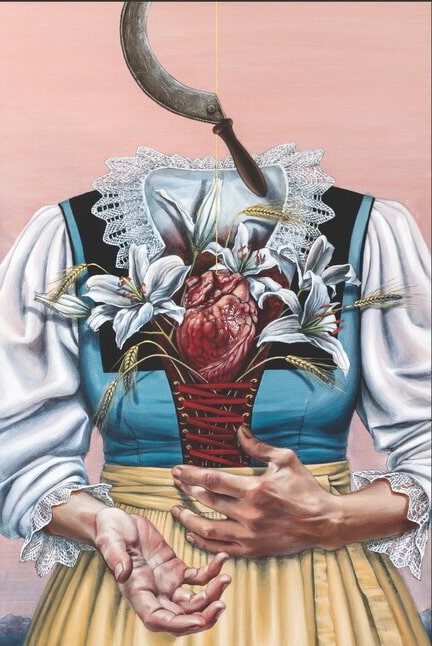
Notburga – the saint of the evening, poster motif for the Schlossbergspiele Rattenberg 2026 © Schlossbergspiele Rattenberg
Director Völlenklee brings his many years of experience in popular theater and his work at major German-language theaters to the production. His artistic career has taken him to major venues such as the Schauspielhaus Düsseldorf, the Thalia Theater Hamburg, and the Salzburg Festival. His long-standing connection to the Tiroler Volkstheater in particular shapes his approach to this production, which combines tradition and contemporary interpretation. In her writing, author Aschenwald combines literary language with social realism. In addition to her work as an author, she works as a nurse at the Schwaz Dialysis Center—an experience that is reflected in her view of human vulnerability and dignity. For her literary works, she has received the Rimbeau Prize, the Jürgen Ponto Prize, and various scholarships, among other awards.
With a view of the historic walls of the Schlossberg, a theatrical experience is created that understands history not as a thing of the past, but as a living narrative about humanity, faith, and social change. For in the end, the central message of this legend remains: one does not get to heaven by seeking it—but because the sacred sometimes finds its way to people.
July 3 to August 7, 2026
www.schlossbergspiele-rattenberg.at