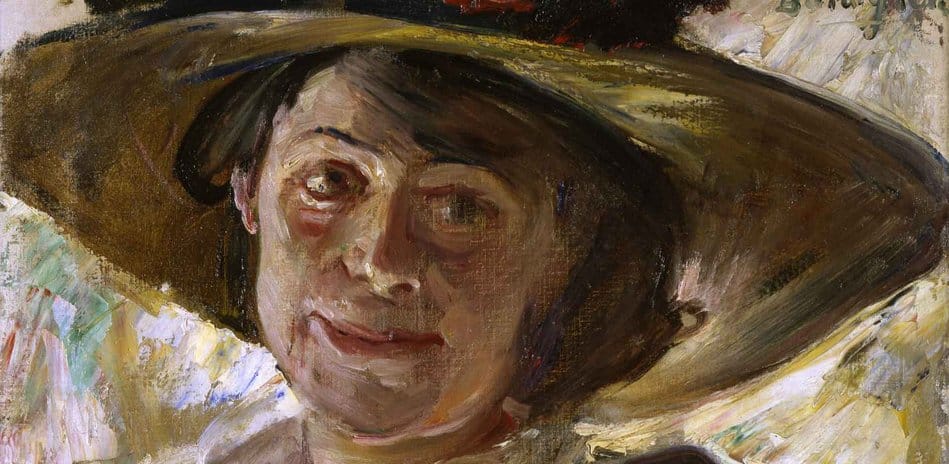
To mark the 100th anniversary of Lovis Corinth's death, the Alte Nationalgalerie is holding a concentrated exhibition on the fate of the works of the artist and his wife, the painter Charlotte Berend-Corinth, in the Nationalgalerie's collection. The exhibition focuses on the different provenances of the paintings: The Nationalgalerie's holdings are supplemented by reproductions of the paintings that ended up in other museums as a result of the National Socialist "Degenerate Art" campaign.
Alongside Max Liebermann and Max Slevogt, Lovis Corinth (1858-1925) is considered the most important representative of German Impressionism. With over twenty oil paintings, some of them large-format, the Nationalgalerie has an extensive and important collection of works by the painter. However, the paths of these objects into the Nationalgalerie's collection are often characterized by loss and partial return: some paintings were confiscated in 1937 as "degenerate", but were surprisingly returned in 1939, others could only be reacquired much later; some were also not confiscated, while others were sold at the time and are now in Germany and abroad.
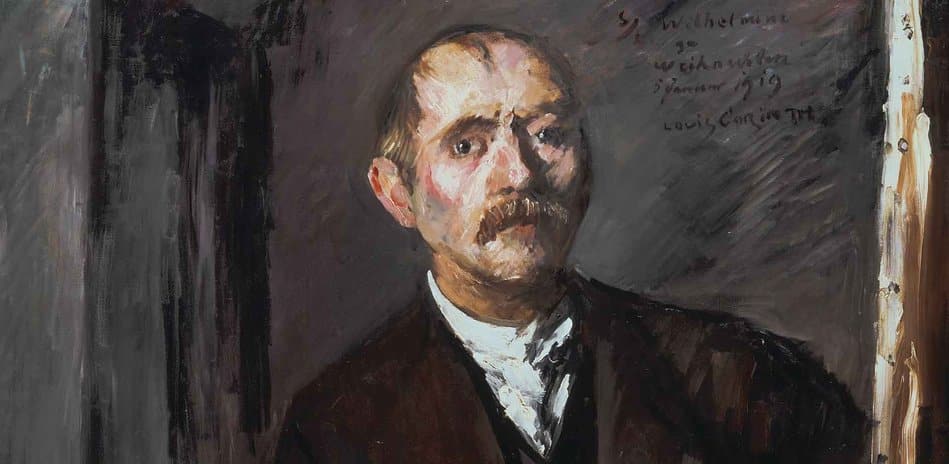
Lovis Corinth, Self-portrait in front of the easel, detail, 1919, oil on canvas © Staatliche Museen zu Berlin, Nationalgalerie, acquired by the State of Berlin in 1976 / Jörg P. Anders
To compensate for these losses, further paintings by Corinth and his wife Charlotte Berend-Corinth (1880-1967) were acquired in both the Federal Republic of Germany and the GDR after 1945. Born in East Prussia, the artist moved from Munich to Berlin in 1901. After suffering a stroke in 1911, his brushwork became much more expressive. When he died of pneumonia on July 17, 1925, he was on a trip to Amsterdam, where he wanted to see the paintings of Frans Hals and Rembrandt once again.
July 18 to November 2, 2025