The Staatsgalerie is one of the largest art museums in Germany. The collection includes paintings, sculptures and prints from the Middle Ages to the present day, including numerous masterpieces and an internationally outstanding collection of modern art. Particular highlights include Oskar Schlemmer's "Figurines for the Triadic Ballet" from the early 1920s, the famous "Back Nudes" (1909-1930) by Henri Matisse, numerous works by Picasso, including the sculpture group "The Bathers" (1956) and the Joseph Beuys Room, which was personally furnished by the artist.
Museum as a school of seeing
Art is a cultural language that people use to communicate with each other. The art of the present always responds to the art of previous eras. In our digital age, the museum has the task of being a "school of seeing" and conveying culture through the visual, the image and its narrative.
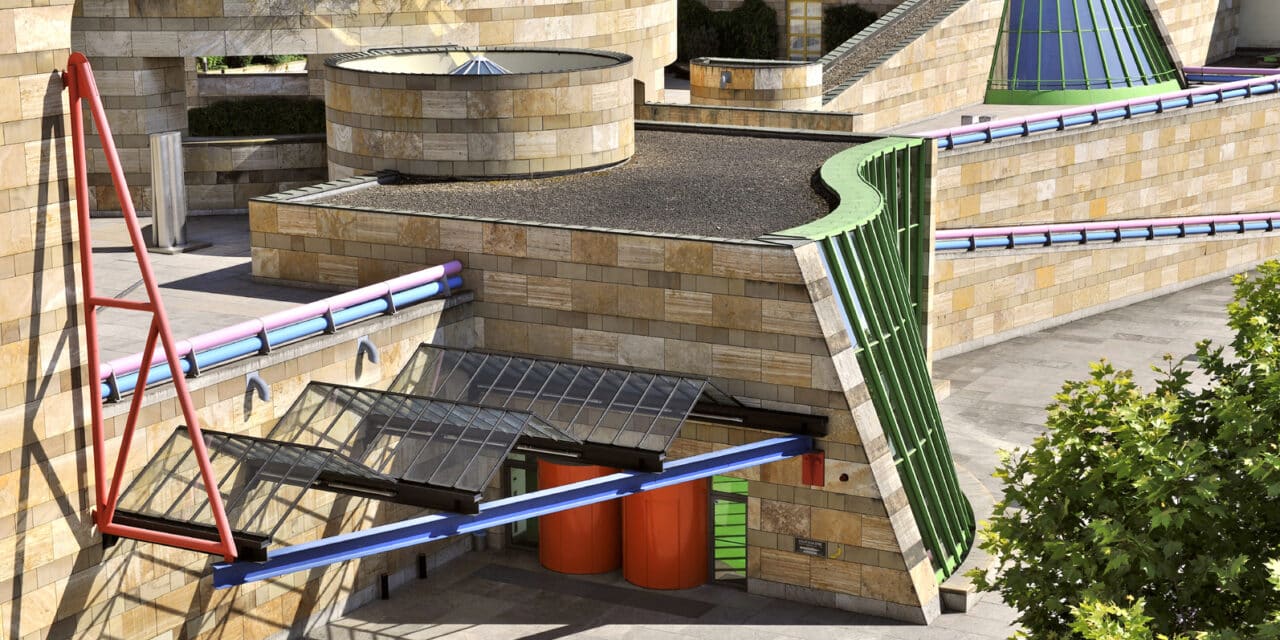
View of the Staatsgalerie Stuttgart © Staatsgalerie Stuttgart
Art for a democratic society
Who owns the museum? This question arises in particular in the context of works such as "Love is in the bin" by British artist Banksy, which attracted worldwide attention in 2018 and was presented in the collection for over ten months. The museum sees itself as a place for open discourse on art, history and society. Exhibitions, lectures and events open up a variety of approaches to art as a reflection of social developments.
The collection predominantly reflects a Western European, male-dominated canon. Female and non-Western positions have so far been underrepresented. Since 2021, this imbalance has been counteracted by a fixed quota for works by female artists, among other things.
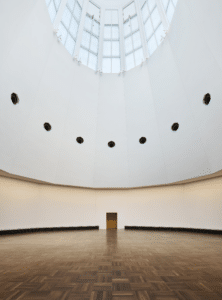
View of the Staatsgalerie in the Kunstgebäude © Simon Sommer
Three architectures for one museum
The building offers an exhibition space of 12,000 m², which is divided between the Alte Staatsgalerie by architect Georg Gottlob Barth (1843) with the extension by Albert von Bok (1888), the postmodern building by James Stirling (1984) and the Steib-Hallen by the Basel architects of the same name (2002). All the buildings are interconnected. In addition to the Alte Staatsgalerie and the Neue Staatsgalerie, the art building on Schlossplatz will be added in 2024 with an exhibition and event space of around 12,000,000 m².
The State Gallery in the art building
After extensive refurbishment by Vermögen und Bau Stuttgart from 2021 to the beginning of 2024, the art building on Schlossplatz was modernized and renovated in line with its listed status. Since April 2024, the Staatsgalerie Stuttgart has been responsible for building management and technical support on behalf of the state of Baden-Württemberg. In addition to the operator function, the Staatsgalerie curates the front part of the building, which was reopened with the exhibition "Florian Slotawa. Viewing Stuttgart" exhibition. Since then, changing exhibitions and events have been held there - also by partner institutions such as the State Archaeological Museum and the Stuttgart Art Museum. This will be followed in 2025 by the major state exhibition "Katharina Grosse. The Sprayed Dear".
The rear part of the building will continue to be used by the Württembergischer Kunstverein. The Stuttgarter Künstlerbund is represented on the upper floor and the ISOPI Café & Restaurant operates the catering facilities. The art building will thus serve as a central cultural venue in Stuttgart with a variety of uses in the long term.
You are currently viewing a placeholder content from YouTube. To access the actual content, click the button below. Please note that doing so will share data with third-party providers.