
"All images will disappear." With this sentence, author Annie Ernaux opens her autobiographical portrait Les années, which was published in France in 2008. What does memory weigh and how long can we keep it? And where do the experiences we have gathered remain?
In her work, Ernaux spans a period of time that begins before her own birth in 1940 and extends through her childhood in Yvetot, her youth and adolescence to the present day, when she is now a mother of two and a successful writer. In doing so, she looks uncompromisingly over her own shoulder and that of her generation and identifies explicit ambiguities: Political interest soon reveals itself as disenchantment and is pushed out of everyday private life.
Ernaux used her literary voice to precisely formulate female perception and the reality of life in relation to the respective political and social developments. As European world and consumer history unfolded, the role of women took on a new shape: "For the first time, life was imagined as a march towards freedom. A typical female feeling was about to disappear - that of natural inferiority." Really completely? How much are we judged by gender and origin? Which characteristics of our own milieu do we assert and which do we ignore? Which luxury items and products do we consider indispensable because they express our identity? And how do we measure whether and how a woman receives social recognition? By describing her own biography, Annie Ernaux provides her readers with a universal chronicle of the last 70 years to compare with their own lives.
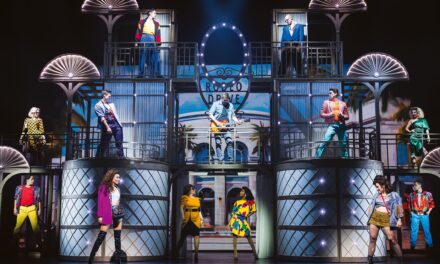
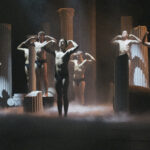
Jan Neumann, in-house director at the Deutsches Nationaltheater Weimar since 2013, succeeds in creating a sensitive and humorous approach in his production: the ensemble light-footedly portrays an entire life over decades and takes the audience on a journey through love, disappointments, successes, marriage, children, happiness and misfortune and finally through ageing. A great sweeping arc over a century and a life.
December 10 and 11, 2024