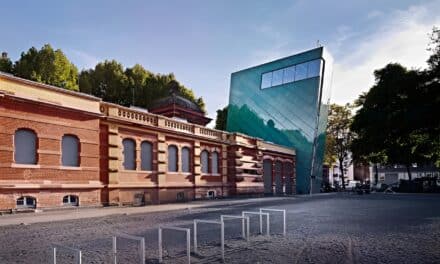
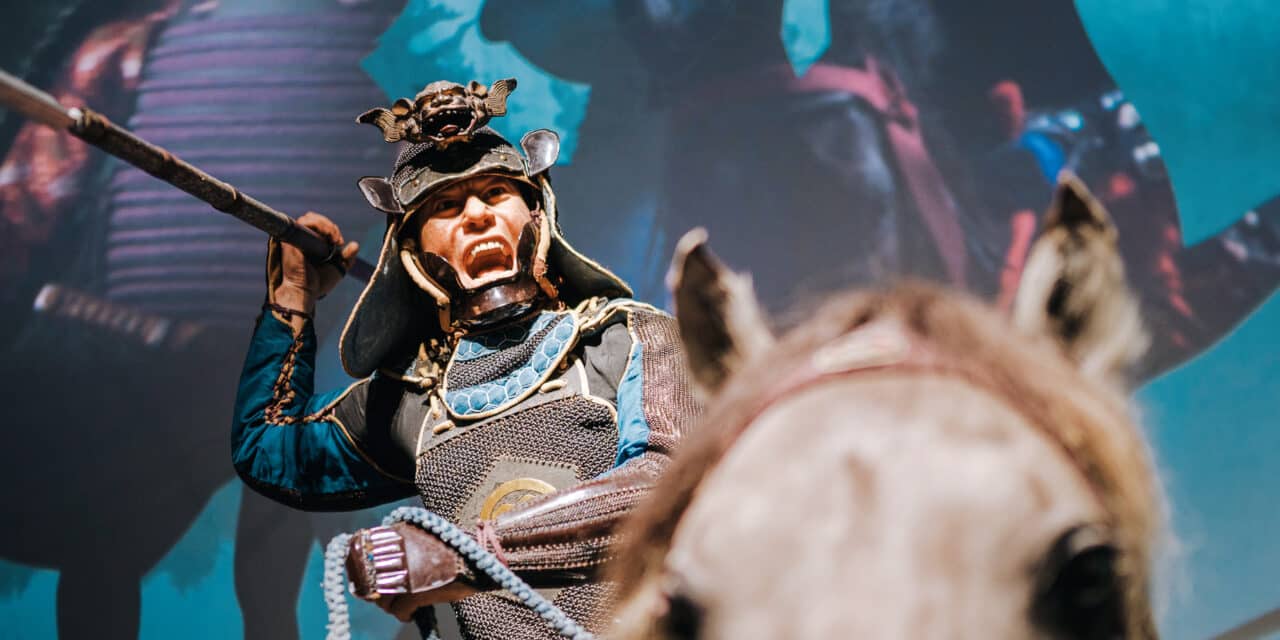
In the heart of Berlin-Mitte, in a place that has always been characterized by cultural movement, the Samurai Museum Berlin invites you on one of the capital's most unusual journeys through time. On 1,500 square meters, a world unfolds in which historical artefacts, digital innovation and Japanese aesthetics merge into a spectacular narrative. Over 1,000 original objects - armor, masks, blades, textiles, tea utensils and sculptures - make the era of the samurai tangible and open up direct access to over 1,000 years of cultural history.
This extraordinary collection is based on the passion of Berlin entrepreneur Peter Janssen. Decades ago, he acquired his first katana at a flea market. Today, his collection comprises over 4,000 pieces and is one of the most important private collections in the world. With the new location in Berlin-Mitte, Janssen presents his treasures in a contemporary museum architecture that not only shows history, but brings it to life. Gigapixel images, CT scans, interactive 3D models and rotating display cases allow visitors to immerse themselves in the complexity of traditional craftsmanship. The museum tour is also accompanied by Kitsune, the changeable fox spirit from Japanese folklore - a playful element that particularly delights younger visitors.
A special experience is the Nō Theater, originally made in Japan, where projections of classical pieces and taiko performances take place every 30 minutes. Right next to it, a teahouse invites you to take a look at the ritual tea ceremony - an atmospheric resting point in the densely packed dramaturgical course.
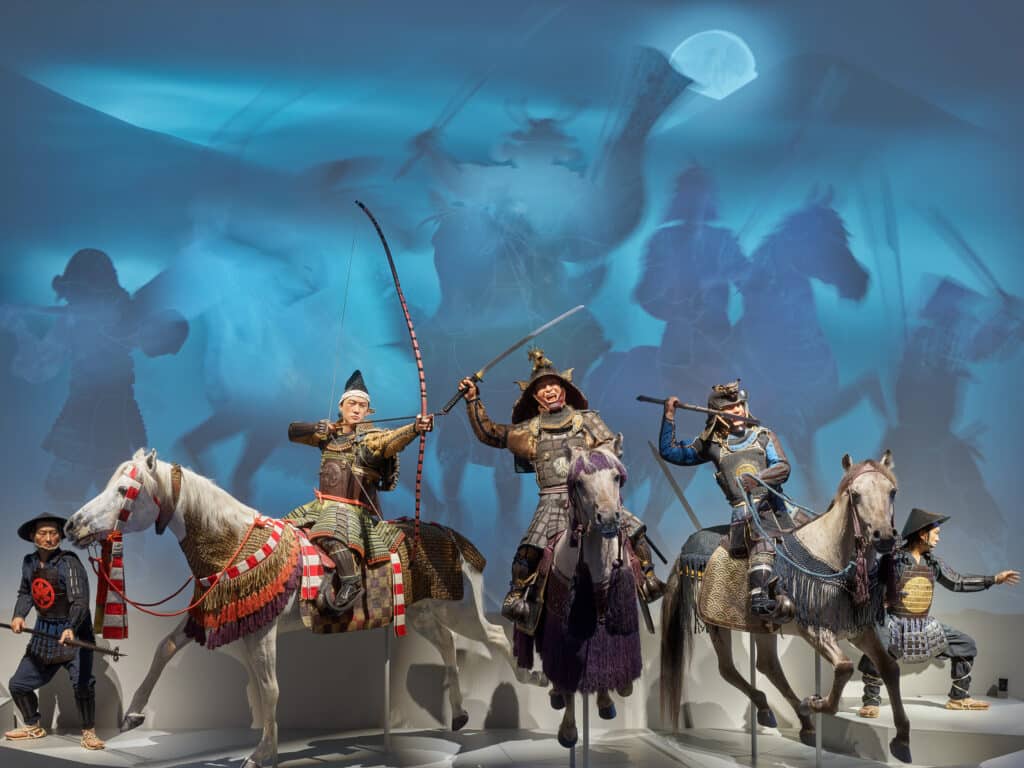
Samurai Museum Berlin © Alexander Schippel
Special exhibition Strangers in the City
The museum is currently setting a striking contemporary accent: the special exhibition Strangers in the City by Berlin artist Jonas Hödicke builds a bridge between the traditional Japanese world and the urban present. Hödicke, son of the painter Karl Horst Hödicke, has Berlin in his heart and a lifelong view of Japan. Samurai myths, the aesthetics of Hokusai and the strict formal language of Japanese art have accompanied him since childhood. His works combine raw asphalt with Far Eastern symbolism - a dialog between rebellion and discipline, between the glimmer of the big city and centuries-old craftsmanship.
Hödicke, who rebelled against authority at an early age, found his way into art rather reluctantly, but all the more consistently. "I don't stick to the rules for long," he says of himself - an attitude that is reflected in his constant experimentation. In "Fremd in der Stadt", these impulses meet the samurai world, not as an exotic ornament, but as a self-confident continuation of traditional visual language into the present. The exhibition, created in collaboration with Galerie Mond Fine Arts, thus becomes a visual bridge between East and West.
Visitors to the Samurai Museum Berlin therefore not only encounter the past, but also a vibrant contemporary culture that shows how Japanese influences have long since become part of global aesthetic consciousness. A place for discoveries - and for the courage to rethink boundaries.
Special exhibition "Strangers in the city" until January 11, 2026
https://samuraimuseum.de
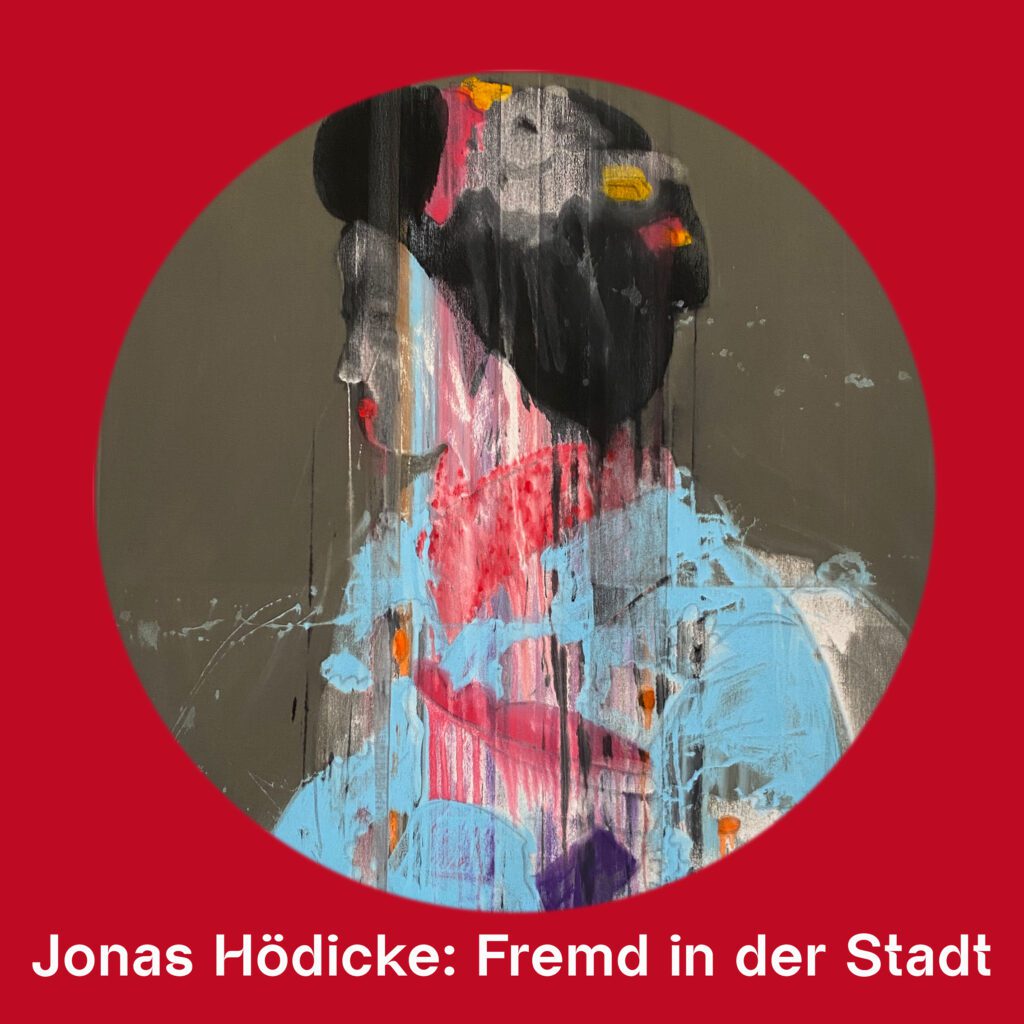
Special exhibition Strangers in the City © Samurai Museum Berlin