After a sold-out 2025 season, the Tiroler Volksschauspiele is starting the summer of 2026 with a striking programmatic statement. At its heart is the world premiere of Felix Mitterer's drama "Feuernacht", accompanied by live music by Herbert Pixner - a work that sheds new light on the historical upheavals in South Tyrol in the 1960s. For Artistic Director Gregor Bloéb, the production is a consciously chosen step towards the neuralgic points of regional identity. "We are obviously hitting a nerve and at the same time going straight to the heart... - that is the task of the theater," he says, referring to the social dimension of the upcoming season.
Mitterer's play follows on from his successful drama "Verkaufte Heimat", which was shown in Telfs in 2019. This time, the focus is on the years in which the so-called "Night of Fire" shook South Tyrol politically and emotionally. Between June 11 and 12, 1961, over 30 electricity pylons were blown up to draw international attention to the situation of the German-speaking population. The moral and political responsibility of this action is still being debated today. Mitterer recounts the events through fictional biographies that exemplify a climate of pressure, fear and awakening.
Romeo & Juliet, 2025, Liliom Lewald © Victor Klein
The play will be performed open air in the South Tyrolean settlement in Telfs, a place that is itself part of the region's migration history. The almost completely demolished settlement becomes an atmospherically dense stage - a setting where great history and personal destinies intertwine. Director Thomas Gassner stages Mitterer's text in a stage version by Peter Lorenz, while Pixner and his band provide live musical excitement every evening. Bloéb emphasizes that the team is deliberately using the real space: "We will build a stage out of rubble for you in the South Tyrolean settlement. It won't be a Wikipedia theater. We are telling stories of people in times of turmoil."
Bloéb's stance on artistic responsibility has also made a lasting impression. His view of the present and the crisis is clear: "One era is coming to an end, the new one has not yet found its order. We are all watching as carts crash into walls and certainties become doubts." For him, theater is a place where these uncertainties become visible and negotiable. The success of recent years - from the sensational "Broken Jug" to the acclaimed "Romeo & Juliet" production - confirms for Bloéb that audiences "want to be enchanted and at the same time seek truth".
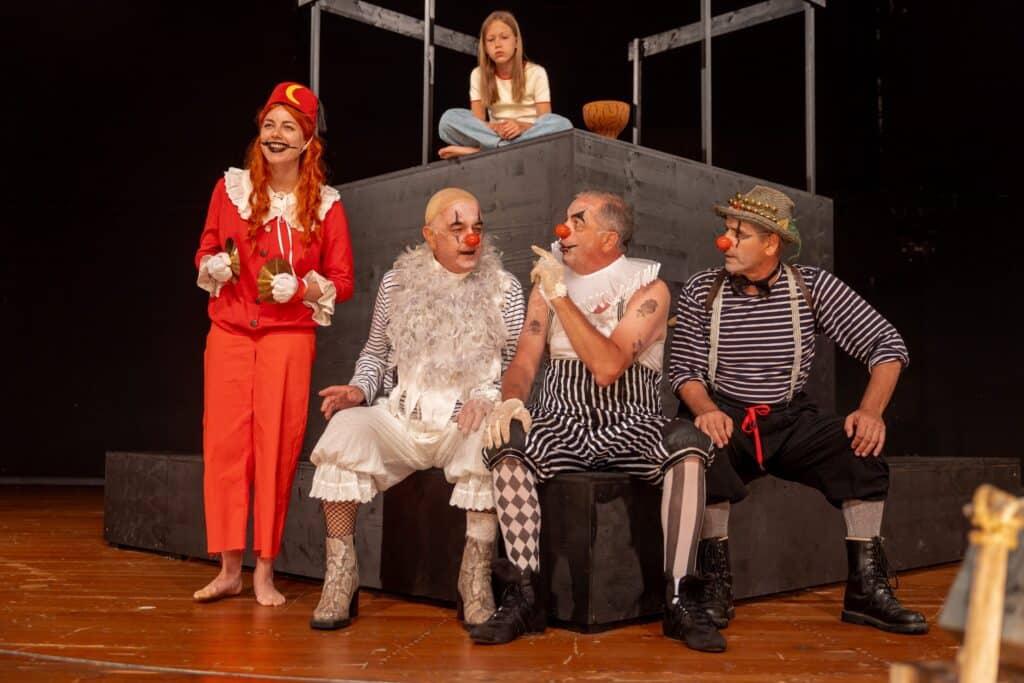
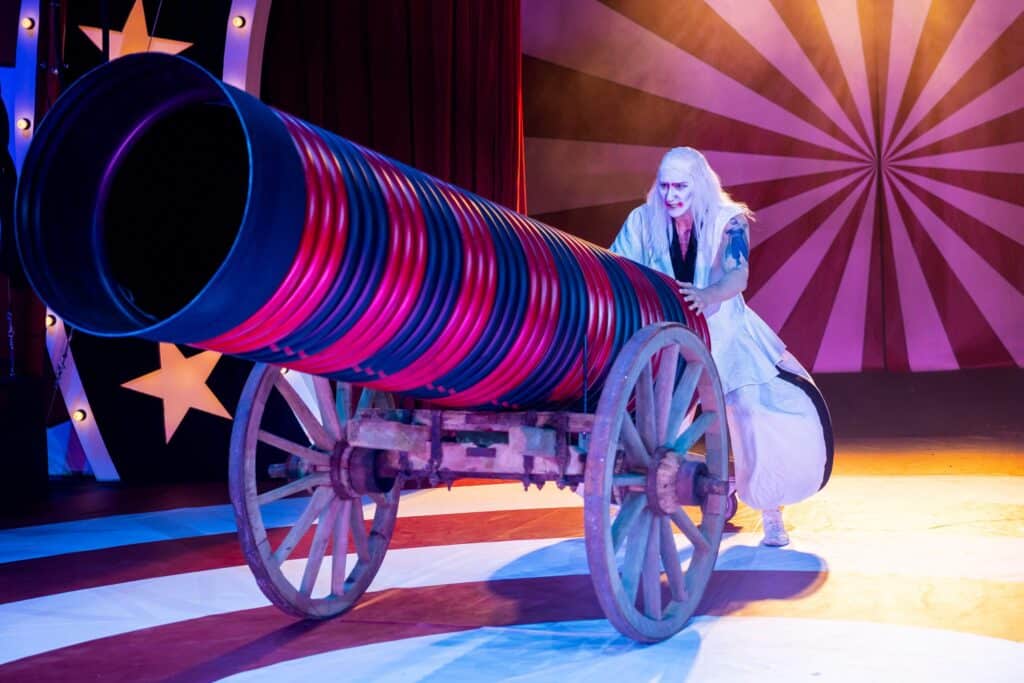
A brief history of Tyrolean humanity in eight pictures and a grail, 2025 © Victor Klein
Once again, the Volksschauspiele are also focusing on literary formats. Together with the Vereinigte Bühnen Bozen, a new edition of the marathon reading is being produced, this time under the title "Flucht ohne Ende", with texts by the restless border crosser Joseph Roth. A North and South Tyrolean ensemble will lead the audience word for word through this prose that describes homelessness, political ruptures and existential searching.
For 2026, the Tiroler Volksschauspiele is presenting a program that does not treat the past as a museum, but uses it as a mirror of the present. Or as Bloéb puts it: "Not shying away from any topic is part of the task of theater." This is exactly where this season comes in - courageous, alert and with an eye on the stories that continue to burn beneath the surface.
July 4 to August 29, 2026
www.volksschauspiele.at
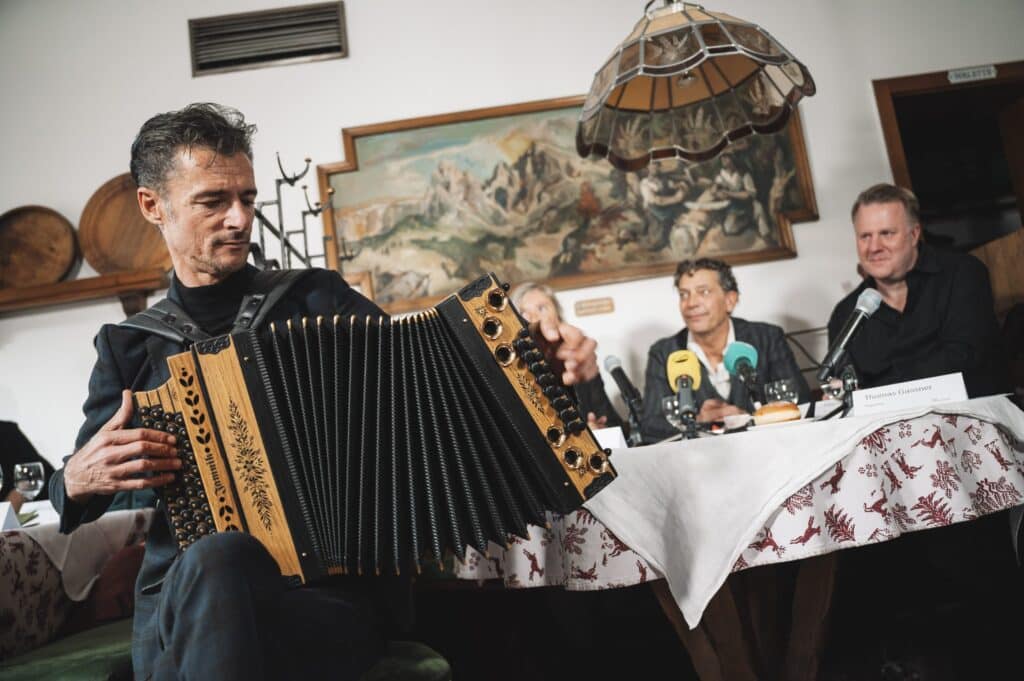
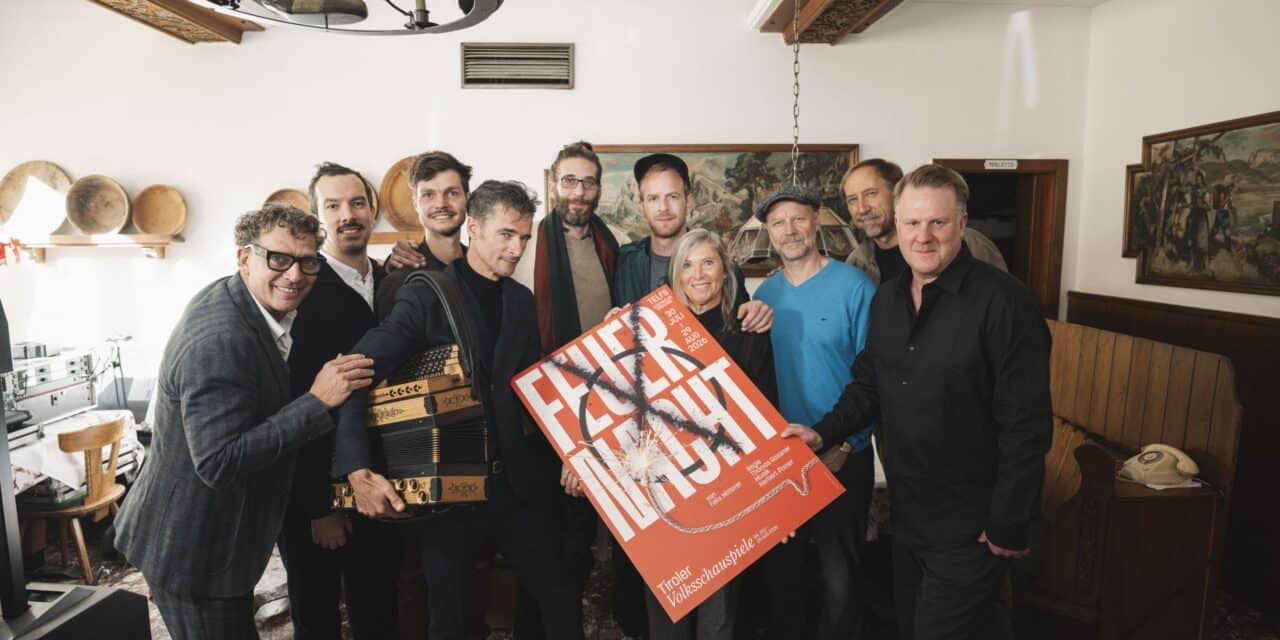
Herbert Pixner, Gregor Bloéb, Florian Hirsch © Tiroler Volksschauspiele