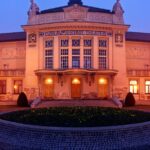

Located in the heart of Vienna's city center, the House of Music uniquely combines music history, science, and interactive exhibition spaces. Since its opening in 2000, the sound museum has developed into an internationally renowned venue for modern music education. In 2025, the museum celebrated its 25th anniversary—an occasion that also demonstrates how successful the concept has been: visitor numbers have more than doubled since then, and the museum is now considered one of the most innovative cultural attractions in the Austrian capital.
Vienna's status as the world capital of music is historically justified. But few places offer such direct access to sound and music history as this museum in the historic Palais Erzherzog Karl. Spread over four floors, visitors can experience the world of sound here – not only by looking and reading, but above all by trying things out, listening and participating. The tour begins on the first floor with the history of the Vienna Philharmonic Orchestra. The rooms where its founder Otto Nicolai once lived now display historical documents and precious objects from the archives of the famous orchestra, including the first concert poster from 1842 and Herbert von Karajan's baton. A cinema hall is also dedicated to the traditional New Year's Concert and its worldwide broadcast.

The History of the Vienna Philharmonic Orchestra, first floor © Paul Bauer
On the second floor, the phenomenon of sound itself takes center stage. In the interactive science center "Sonotopia," visitors can learn how sound is produced, how sound waves propagate, and how our hearing works. Experiments in the sound lab, audible vibrations, and the opportunity to create your own "sound creatures" transform abstract physical processes into playful experiences.

Soundlab, 2nd floor © Paul Bauer
The third floor is dedicated to the great composers who made Vienna a center of musical innovation. Rooms dedicated to personalities such as Joseph Haydn, Wolfgang Amadeus Mozart, Ludwig van Beethoven, Franz Schubert, Johann Strauss II, and Gustav Mahler tell the story of an era in which music increasingly broke away from courtly representation and became an art form for a broad audience. To mark its 25th anniversary, this floor is currently being gradually redesigned and updated.

The Great Masters, 3rd floor © Paul Bauer
The exhibition concludes with an entertaining and ambitious experiment: on the fourth floor, visitors can become conductors themselves and virtually lead the Vienna Philharmonic Orchestra—with tips from star conductor Zubin Mehta. The video projection reacts immediately to the movements of the baton, bringing the complex communication between conductor and orchestra to life.
However, the House of Music sees itself not only as a museum, but also as a lively concert venue. Young bands and artists regularly perform in the event hall in the attic – often in cooperation with the Viennese concert series Bluebird. Folk, indie, rock, and electro-pop are just as much a part of the program here as classical concerts and children's formats. The result is a place where music history, sound research, and contemporary culture intertwine. The House of Music invites visitors not only to hear sound, but also to discover and understand it—and ultimately to create it themselves.
www.hdm.at

Conduct yourself! 4th floor © Paul Bauer