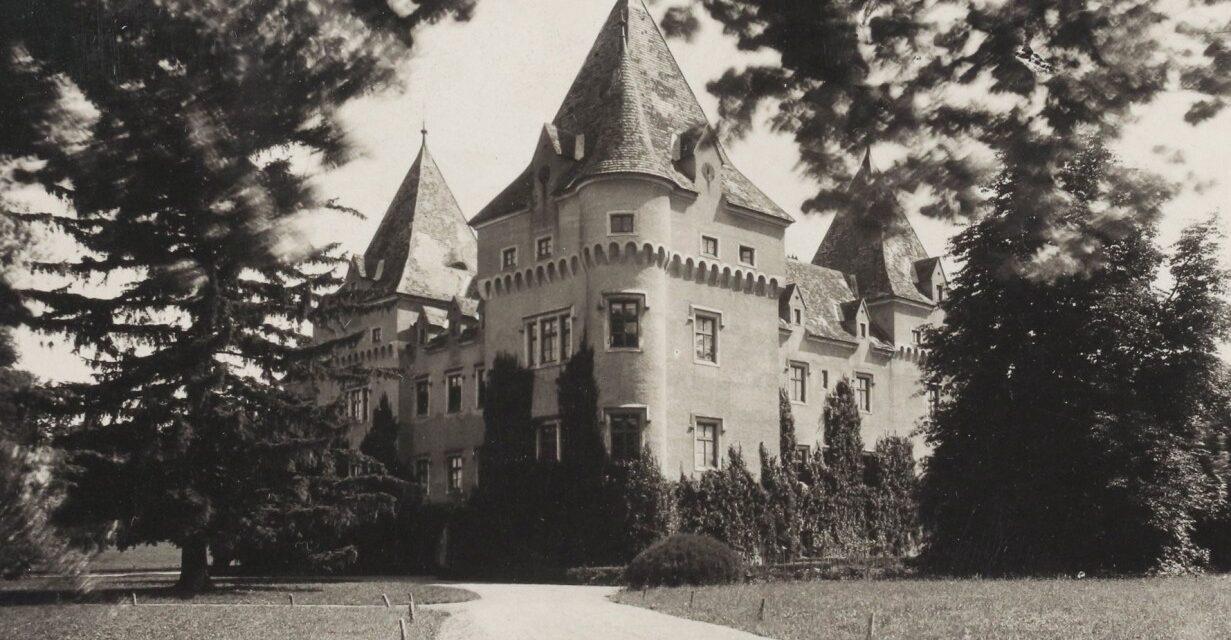
At the end of the Second World War, when the guns finally fell silent, not only were human lives lost, but also priceless works of art - forever. May 8, 1945 marked not only the political and military capitulation of the Nazi regime, but also a cultural turning point that was almost irreparable: the major fire at Immendorf Castle in Lower Austria. The baroque country palace, used during the war to store art treasures, became the scene of a catastrophic loss in the final days of the war. Important works by Gustav Klimt and other artists disappeared with the flames - forever.
In cooperation with the Klimt Foundation, the MAK - Museum of Applied Arts in Vienna is dedicating a comprehensive exhibition to this dramatic chapter in Austrian art history: "Burned, destroyed, lost?". Between July 16 and September 21, 2025, the MAK Forum will not only document the loss, but also renegotiate the commemoration of cultural heritage.
The focus will be on those works by Klimt that were stored in the palace and destroyed during its destruction - including the three faculty paintings Philosophy, Medicine and Jurisprudence, which were originally intended for the ballroom of the University of Vienna. Their expressive symbolism and break with academic conventions caused controversy during Klimt's lifetime - making them all the more significant today. The exhibition also includes lost supraport paintings such as The Music or Schubert at the Piano, as well as works from the expropriated Lederer Collection - such as The Golden Apple Tree, Girlfriends II, Leda and Wally.
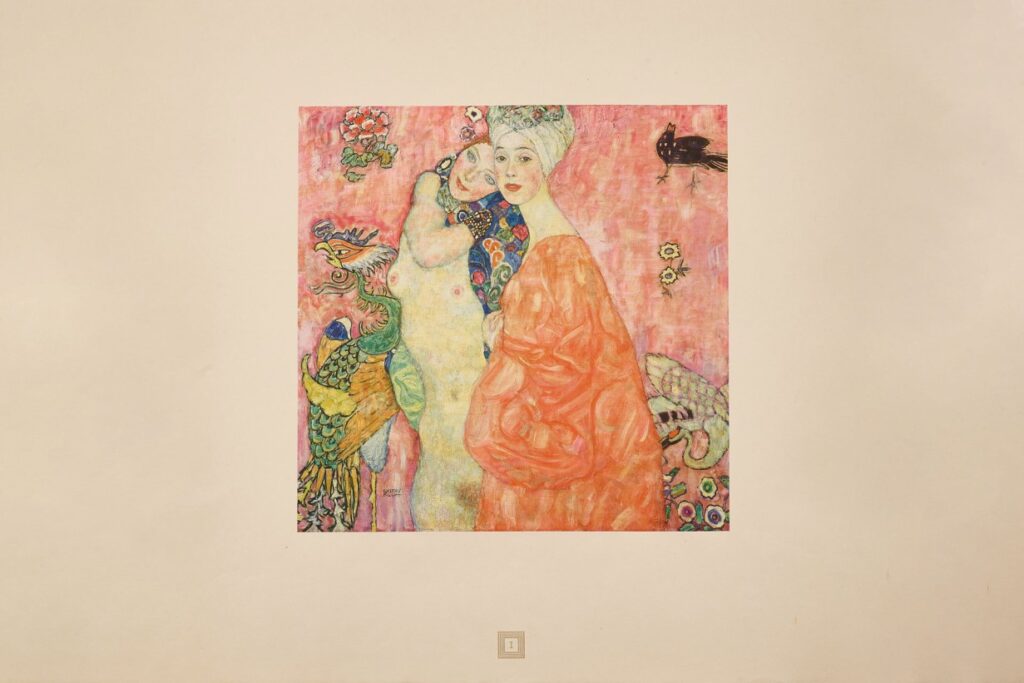
Gustav Klimt, Girlfriends II, 1916/17, color collotype from the portfolio Gustav Klimt, eine Nachlese, ed. Max Eisler, Druck und Verlag der österreichischen Staatsdruckerei, Vienna, 1031 © Klimt-Fondation, Vienna
But it was not only Klimt's oeuvre that was decimated. The MAK also lost key holdings: arts and crafts objects from Asia, early modern furniture, carpets, wallpaper and the so-called Laxenburg Room - an expansive ensemble of applied art. Particularly tragic: the so-called Möchlinger Tomb, a unique wooden shrine in the shape of a Gothic church from the 15th century.
The exhibition not only reconstructs the events surrounding the fire, but also attempts to fill in the gaps in memory. With the help of original salvage lists, archive materials, plans, photographs and a specially created architectural model of the castle, the extent of the loss is made tangible. A new film documentary with interviews with contemporary witnesses opens up additional perspectives on the circumstances of the destruction - and on the silence afterwards.
"Burned, destroyed, lost?" is an exhibition of reconstruction, remembrance and critical reappraisal. It is both a warning and a tribute - to the vulnerability of art and the need to protect it. And it is a plea for the historical awareness of a country that must never take its cultural heritage for granted.
July 16 to September 21, 2025, MAK Forum
www.mak.at