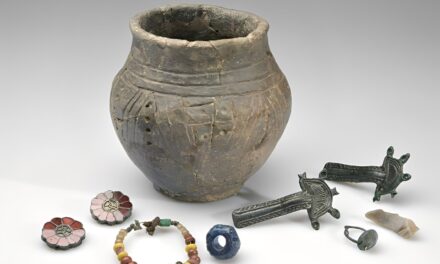
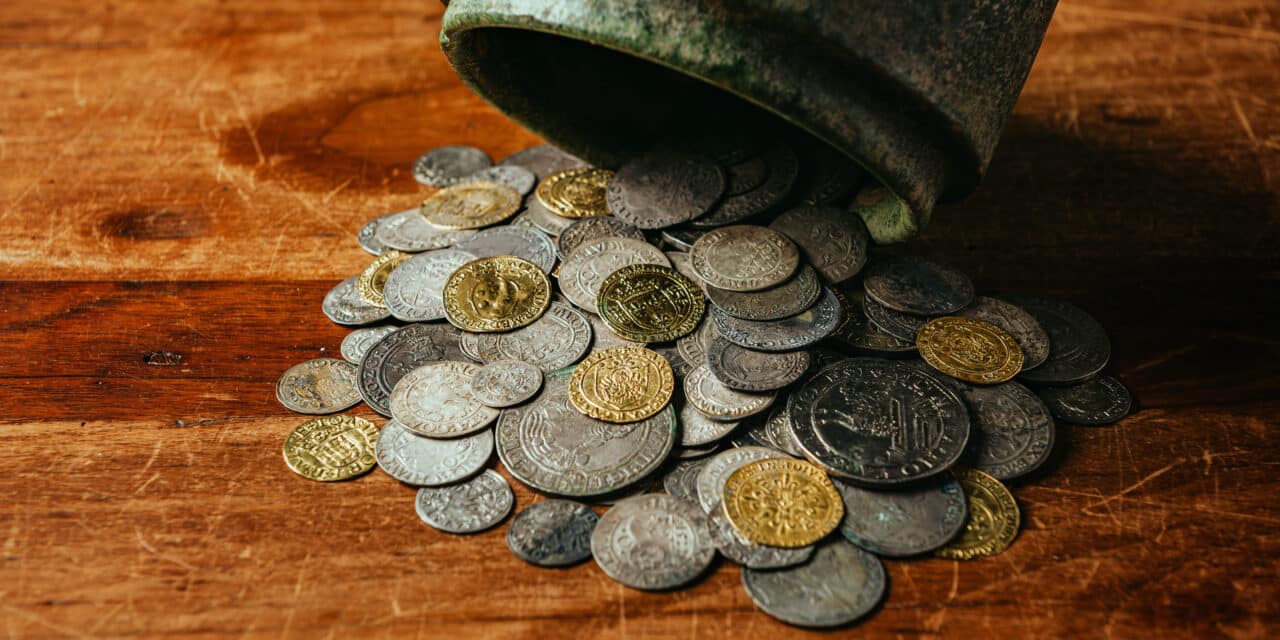
Over a hundred years ago, a spectacular find came to light during construction work in a barn in Merishausen: around 1100 gold and silver coins in a clay jar. The coins, dating from the end of the Middle Ages to the middle of the 16th century, were then transferred to the new Museum zu Allerheiligen as a deposit of the Canton of Schaffhausen.
In September 1922, Georg Meister, a farmer from Merishaus, was busy excavating the floor of his barn in order to lay a concrete floor. In the process, he came across a vessel containing numerous silver coins and some gold coins. News of the find spread quickly and it was speculated that it may have been buried during the Thirty Years' War. The cantonal authorities also took notice, as ownerless antiquities of scientific value belong to the canton according to the Civil Code. After a lengthy back and forth, 1087 coins were finally deposited in the Museum zu Allerheiligen as a deposit of the canton. Although all or part of the find was always displayed in the museum, it was never evaluated in its entirety.
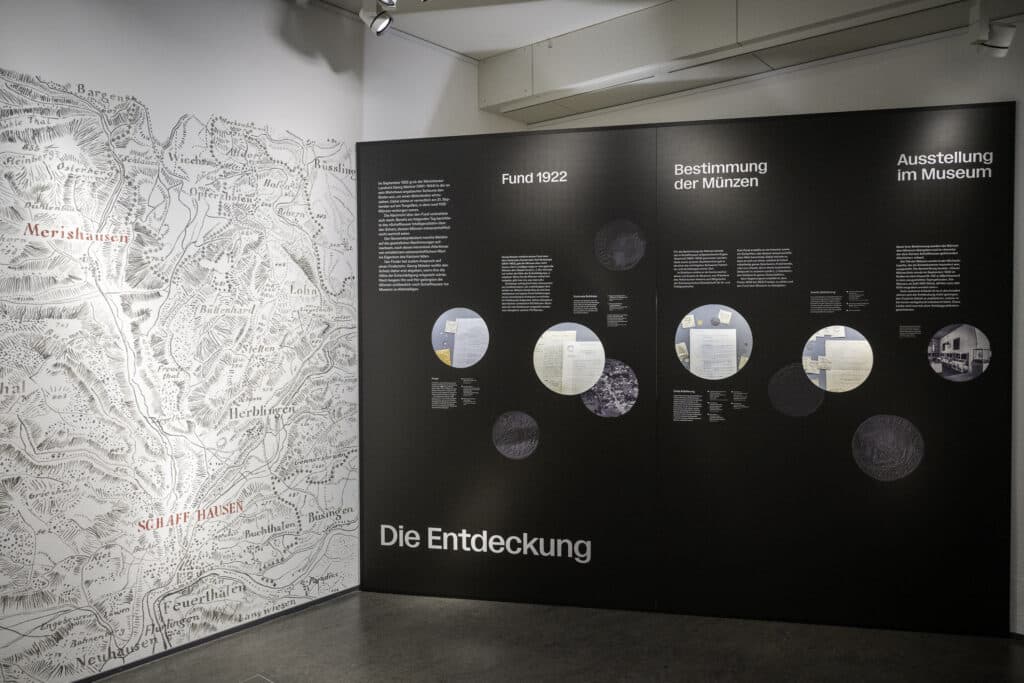
View of the exhibition. Photo: Jeannette Vogel
A new scientific analysis has now given rise to the treasure being presented to the public in its entirety. In a cabinet exhibition covering 70 square meters, the treasure, its chronological context and the history of its discovery are examined in more detail. In combination with other coins from the Sturzenegger Foundation's collection, the find is embedded in the monetary history of its time and the various aspects that are important for the overall interpretation of the treasure are highlighted. The entire find originally comprised at least 1089 coins, including 47 gold coins, 20 thalers and over a thousand smaller silver coins. Most of the coins come from southern Germany, from Schaffhausen to Salzburg, from Constance to beyond Munich. However, around 30 coins from Italy also made it into the find.
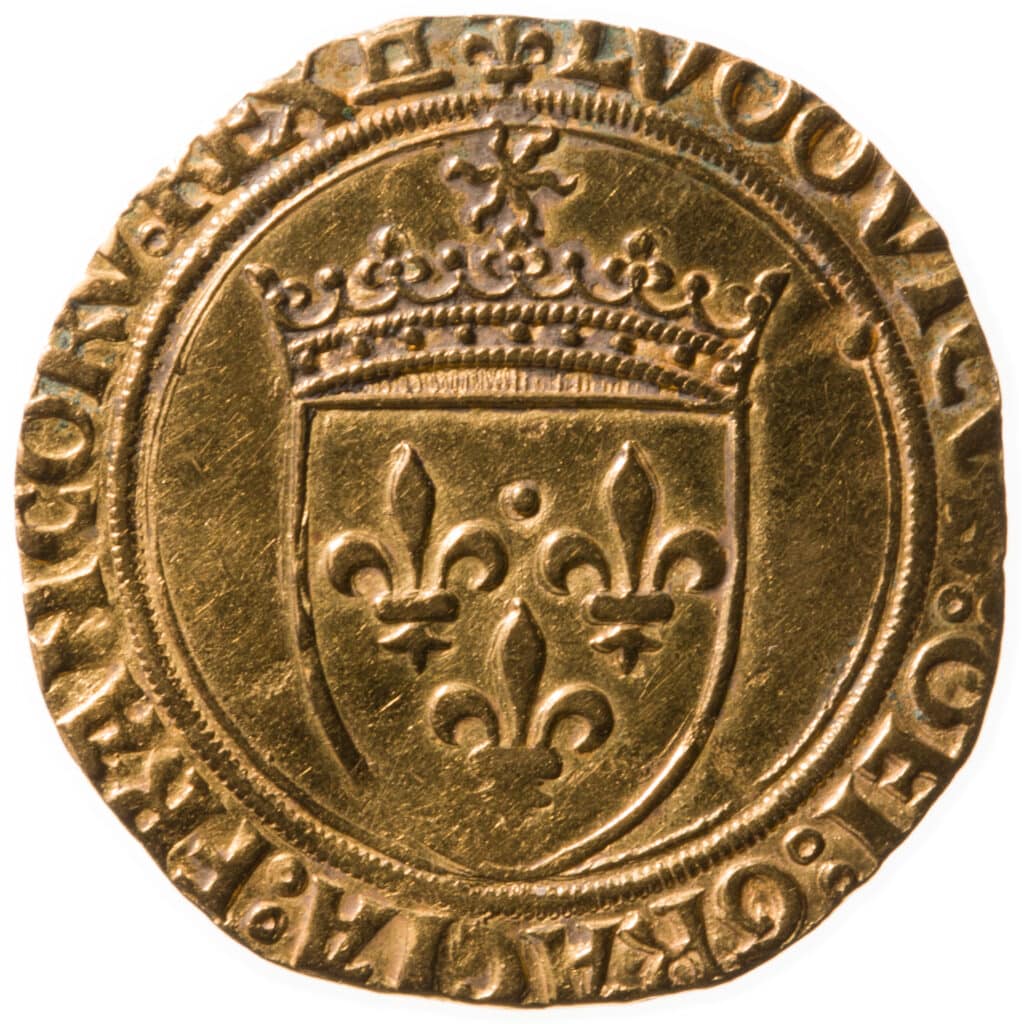
Kingdom of France, Louis XII, Écu d'or au soleil, 1498/1515, Tours. Museum zu Allerheiligen Schaffhausen, Deposit of the Canton of Schaffhausen, Photo: Adrian Bringolf
With a few exceptions, the gold coins all come from the Kingdom of France. A coin from Seville in Spain and one from York in England had the longest journey to Merishausen. This great variety is not unusual for the time. Given the large quantity, a single foreign piece could easily have been overlooked. Many coins also came from regions where the necessary raw materials were available, such as Hall in Tyrol or the Ore Mountains.
The exhibition is accompanied by numerous events. For families with children, a coin workshop accompanies the exhibition. Here, children aged 5 and over can design their own gold and silver coins for the duration of the exhibition. The craft kit is available from the museum ticket office
March 15 to October 19, 2025
www.allerheiligen.ch
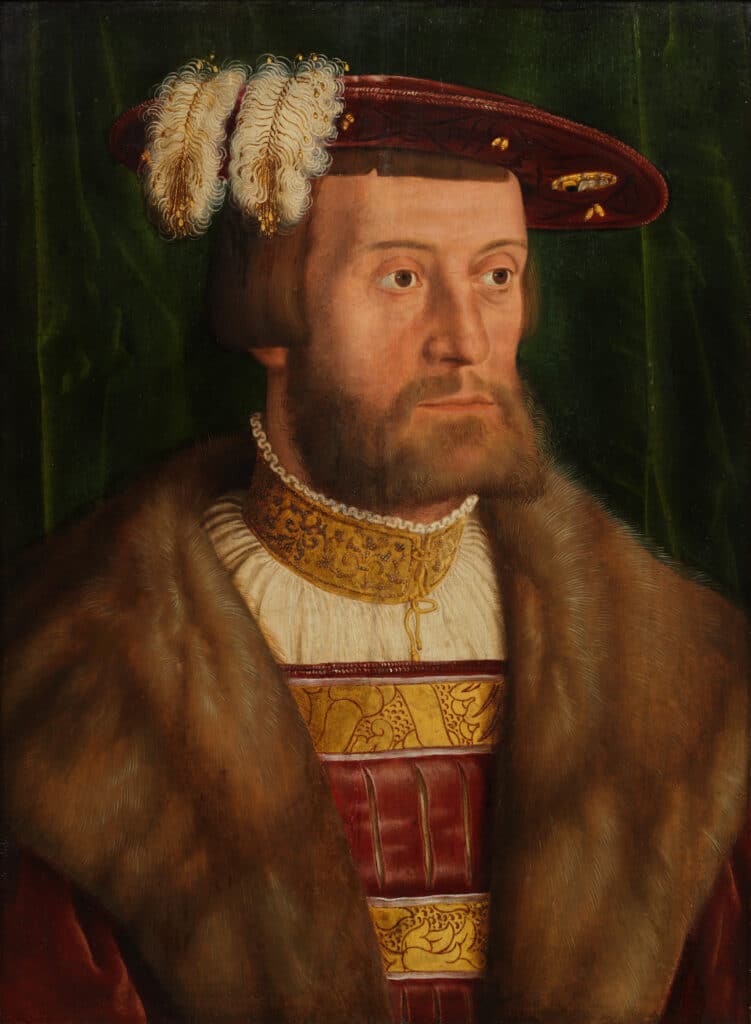
William "the Steadfast" of Bavaria was a persistent opponent of the Reformation. Around 50 coins from the treasure were issued under his reign. Museum zu Allerheiligen Schaffhausen, deposit of the Peyer'schen Tobias Stimmer Foundation, photo: Jürg Fausch