
When the Amalienbad celebrates its 100th birthday in July 2026, it will be about much more than just an indoor swimming pool. It is about physical culture as a social promise, architecture as a political statement, and water as a democratic commodity. The Karl-Marx-Hof laundromat is taking this anniversary as an opportunity to retell the history of Vienna's public baths during the First Republic: sensually, with social-historical precision, and with surprising relevance to the present day.
Hygiene as progress, bathing as a right
Around 1900, bathing was still a luxury in Vienna. Most apartments had neither bathrooms nor hot water. The city took its first steps to counter this with the so-called Tröpferlbäder: modest public showers designed to enable cleanliness for all. In Red Vienna, they were modernized and supplemented by communal baths in the new municipal housing estates. By 1932, 62 such facilities had been built—a quiet but powerful infrastructure program.
At the same time, the city's waters were opened up. Electricity baths in the Danube Canal, beach and summer baths on the Old Danube, the Gänsehäufel as the largest outdoor pool on the continent: bathing became a leisure activity, a place of relaxation, a social meeting place. Newspaper reports tell of stenographers, fitters, and apprentices who jumped into the water after work – out of the heat and into the community.
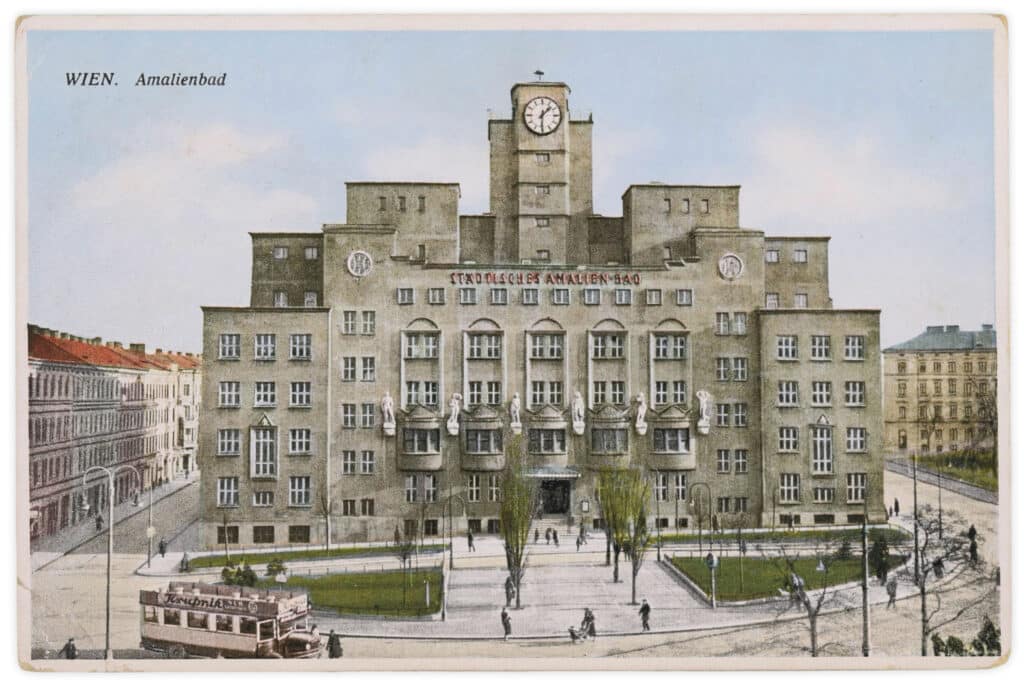
Amalienbad, 10th district, Reumannplatz 23 © Vienna Museum
The luxury baths for the working class
The crowning glory of this development is the Amalienbad in Favoriten. Decided upon in 1923 and opened in 1926, it became the largest and most modern bathing facility in Vienna. Named after local councilor Amalie Pölzer, the building stands confidently in the working-class district—monumental, avant-garde, deliberately provocative. In 1926, cultural journalist Max Ermers spoke of "Austrian constructivism." Criticism was not long in coming. Conservative voices criticized the pomp, the cost, and the milieu. But that was precisely the point: what was otherwise reserved for the bourgeoisie was to be open to everyone here. The glass-covered swimming hall with retractable spectator stands, the adjoining spa and treatment area, the affordable prices—the Amalienbad understood luxury as a public good.
Learning to swim for democracy
Just weeks after opening, the city council decides to make swimming lessons compulsory for Vienna's schoolchildren. The health benefits are measurable, and the symbolic significance can hardly be overestimated. The pool becomes a school for the body—and an international flagship. By 1927, the millionth visitor has already been counted, and shortly thereafter, delegations from Europe and Asia visit the "Riesenbad" in Favoriten.
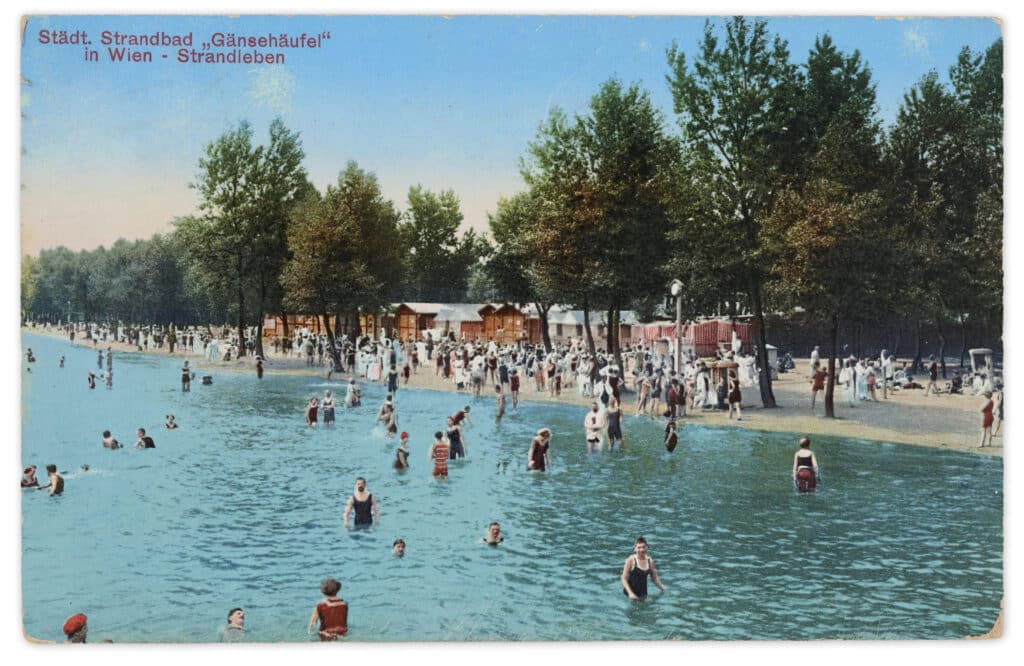
Gänsehäufel beach, 1914 © Vienna Museum
From public baths to bathing capital
The exhibition broadens the perspective: from the Theresienbad with its Roman sulfur spring to the Dianabad on the Danube Canal to the outdoor children's pools, financed by the famous Breitner taxes. For many children, these are the best vacation spots—located in green surroundings, free of charge, and designed with education in mind. The Second World War also left deep scars on the bathing industry. But Vienna rebuilt itself. Today, the city has 38 municipal bathing facilities with around 3.5 million visitors annually. The legacy of Red Vienna is more than just history: it lives on in the idea that public infrastructure creates quality of life.
A year full of walks
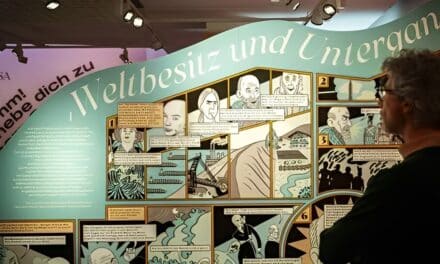
The exhibition is accompanied by an extensive supporting program: guided tours of the Karl-Marx-Hof, themed city walks to municipal buildings, baths, and memorial sites of Red Vienna—from Favoriten to Floridsdorf, from Margareten to Donaustadt. Architecture, politics, and everyday history combine to create a walk-in city archive.
March 5, 2026 to September 5, 2027
www.dasrotewien-waschsalon.at