There are artists who paint pictures. And there are artists who change the way we see. Paul Cézanne belongs to the latter group. The Cézanne exhibition at the Fondation Beyeler is the first in the museum's history to be devoted exclusively to this artist of the century, focusing on the late phase of his work in which Cézanne radically rethought painting. Around 80 works—oil paintings and watercolors—show an artist who had detached himself from depicting the world in order to make the act of seeing itself the subject of his work.
Cézanne's paintings are not windows onto nature, but constructions of perception. For him, color is not a means of description, but a vehicle for form, space, and weight. With short, tentative brushstrokes, he translates his "sensations colorantes" onto the canvas. Things do not arise from contours, but from color relationships. In this way, painting becomes a process of thinking—slow, concentrated, open.
The exhibition focuses on Cézanne's major themes: landscape, still life, portraiture, and bathers. Particularly impressive is the grouping of nine views of Montagne Sainte-Victoire. The mountain, which Cézanne painted repeatedly over decades, becomes the touchstone of his artistic question: How can the permanent be united with the fleeting? How can a motif be both stable and in a state of change? Cézanne's answers are not definitive solutions, but persistent approximations. Each version is a new attempt to organize seeing without fixing it.
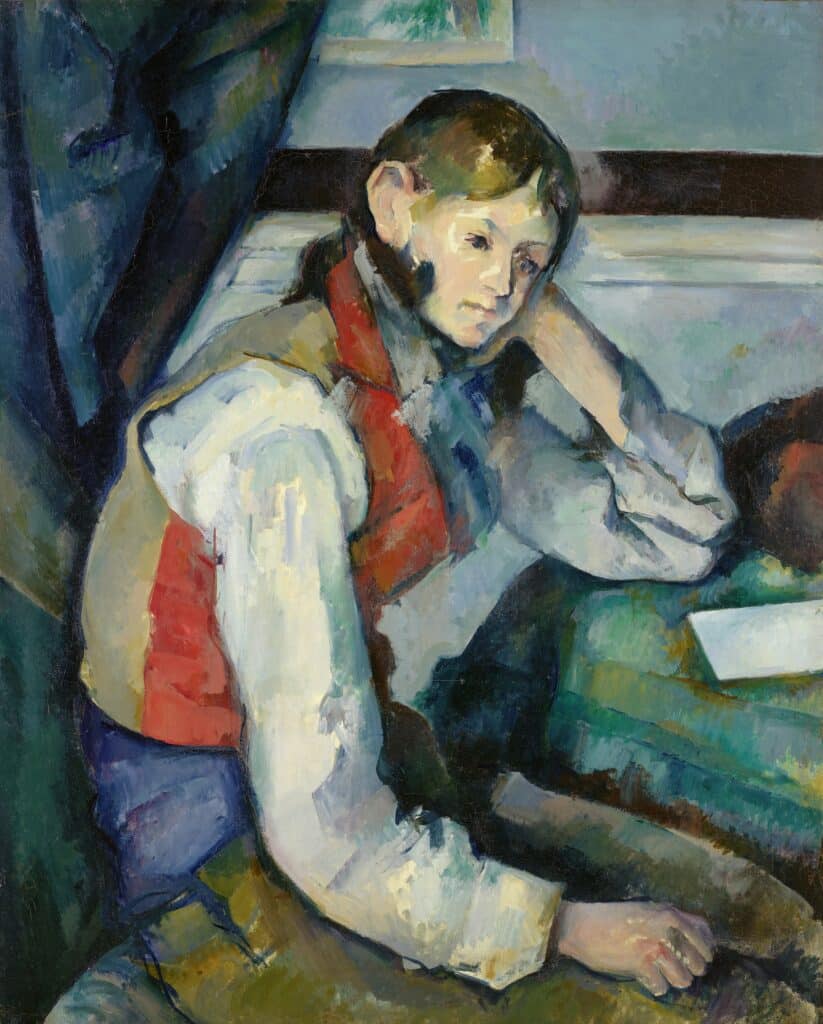
Paul Cézanne, Le garçon au gilet rouge (The Boy in the Red Waistcoat), 1888–1890, oil on canvas, Emil Bührle Collection, on permanent loan to the Kunsthaus Zürich
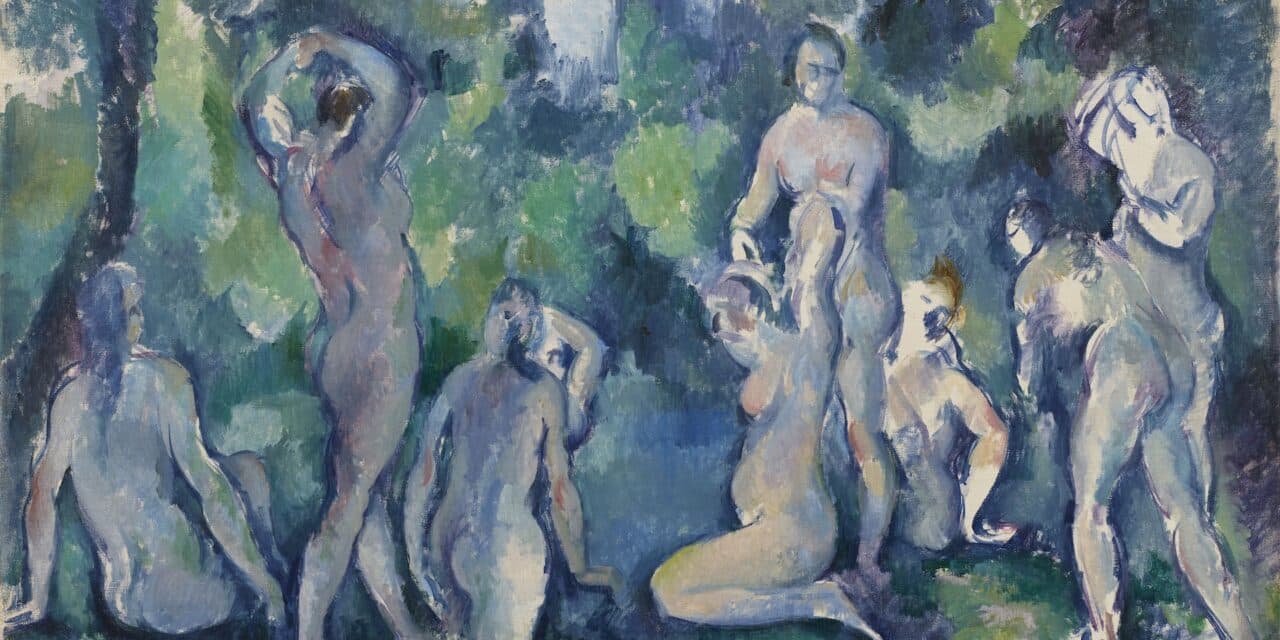
The bathers also follow this principle. Body and landscape are inextricably intertwined. The figures seem less depicted than woven into their surroundings—as if they were part of the rhythm of the trees, the movement of the terrain. Here, the classical nude tradition meets a modern understanding of space, in which bodies are not in the foreground but become part of a larger structure.
Cézanne's quest for order in the small is condensed in his still lifes. Apples, carafes, cloths, and skulls become the supporting elements of a silent architecture. Nothing is random, nothing is decorative. Even the unfinished takes on weight. It is precisely where Cézanne leaves the canvas blank that space opens up for the viewer. The paintings demand participation—a shared viewing, a further reflection.
It is this openness that keeps Cézanne relevant to this day. He did not want to copy nature, but to create a "parallel to nature": a painting that reflects structure, time, and perception at the same time. This attitude is palpable at the Fondation Beyeler. The exhibition shows Cézanne not as a historical fixed point, but as a living starting point for modernism. Or, as Picasso put it: as the father of us all.
January 25 to May 25, 2026
www.fondationbeyeler.ch
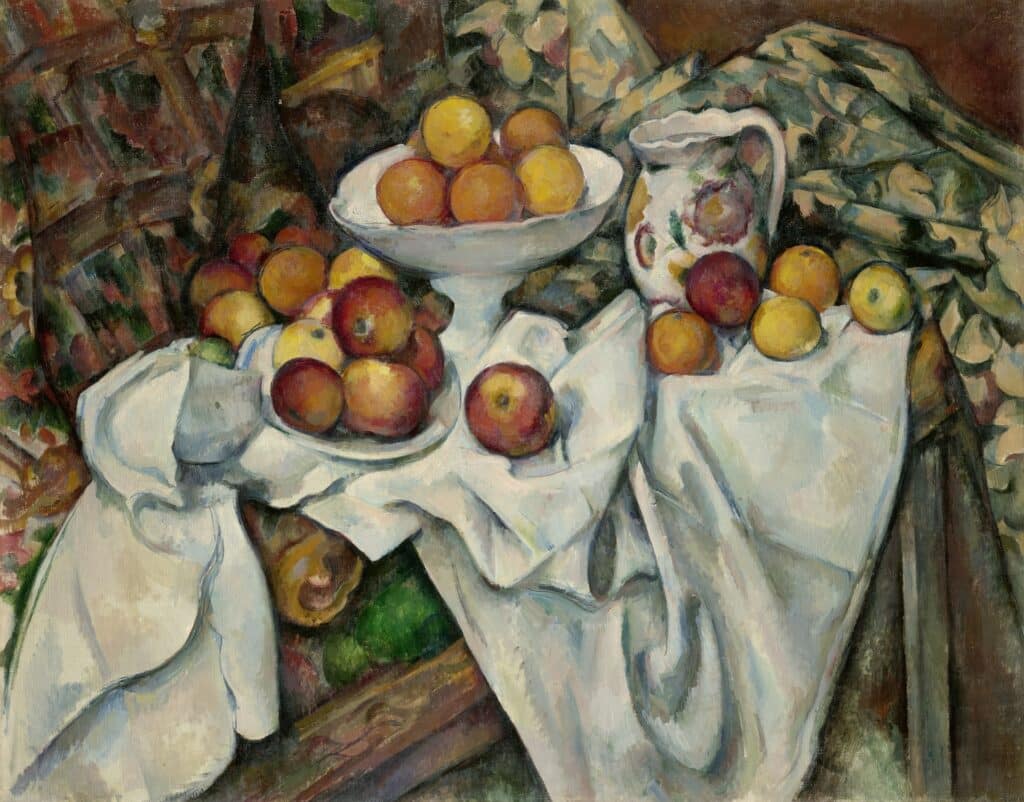
Paul Cézanne, Pommes et oranges (Apples and Oranges), circa 1899, oil on canvas © GrandPalaisRMN (Musée d'Orsay) / Hervé Lewandowski