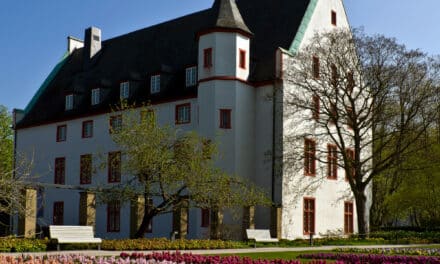
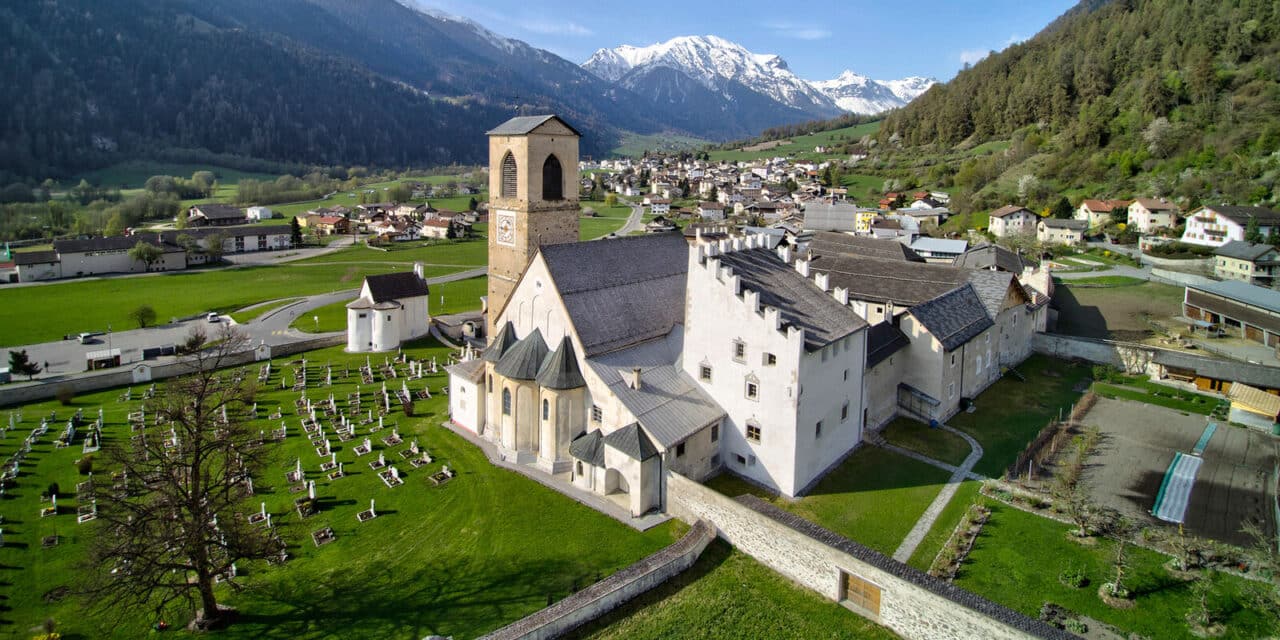
Walls, towers and arches, nooks and crannies, gardens and sheep, knowledge, art and culture. The monastery of St. Johann in Müstair was founded in the 8th century. It is said to have been founded by Charlemagne, as evidenced by the statue in the monastery church. The monastery complex was built in one piece. The monastery church and the Chapel of the Holy Cross still remain from the Carolingian period. This year's annual program is themed "1250 years of Müstair Abbey", as the UNESCO World Heritage Site St. Johann Abbey in Müstair is celebrating its 1250th chronological birthday: the timbers used in the construction of the church were felled in 775 and are still present in situ.
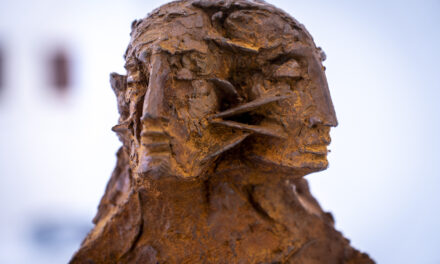
The monastery museum is located in the Plantaturm, a residential and refuge tower that is over a thousand years old. Take a guided tour through 1200 years of monastery, art and building history. The Benedictine nuns of Müstair provide an insight into their monastery and their lives, past and present. The exhibition program in the museum is particularly exciting: for the first time, the artistic works of Sister Pia Willi will be on display in a comprehensive retrospective. The focus of the exhibition "Pia Willi. Art and Convent" focuses on drawings from three creative periods in the field of tension between convent life and art. Drawings from her student years at the Zurich School of Applied Arts and the André Lhote Academy of Art in Paris will be shown for the first time, as well as designs for traditional costume embroidery and the popular "Willi cards" with motifs from monastic life. (from June 26, 2025)
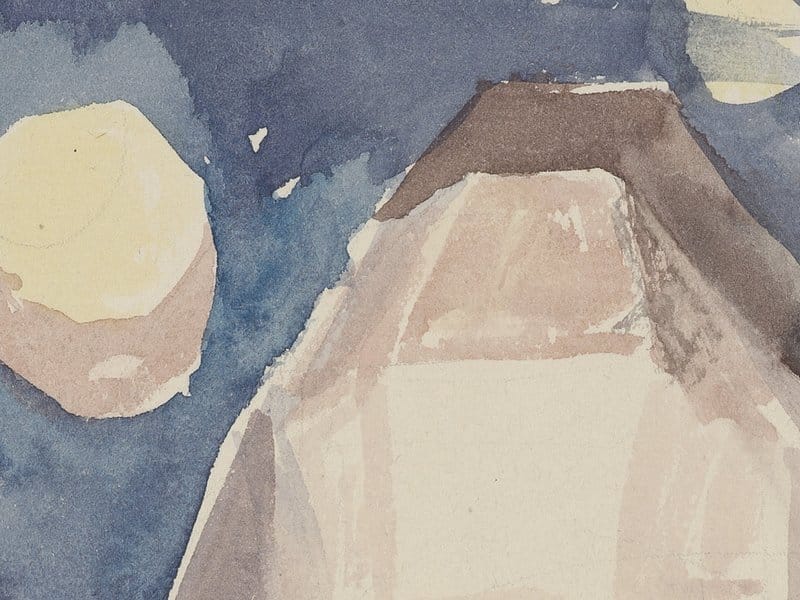
Exhibition "Pia Willi. Art and Monastery" © Stiftung Pro Kloster St. Johann in Müstair
The exhibition "In persona: The Sisters of St. John and their favorite objects" is dedicated to the eight Benedictine nuns of Müstair and their preferences and talents. The exhibition "Bun viadi. Paths to and from Müstair" also traces the connections and networks of the monastery from the Middle Ages to modern times and brings surprising connections to light. For example, a Madonna from Einsiedeln bears witness to the close relationship between the two monasteries around 1700, while pilgrim souvenirs from Santiago de Compostela or Rome found during archaeological excavations bridge distances of up to 7,000 kilometers.
And in the exhibition "Inner life. The Baroque Nuns' Cells", exciting objects and touching stories explore the life of the nuns in and with the rooms of the convent.
In the museum, you can trace the spirit of the Benedictine nuns. Within the historic walls of the former cloister, you will experience a journey through the centuries, see extraordinary art treasures and unexpected traces of everyday life.
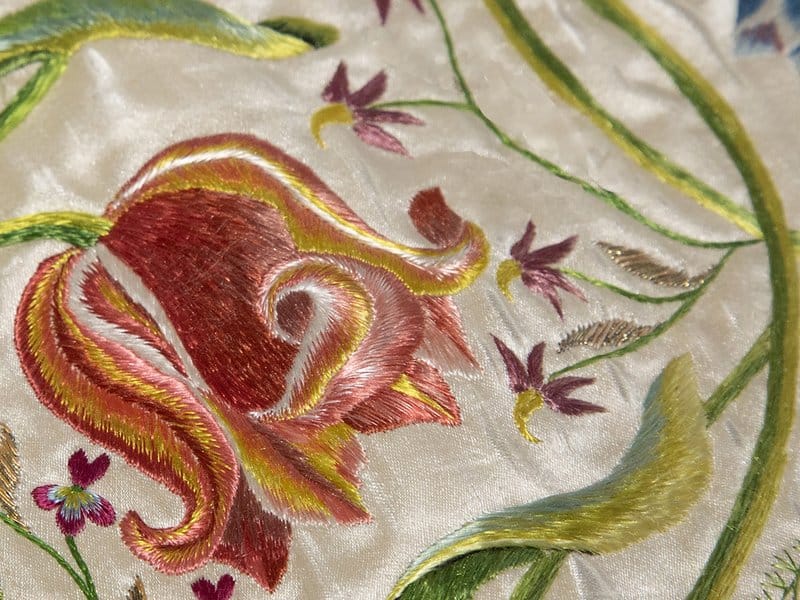
Textile collection of the monastery © Stiftung Pro Kloster St. Johann in Müstair
The monastery museum is located in the Plantaturm, a residential and refuge tower that is over a thousand years old. Take a guided tour through 1250 years of monastery, art and building history. The Benedictine nuns of Müstair will give you an insight into their monastery and their life then and now.
Your visit to the museum takes you into the cloister and then into the mighty cellar of the Plantaturm and the three upper floors to experience a "convent within a convent". You will enter state rooms and living quarters, bedchambers and prayer rooms as well as the High Beam Room, a graceful room from the Baroque period. Admire archaeological finds and art-historical treasures and learn more about life behind the monastery walls.
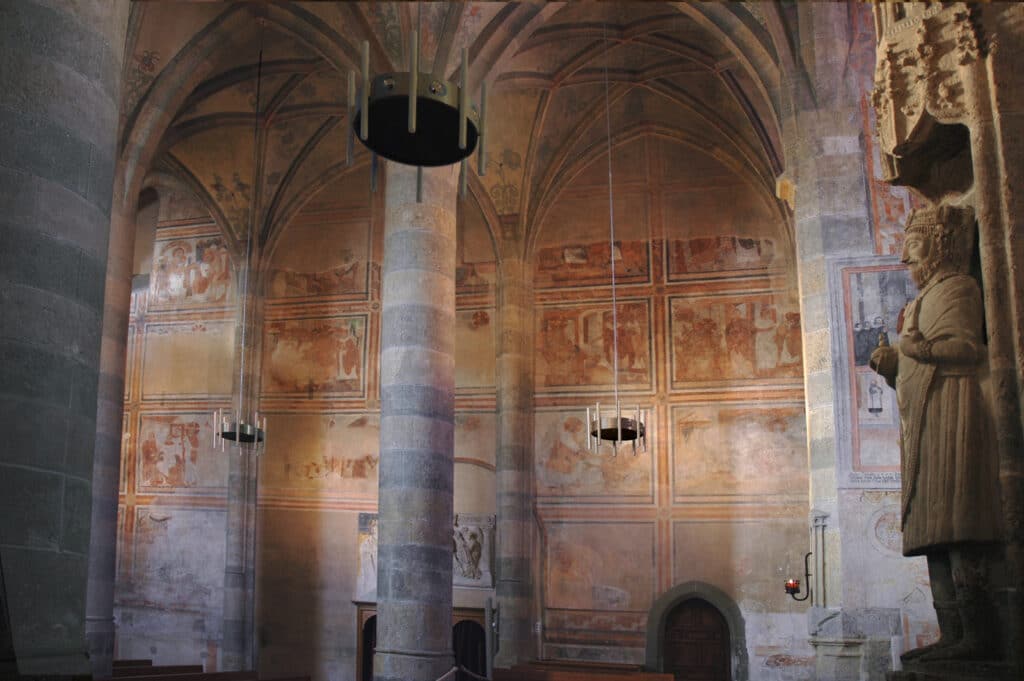
Müstair monastery church, Carolingian frescoes and statue of Charlemagne © Stiftung Pro Kloster St. Johann in Müstair
The church - the heart of the monastery
Originally, the monastery church was reserved for the convent. Today it is the parish church and place of worship for all believers. Church services are held here regularly in summer. The nuns also pray the Liturgy of the Hours in the convent church in summer.
The monastery church of St. Johann in Müstair contains the world's largest and best-preserved cycle of frescoes from the early Middle Ages. Carolingian and Romanesque paintings adorn the walls and the three apses. The entire history of salvation is depicted in pictures. They tell the life of King David from the Old Testament, the childhood, ministry and suffering of Jesus as well as the ascension and return of Christ. The apses are dedicated to saints and martyrs: John the Baptist, Stephen, Peter and Paul. On a guided tour of the church, visitors can learn about the architecture and history of the monastery, but also immerse themselves in the fascinating world of images that was originally reserved for monks, nuns and clergy.
Museum events
International Museum Day : May 18
World Heritage Day: "1250 years of Müstair Abbey" June 15
La not dals museums in Val Müstair: August 2
European Heritage Days: September 13/14
Misteri Müstair III: September 20
Romanesque Day: October 12
European Restoration Day: October 19
Christmas sale in the monastery store: December 6
UNESCO World Heritage Site since 1983
The monastery of St. Johann in Müstair is a witness to the Christian heyday around 800, a cultural heritage of mankind through the ages. It is much more than just a monument, it is a living cultural asset. Today, nuns still live in the monastery in the regular rhythm of the Benedictine "ora et labora et lege". The fact that the entire monastery complex - and not just the church - was placed under protection proved to be far-sighted. The largest, best-preserved mural painting cycle from the early Middle Ages and the Romanesque imagery in the monastery church are world-class. The church is also home to the oldest monumental statue of Charlemagne, which was once painted in color. Thanks to archaeological investigations, however, further sensations have been discovered. The Chapel of the Holy Cross, thought to be Romanesque, turned out to be a true jewel of Carolingian architecture and art. The Planta Tower was not built by the abbess Angelina Planta at the end of the 15th century, as initially thought, but served as a residential and defensive tower as early as the 10th century. It has no parallels in castle research. The bishop's residence from the 11th century is still preserved in significant parts and houses the charming double chapel of St. Ulrich and St. Nikolaus.