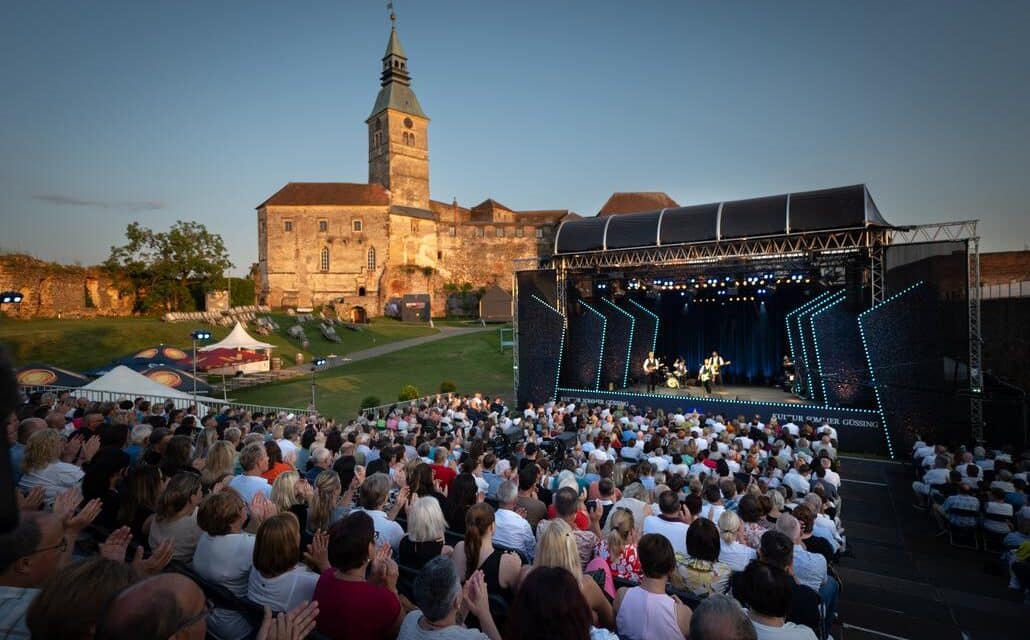
Since 2001, the Güssing Cultural Summer has been delighting art and culture lovers from all over Burgenland and beyond. Initiator and artistic director Frank Hoffmann created a festival that turned the region into a meeting place for cabaret, music, and extraordinary productions. Even after his death, his vision lives on: under the artistic direction of Andreas Vitásek, cabaret artist, actor, and director, the Güssing Cultural Summer 2026 is providing new impetus. Vitásek, himself a "zuagroaster" (newcomer) to southern Burgenland, knows how to bring top-class artists to the picturesque stages in front of Güssing Castle and in the Gerersdorf open-air museum. The result is a mixture of musical enjoyment, satirical wit, and entertaining entertainment that captivates thousands of visitors every year.
The festival combines tradition and modernity: under the artistic direction of Frank Hoffmann, greats such as Joe Zawinul, Toni Stricker, Georg Danzer, The Rounder Girls, and Mnozil Brass have already performed. Now Vitásek is showing that the Güssing Cultural Summer will remain a place of diversity, quality, and surprises in the future.

Andreas Vitásek © Gianmaria Gava
Opening gala "Real People"
The Güssing Culture Summer 2026 begins with a grand opening gala celebrating the arts. Under the title "Real People," the evening brings together music, cabaret, and performance in a cultural extravaganza. The gala is intended as a tribute to the audience itself—to people with their strengths, weaknesses, hopes, and life stories. Various artists will present excerpts from their repertoire, while music and humorous interludes will ensure a varied evening. The combination of a festive setting and a relaxed summer atmosphere in particular makes this opening one of the highlights of the festival.
July 12, 2026
ORF III Round Table
The ORF III Round Table will continue to provide satirical analysis of the highest standard in 2026. Moderated by Gerald Fleischhacker, Eva Maria Marold, Herbert Steinböck, Gudrun Nikodem-Eichenhardt, and host Vitásek will discuss and improvise on world events, politics, and social idiosyncrasies. The focus is less on classic cabaret numbers and more on spontaneous conversations, pointed commentary, and intelligent entertainment. The Round Table combines humor with social criticism, creating a space where laughter and reflection exist side by side.
July 13, 2026
Dirk Stermann: 20 Spritzer bis Amstetten
In his program 20 Spritzer bis Amstetten, Dirk Stermann talks about travel, identity, and the everyday madness between Austria and his personal life. The starting point is an ironic self-portrayal: Stermann, who already sees himself in the tradition of great musical entertainers after his first stage program, is confronted with a different reality by his agency—his singing talent is classified as humorous rather than heroic. The program combines storytelling, musical interludes, and astute observations of everyday life in Austria. In particular, the train journey through Austria becomes a metaphor for social and personal landscapes.
July 16, 2026
Malarina: Trophy Theft
In Trophy Theft, Malarina satirically dissects social role models, capitalism, and modern relationship constructs. The artist presents herself as a self-confident observer of social power structures. The evening tells of fame, financial demands from authorities, and the search for self-determination in modern society. With provocative humor and a feminist perspective, Malarina plays with clichés and simultaneously uses them as a satirical tool.
July 18, 2026
Final of the Burgenland Cabaret Award 2026
Excitement guaranteed! The secret surrounding the winner will be revealed in a thrilling final. The final of the Burgenland Cabaret Award presents the next generation of Austrian cabaret. Young talents compete against each other, while the jury and audience decide together who will receive the coveted prize. The evening stands for innovation, talent promotion, and the future of the Austrian cabaret scene. A highlight of the festival for all cabaret fans.
July 20, 2026
Christina Kiesler: Nachspielzeit (Extra Time)
Christian Dolezal: Tante Pepi (Aunt Pepi)
In Nachspielzeit, Christina Kiesler transforms life into a cabaret-style soccer game. The audience becomes part of a humorous match analogy between everyday life, relationships, and social expectations. With rapid wordplay and musical elements, the program combines comedy with social observation.
In Tante Pepi, Christian Dolezal tells personal stories from his life. The evening is based on real experiences, presented with a great deal of humor and self-irony. The character of Aunt Pepi in particular symbolizes tradition, family, and the sometimes bizarre advice of life.
July 22, 2026
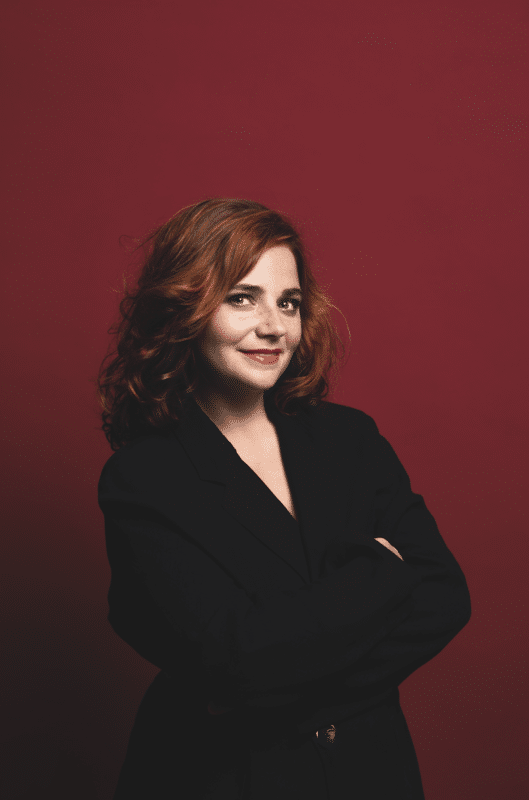
Isabell Pannagl © Andrea Peller
Isabell Pannagl: News from the Attic
Gerald Fleischhacker: Older Nicer Man
Isabell Pannagl invites the audience into her imaginary attic—a place of thoughts, questions, and inner dialogues. Topics such as ideals of beauty, family roles, and social expectations are reflected upon with humor. The evening combines self-irony with everyday philosophy.
With plenty of punchlines, Gerald Fleischhacker reflects on aging from a male perspective. Between generational conflicts, digitalization, and relationship issues, the result is an evening full of humor and observations about life.
July 23, 2026
Eichberger & Niemand: Municipal Housing
Sebastian Humi: Arab-Catholic-Gay
Welcome to municipal housing—where real life in all its facets becomes visible. Where grumpiness and glamour live side by side, where neighborhood disputes and solidarity are often separated only by a few thin walls, and where every other resident could provide material for their own story. This is exactly where Eichberger & Niemand come in, transforming the microcosm of public housing into a stage for everyday urban culture, social observations, and human absurdities.
Behind Eichberger & Niemand is the versatile artist Barbara Eichberger. Her particular strength lies in the art of transformation: with minimal means, precise facial expressions, and strong timing, she creates an entire universe of characters. From the self-proclaimed influencer Vanessa-Michelle to the grumpy janitor to Riccardo Gonzalez, the AMS recipient with big plans for life, or the middle-class economics student Laurenz—each character seems exaggerated and yet remains surprisingly close to real life. It is precisely this mixture of exaggeration and recognition that makes the program so appealing.
In his solo program, Sebastian Humi tells a very personal yet universal story about identity and belonging. As a man of Arab descent, Catholic upbringing, and homosexuality, he navigates between cultural worlds and social expectations. Instead of dramatizing these tensions, Humi transforms them into humorous, self-deprecating stories. His program is a journey through family histories, religious influences, and questions of social integration in Austria. With sharp wit and loving observation, he paints a picture of cultural differences without ever becoming judgmental. Rather, he shows the comedy and tragedy of everyday situations—from family traditions to social clichés.
July 27, 2026
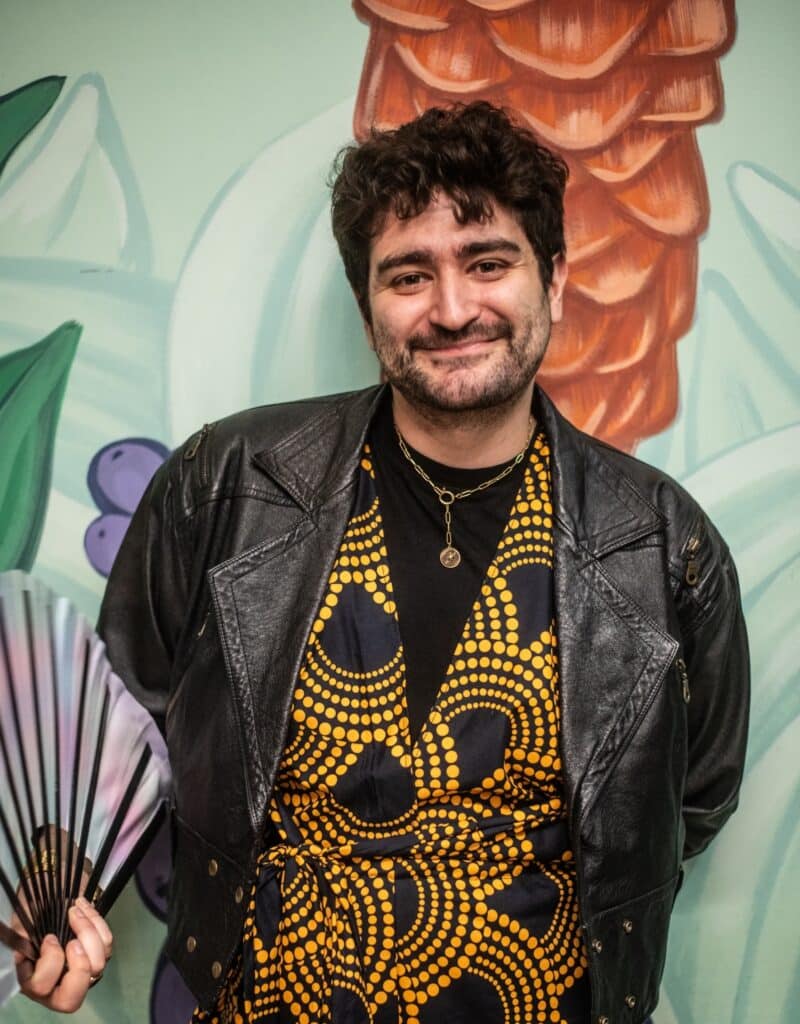
Sebastian Humi © Sebastian Humi
Christof Spörk – Maximo Lieder
With Maximo Lieder, Christof Spörk returns to his musical-satirical roots. In his songs, the political scientist combines social criticism with musical lightness. His songs deal with everyday phenomena – industrial parks, noise barriers, or technological changes – and transform seemingly mundane topics into satirical social analyses.
Spörk observes the world with sharp irony. His lyrics ask questions about political power, social developments, and human contradictions. Humor becomes a tool for reflecting on political and social realities without coming across as didactic. The program moves between musical nostalgia, political satire, and philosophical cabaret.
July 28, 2026
Benedikt Mitmannsgruber – 1996 (Burgenland premiere)
In his 1996 program, Benedikt Mitmannsgruber tells an autobiographical story about origin and identity. Growing up in the Austrian province near the Czech border, he processes family history and social changes after the fall of the Iron Curtain.
The program is both a declaration of love for growing up in rural areas and a humorous look at so-called "forgotten places." Mitmannsgruber combines personal memories with social observations and paints a picture of a generation caught between tradition and a globalized present.
July 29, 2026

Kernöl Amazons © Monika Fellner
Kernölamazonen – 20 Years of Love & Pumpkin Seed Oil
For two decades, the Kernölamazonen have stood for cheeky, musical cabaret with a feminist perspective. In their anniversary program, they celebrate their own history – and at the same time the changes in society. The two artists take a musical journey through their program history, but also ask what has changed in the world of relationships, role models, and lifestyles. With humor, wit, and charm, they reflect on the search for love, identity, and equality. Their program is musical cabaret with heart, humor, and plenty of self-irony.
July 30, 2026
Josef Hader & Alfred Dorfer with special guest: Andreas Vitásek
Reading Indien
With the reading of Indien, a classic of Austrian cabaret returns to the stage. Josef Hader and Alfred Dorfer embody their legendary characters Heinz Bösel and Kurt Fellner.
The play is a tragicomic masterpiece about friendship, society, and human weaknesses. Between philosophical conversations, everyday situations, and Austrian humor, a subtle portrait of two very different characters emerges. The special appeal lies in the mixture of comedy and melancholy.
July 31, 2026
Andreas Vitásek – As I Like It (Anniversary Program)
Artistic director Vitásek celebrates the stage with his anniversary program. After 70 years of life and 45 years on stage, he combines old and new texts, improvisations, and short theater scenes in this program. Every evening is intended to be different—a play with memories, the present, and spontaneous stage art.
Vitásek remains true to his typical mixture of satire, drama, and philosophical humor. His program is both a personal retrospective and a commentary on the present.
August 1, 2026
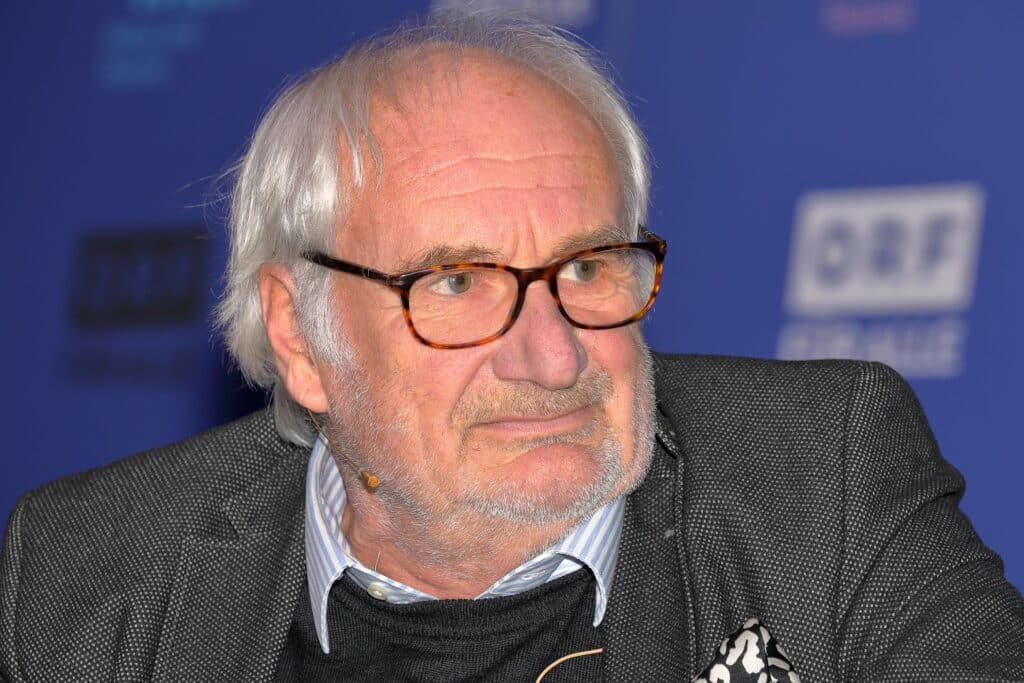
Michael Schottenberg © Photo: C. Stadler/Bwag
Michael Schottenberg – Travel is Life
Travel writer and theater producer Michael Schottenberg takes the audience on a journey around the world. From Morocco to Italy to Southeast Asia, a literary and philosophical mosaic of encounters, cultures, and landscapes emerges.
Schottenberg talks about travel as a form of self-discovery. Places become stories, people become memories, and landscapes become emotions.
September 5, 2026, Gerersdorf Open-Air Museum
Martina Parker – Comedy & Crime
Martina Parker combines literature, crime stories, and cabaret. In addition to reading passages from her works, she presents humorous anecdotes, quiz games, and improvisation with the audience.
The evening shows how suspense and humor can reinforce each other – entertainment with a criminalistic touch.
September 12, 2026, Gerersdorf Open-Air Museum
Tarek Leitner – Moments of the Republic
In his book project, Tarek Leitner reflects on the history of Austria through unusual photographs. Instead of major historical events, the focus is often on quiet moments – everyday images that reveal the personal stories behind political developments.
Leitner's narrative style combines personal memories with contemporary history. The result is a multi-layered portrait of the Second Republic – from the post-war period to the present day.
September 19, 2026