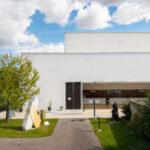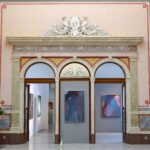
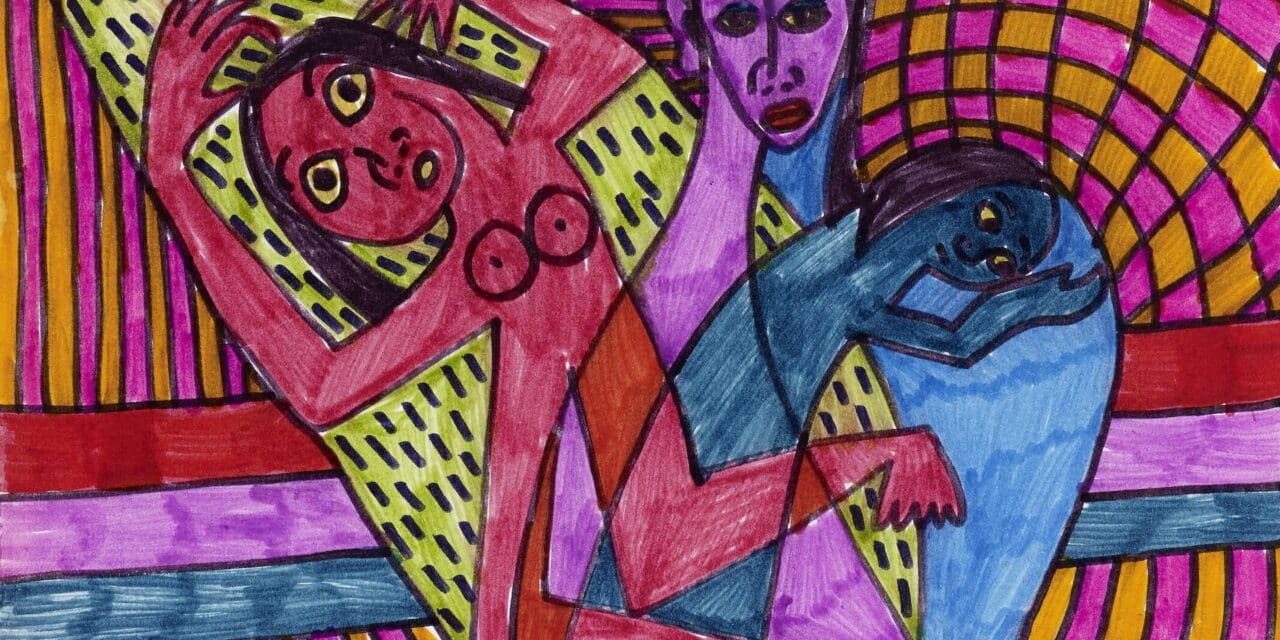
Located in the heart of eastern Switzerland, the open art museum sends a clear message: art knows no hierarchies. The museum is dedicated to positions from fringe areas—art brut, outsider art, and naïve art—and thus focuses on artistic attitudes that have developed beyond academic traditions and market mechanisms. Here, it is less about questions of style than about existential forms of expression.
The museum sees itself as an open place of encounter. It questions conventions, promotes diversity in the art world, and creates space for exchange on an equal footing. In examining Art Brut—the term coined by Jean Dubuffet for "unspoiled" creativity—the expanded understanding of Outsider Art according to Roger Cardinal, and the traditional Naïve Art associated with artists such as Henri Rousseau, it becomes clear that these categories overlap, contradict each other, and elude clear definitions. This is precisely where their power lies. The open art museum understands this art as an expression of inner necessity—raw, direct, and socially relevant.
You are currently viewing a placeholder content from YouTube. To access the actual content, click the button below. Please note that doing so will share data with third-party providers.
Stranger Than Paradise
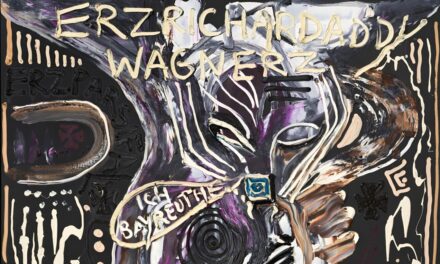
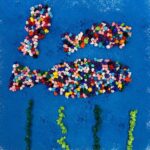
In Stranger Than Paradise, the motif of paradise becomes a polyphonic resonance chamber. The starting point is a monumental carpet collage from the Olma Special Show 2025, which is now being recontextualized in the museum. The motifs come from the museum's collection and visitors encounter them in their original form: visions of nature, rural idylls, landscapes of longing – but also jarring breaks. Works by Pietro Angelozzi, Anny Boxler, Aloïse Corbaz, Emil Graf, Hans Krüsi, and Konrad Zülle show paradise as a fragile fiction. Harmony tips into absurdity, idylls crack. Paradise appears not as a fixed place, but as a projection surface – as an inner refuge as well as a cultural construct.
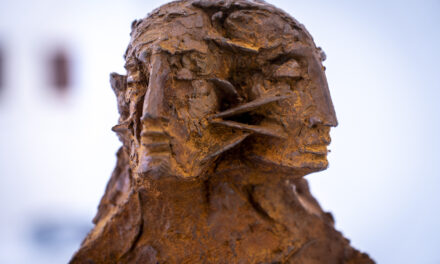
In the cabinet, textile researcher Thessy Schoenholzer Nichols complements the show with filigree miniature gardens. Glittering and rotating, they cast shadows on the walls, allowing imaginary landscapes to grow. The idea of the hortus conclusus, the protected garden, is combined here with today's notions of a mindfulness garden – a place of retreat and a space of longing at the same time.
March 15 to June 7, 2026
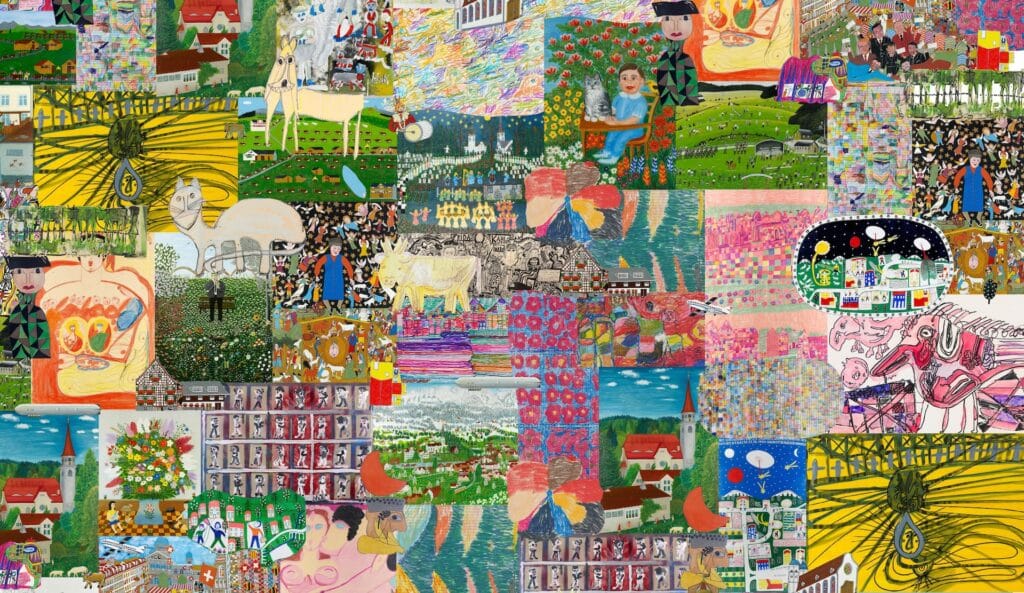
Picture collage carpet open art museum, (detail), 2025, Collage rug open art museum (detail), 2025
Adelheid Duvanel
A comprehensive retrospective is dedicated to the Basel writer and artist Adelheid Duvanel (1936–1996). While her literary miniatures have long been part of the canon of contemporary Swiss literature, her visual art has remained in the shadows for many years. The exhibition brings together drawings and paintings from the museum's collection as well as works from the University Psychiatric Clinics in Basel.
Duvanel's imagery is characterized by radical condensation. Even in her early works from the 1950s, she depicts fragile female figures, uprooted children, and deformed bodies. Themes such as loneliness, fear, illness, and death pervade her work with haunting consistency. Religious symbols—the crown of thorns, the mandorla—lend the scenes a timeless dimension.
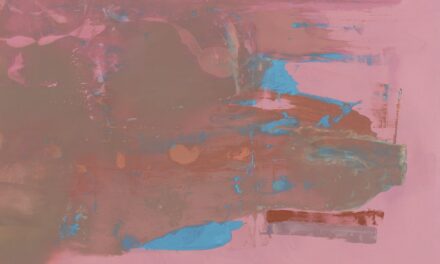
After a break from her creative work, she began drawing again in 1980 in the protected environment of the clinic. She produced ballpoint pen and felt-tip pen works in bright shades of pink and purple, as well as large-format acrylic paintings. The figures became more angular, more expressive, almost archaically reduced. Despite their seemingly naive formal language, the works develop a disturbing intensity.
Duvanel was a border crosser—in life as in art. Her pictures are not illustrations of her biography, but independent, uncompromising forms of expression. They encapsulate the struggle for identity, for female self-assertion, and for a place in the world.
until October 18, 2026
With these two exhibitions, the open art museum impressively demonstrates how art beyond established categories reveals social and personal realities—openly, directly, and touchingly.
www.openartmuseum.ch
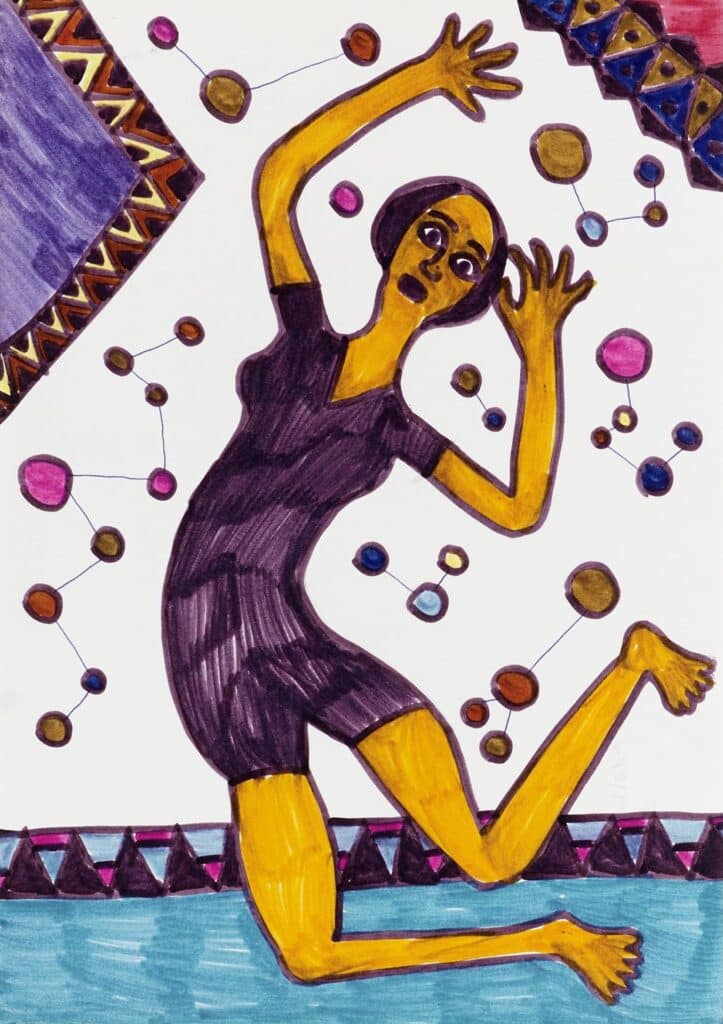
Adelheid Duvanel, Untitled (Floating/Falling Woman), 1984, felt-tip pen on paper © open art museum, Foundation for Swiss Naïve Art and Art Brut, St. Gallen