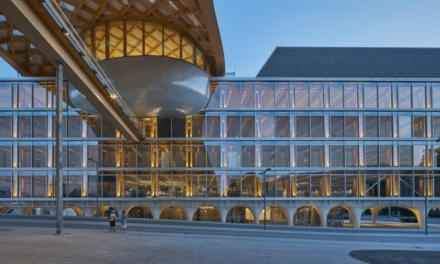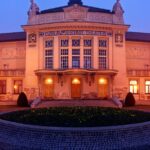
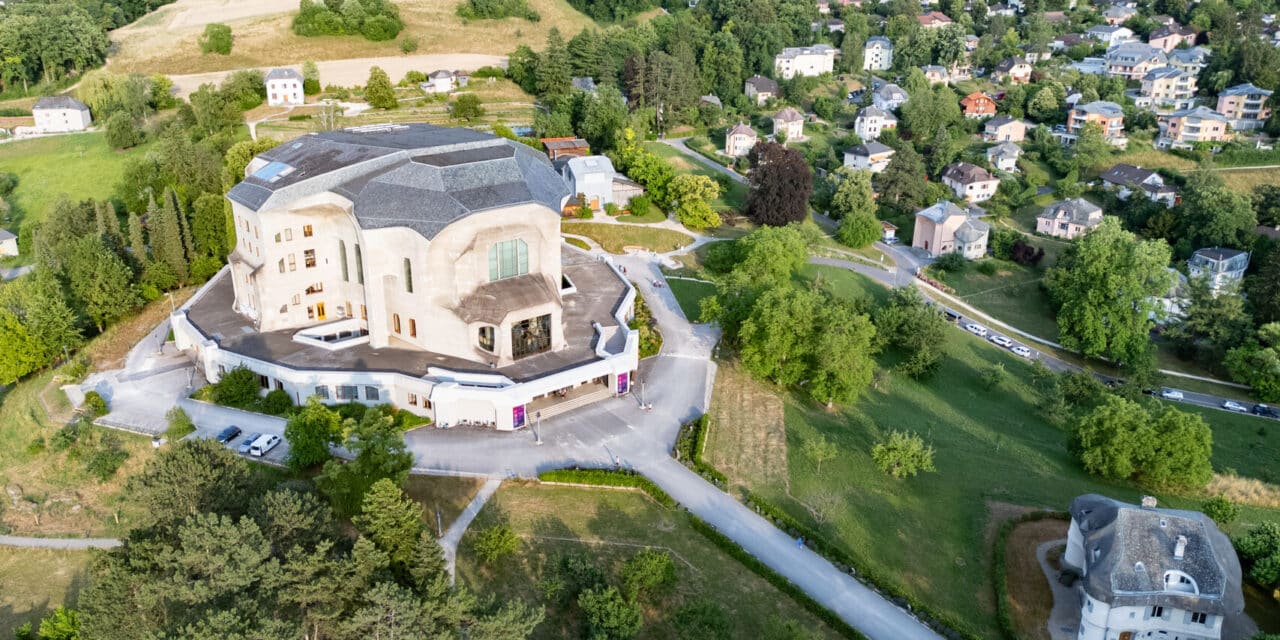
The Goetheanum rises up on the Dornach hill in the gently rolling Jura landscape, ten kilometers south of Basel. Its expressive architecture shapes the silhouette of the region; surrounded by a garden park, café, and bookstore, it is a place of encounter, art, and intellectual work. As the seat of the globally active School of Spiritual Science and the Anthroposophical Society, the building combines research, teaching, and cultural practice in a unique way. In July 2026, the Goetheanum stage will celebrate an extraordinary anniversary: the 100th performance of Faust I and II by Johann Wolfgang von Goethe – since the legendary premiere of the unabridged complete version in 1938. Over the course of three summer festivals, the monumental work will return to its historic performance venue.
The nine-hour production, spread over two or three days, is surprisingly light. Scene follows scene as if they were all connected. Linguistically, the performance stays close to Goethe's words, while narratively it unfolds the full scope of the drama: Faust's journey from his study to the underworld and the heavens, his encounters with Mephisto, angels, and the "most beautiful," his border crossings between the thirst for knowledge and seduction. The play ranges from the laboratory for artificial humans back to mythical primeval times—to the beginning of creation.
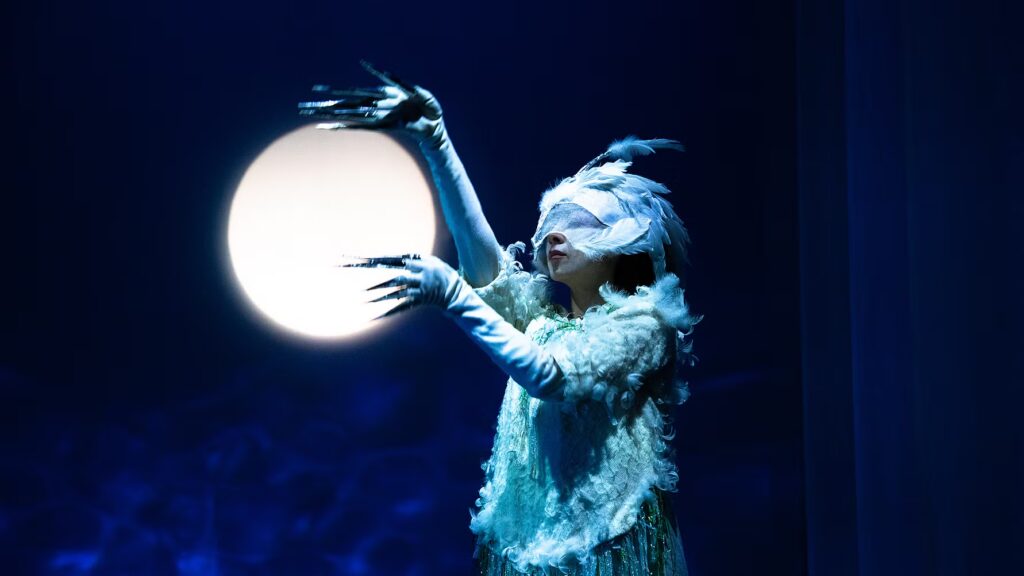
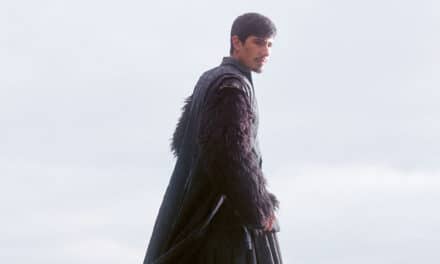
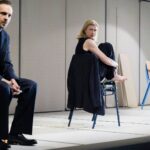
Faust 2 © Laura Pfaehler
Since 1938, Faust I and II have been at the artistic heart of the Goetheanum stage. Psychologist Carl Gustav Jung described Faust as a myth of modern man. In this interpretation, the drama becomes the spiritual landscape of our time: the highest ideals and the pact with darkness lie close together. "From heaven he demands the most beautiful stars / And from earth every highest pleasure," says Mephistopheles – a tension that has lost none of its relevance to this day. Director Andrea Pfaehler, who has been staging the work at the Goetheanum since 2020, describes the magic of theater as a moment in which the feelings and thoughts of the performers unite with the material—and the audience develops their own responses. Rafael Tavares has been responsible for eurythmy direction since 2025. In the interplay of acting and eurythmy, the interplay of inner and outer, of spiritual movement and visible gesture, becomes sensually tangible.
The 100th performance of Faust at the Goetheanum – that is more than just a number. It is a celebration of a living tradition and at the same time an invitation to experience Goethe's world drama anew: on that hill in Dornach where theater history was written in 1938.
Faust I and II
July 10 to 12, 2026
July 17 to 19, 2026 (100th performance)
July 25 to 26, 2026
www.goetheanum.ch