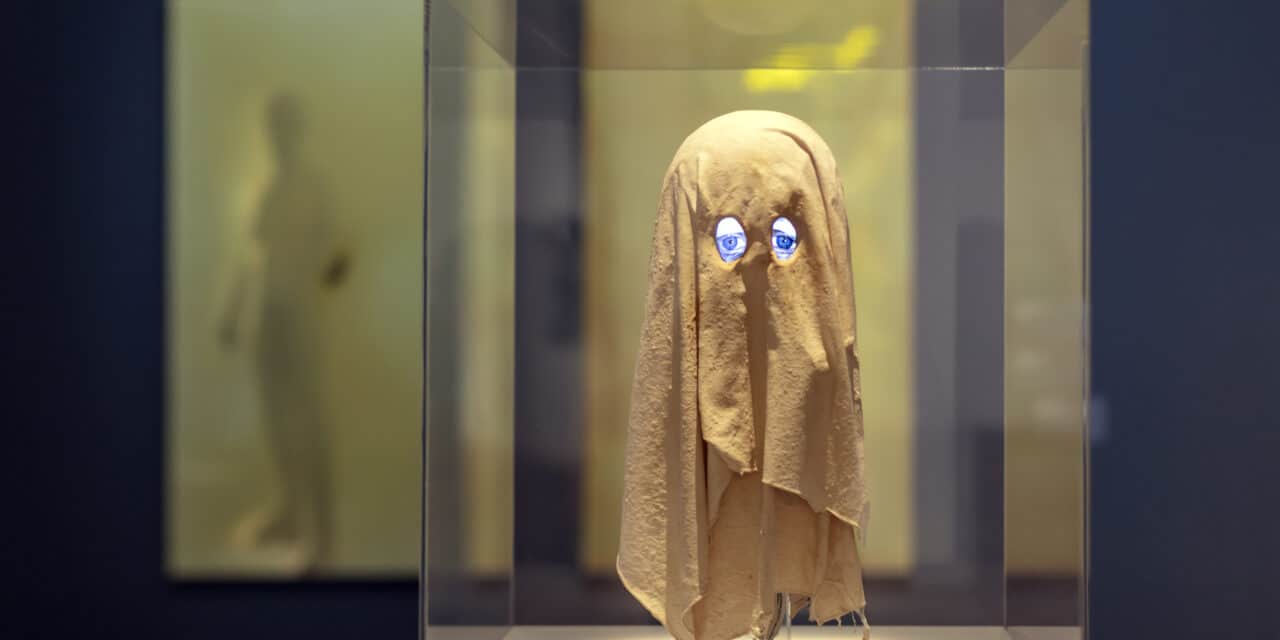
Ghosts never let go of us. They haunt films, novels, myths and dreams - and even in an enlightened, digitally illuminated world, their existence remains strangely plausible. Between reality and imagination, life and death, the visible and the invisible, they unfold their peculiar power: that of the in-between. The Kunstmuseum Basel is devoting its major fall exhibition "Ghosts. On the trail of the supernatural" is dedicated to this shimmering in-between realm - and invites visitors to view the incomprehensible through the eyes of art.
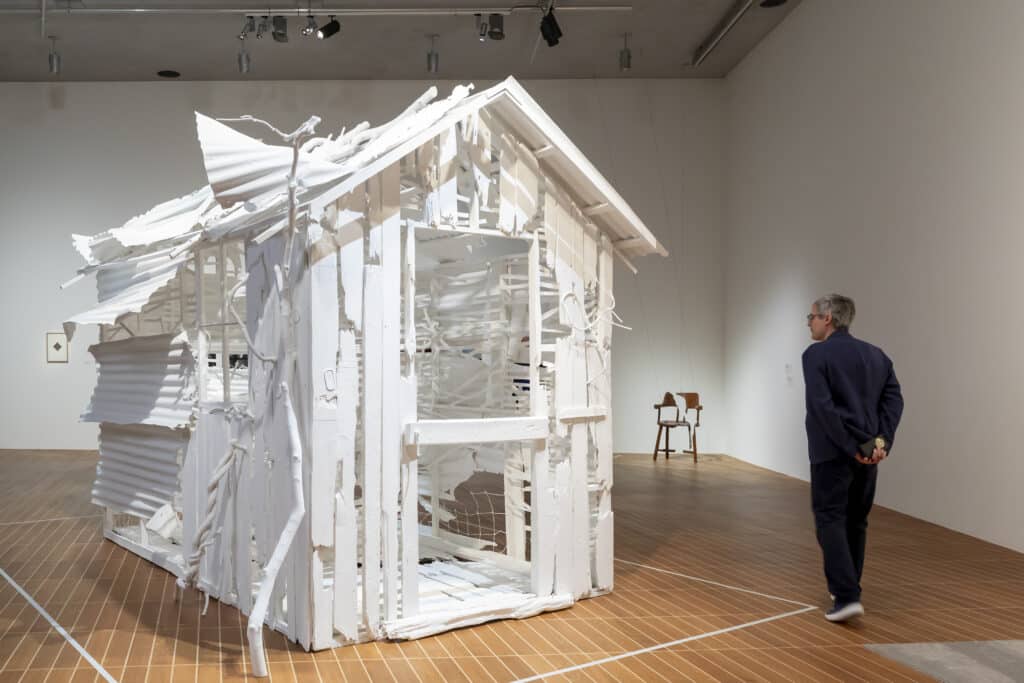
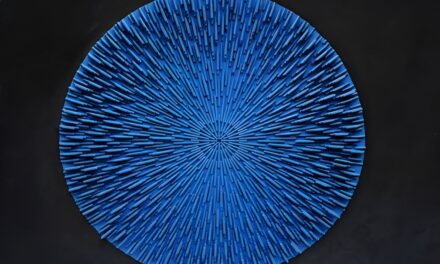
Rachel Whiteread, Poltergeist, 2020, corrugated iron, beech, pine, oak, household paint and mixed media, Fondation Beyeler, Riehen/Basel, Photo: Robert Bayer, Basel
Over 160 works and objects from 250 years tell of a cultural history of hauntings that is characterized by both science and faith, technology and poetry. The exhibition makes it clear how closely the 19th century - the age of rationality and progress - was interwoven with the belief in the supernatural. While steam engines, electricity and telegraphs changed the world, many sought a connection to invisible forces. Spiritualist circles, séances and the invention of "spirit photography" were an expression of this longing for contact with the afterlife.
The exhibition takes us back to this fascinating era, in which the desire to make the invisible visible met with technical and artistic innovation. X-rays, photograms and early light images suggested the permeability of the world - and at the same time opened doors to psychic spaces. Figures such as William H. Mumler or William Hope captured "ghosts" on glass plates, while researchers such as Baron von Schrenck-Notzing from Munich wanted to scientifically record the paranormal. Their images, half illusion, half revelation, point to the fragile boundary between belief and knowledge.
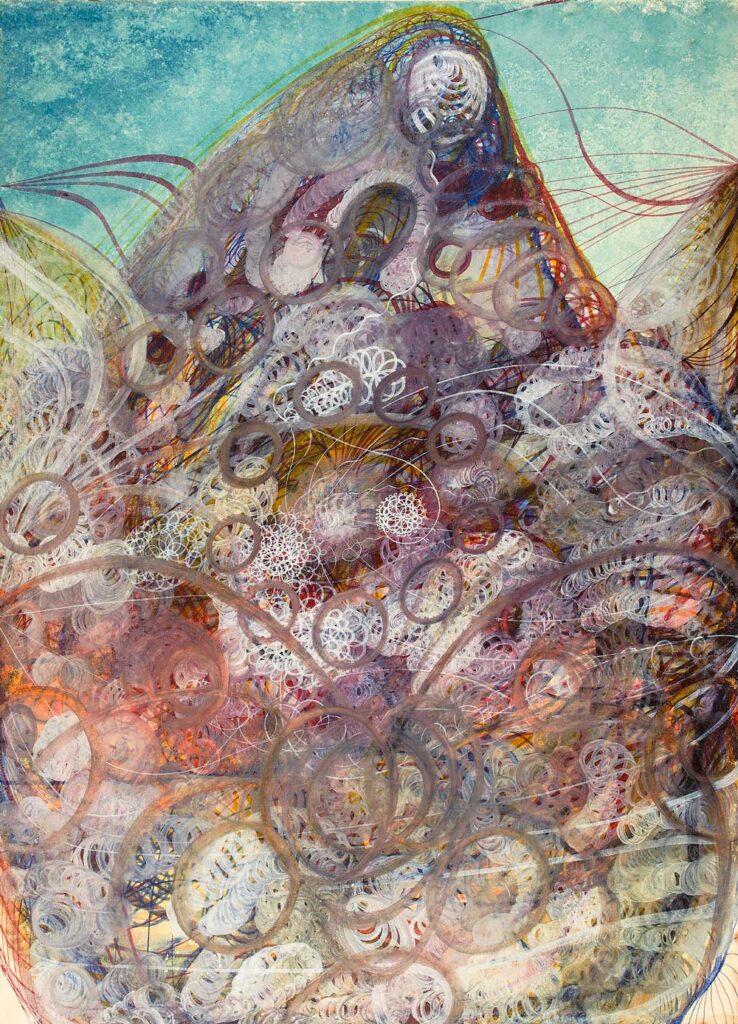
Georgiana Houghton, The Spiritual Crown of Annie, Mary Howitt Watts, 1867, watercolor and gouache on paper mounted on cardboard, pen and ink, Collection of Vivienne, Roberts, London, Courtesy of Vivienne Roberts
But "Ghosts" is not a historical show in the classic sense. It unfolds a visual panorama that spans from the 19th century to the present day. Artists revisit the iconic language of haunting time and again - as a metaphor for memory, loss, the unconscious or social shadows. The exhibition shows how the ghostly becomes a mirror of modern man: the attempt to name the repressed, to grasp the invisible.
Artistic recordings of spiritualistic mediums stand alongside psychologically inspired works, photographs alongside sculptures, popular imagery alongside subtle aesthetic experiments. The scenography - designed by please don't touch (Alicja Jelen and Clemens Müller) - invites visitors on an atmospheric journey in which the boundaries of space and perception become blurred. Light, shadows, projections: Everything seems to be in motion, everything is just a breath away from the invisible.
The exhibition was conceived in collaboration with Andreas Fischer (IGPP Freiburg) and the British art historian Susan Owens, who once aptly described ghosts as the "shadows of humanity". It is precisely these shadows that the Basel show pursues - not as horror, but as a cultural echo: an echo of the human longing for connection beyond the limits of the visible.
For ghosts, as is shown here, are not haunted figures from old stories, but an expression of our ongoing search for meaning. They remind us that the invisible never disappears completely - it only changes shape. And sometimes, in the flickering light of an exhibition hall, it almost seems as if it is quietly looking back at us.
September 20, 2025 to March 8, 2026
www.kunstmuseumbasel.ch
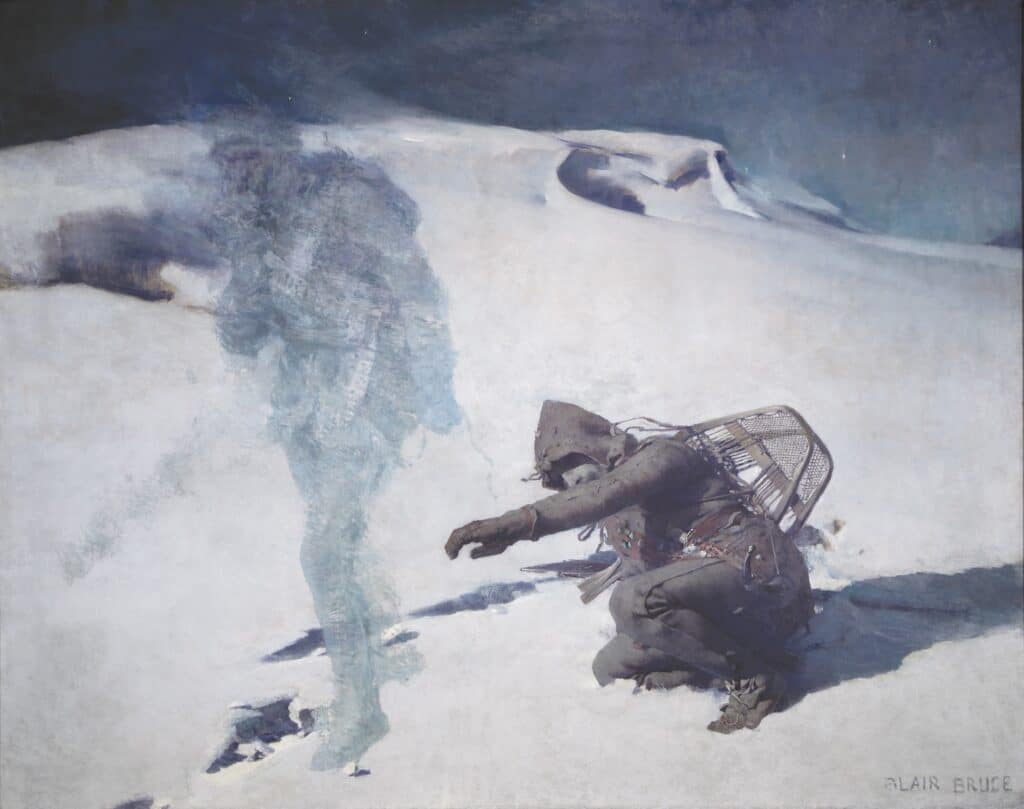
William Blair Bruce, The Ghost Hunter, 1888, oil on canvas, Art Gallery of Hamilton.
Bruce Memorial, 1914